António Guterres' speech at the Web Summit was about unity. Guterres' intentions were clear, he wants to bring all the main political, business, and technology players together for the "common good of the societies of tomorrow".
Following the same line, just a few minutes earlier in the same auditorium, the CEO of Web Summit, Paddy Cosgrave, reinforced the same idea stating that the "the Web Summit is all about networking."
[caption id="attachment_2880" align="aligncenter" width="640"]
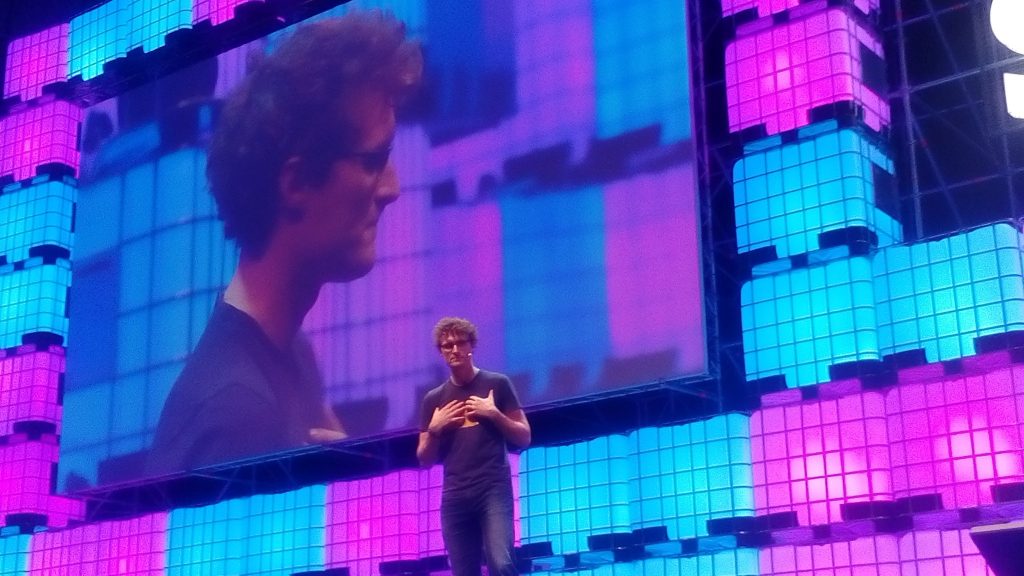
"Web Summit is all about networking", Paddy Cosgrave at the Web Summit opening night. Photo by: Miguel Salvado.[/caption]
The innovation driven crowd at the Web Summit Center Stage saw Mr Guterres stating he believes innovation works for the good of humankind and that the majority of the population quality of living has massively improved because of it.
[caption id="attachment_2872" align="aligncenter" width="640"]
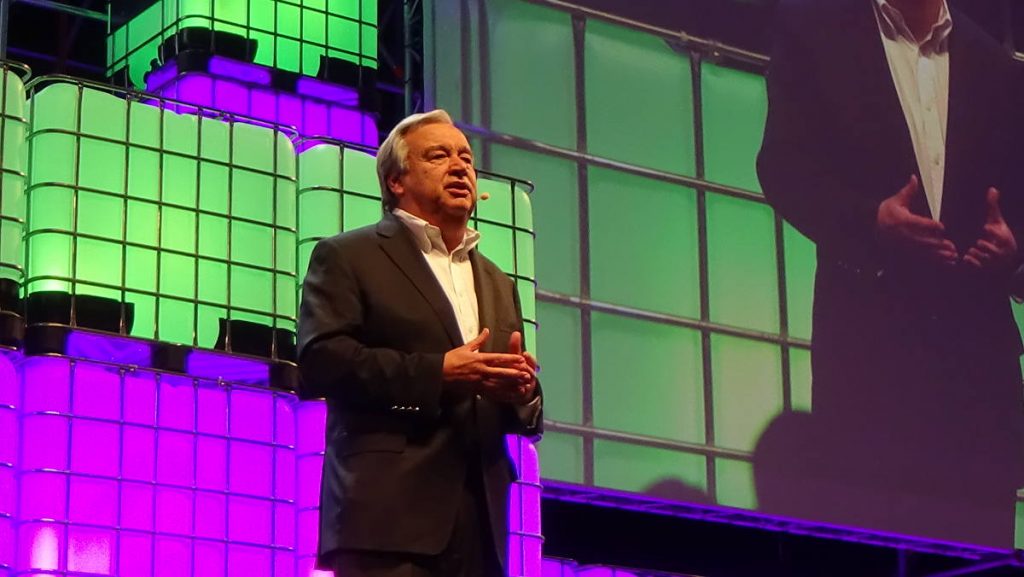
Secretary-General, António Guterres at the Web Summit[/caption]
Mr Guterres added that there are nevertheless, "two major difficulties in the world: climate change and growing inequality."
Natural disasters, desertification, massive movements of population, increasing competition for resources can all be traced back to climate changes.
As an example for growing inequality, Mr Guterres stated that "eight men own as much wealth as the poorest half of humanity." which is, according to the UN chief, "undermining the trust in relations with institutions" and "xenophobia and racism are undermining the social cohesion of our societies."
Guterres' Solution
The way to respond to climate change is with "climate action", and the way to respond to social inequality is the struggle for a fair globalization.
The problem to all of this is "implementation", said Mr Guterres, adding that "not all countries are abiding by the commitments made in Paris", referring to the inefficient way some countries are dealing with the climate change issue.
[caption id="attachment_2873" align="aligncenter" width="640"]
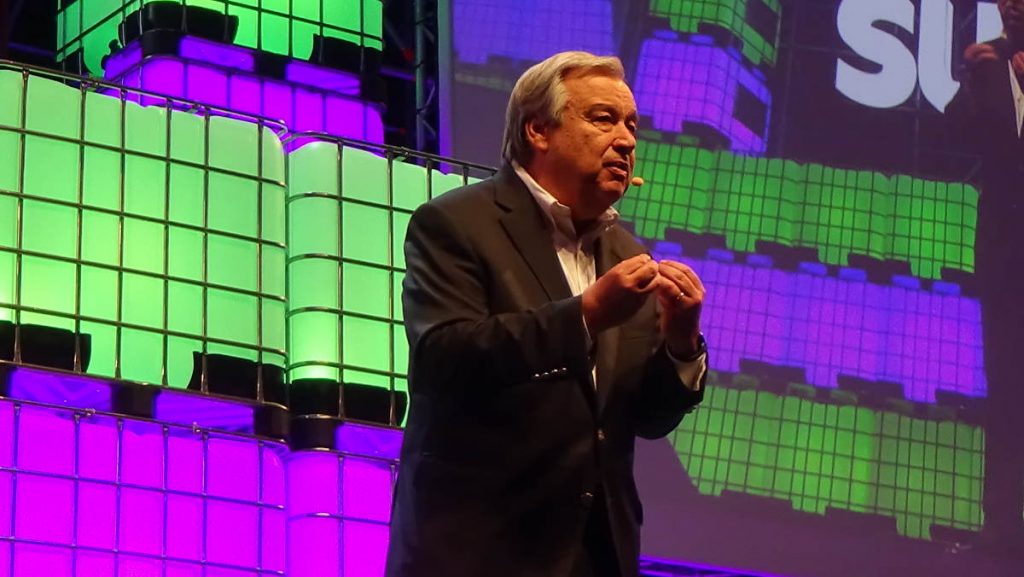
Secretary-General, António Guterres at the Web Summit[/caption]
In the case of the growing inequality, there is a "need to combine efforts of governments, the business sector, civil society, in order to be able to allow our planet to be sustainable and inclusive."
The good news is that science is on our side. said Mr Guterres, adding that "thanks to new technologies, to green technology, people can make money and do good" at the same time.
Mr Guterres then added to his speech the concept of the Fourth Industrial Revolution, stating that "it can be the answer to the main challenges we are facing today".
The fourth industrial revolution can be defined as the current and developing circumstances in which disruptive technologies and trends such as the Internet of Things, Virtual Reality, Robotics, and Artificial Intelligence are changing the world we live in.
He appealed to "all those at the Web Summit: governments, business, academia, researchers, scientists, to start a serious discussion on the impacts of the Fourth Industrial Revolution in the societies of tomorrow."



 "Web Summit is all about networking", Paddy Cosgrave at the Web Summit opening night. Photo by: Miguel Salvado.[/caption]
The innovation driven crowd at the Web Summit Center Stage saw Mr Guterres stating he believes innovation works for the good of humankind and that the majority of the population quality of living has massively improved because of it.
[caption id="attachment_2872" align="aligncenter" width="640"]
"Web Summit is all about networking", Paddy Cosgrave at the Web Summit opening night. Photo by: Miguel Salvado.[/caption]
The innovation driven crowd at the Web Summit Center Stage saw Mr Guterres stating he believes innovation works for the good of humankind and that the majority of the population quality of living has massively improved because of it.
[caption id="attachment_2872" align="aligncenter" width="640"] Secretary-General, António Guterres at the Web Summit[/caption]
Mr Guterres added that there are nevertheless, "two major difficulties in the world: climate change and growing inequality."
Natural disasters, desertification, massive movements of population, increasing competition for resources can all be traced back to climate changes.
As an example for growing inequality, Mr Guterres stated that "eight men own as much wealth as the poorest half of humanity." which is, according to the UN chief, "undermining the trust in relations with institutions" and "xenophobia and racism are undermining the social cohesion of our societies."
Secretary-General, António Guterres at the Web Summit[/caption]
Mr Guterres added that there are nevertheless, "two major difficulties in the world: climate change and growing inequality."
Natural disasters, desertification, massive movements of population, increasing competition for resources can all be traced back to climate changes.
As an example for growing inequality, Mr Guterres stated that "eight men own as much wealth as the poorest half of humanity." which is, according to the UN chief, "undermining the trust in relations with institutions" and "xenophobia and racism are undermining the social cohesion of our societies."
 Secretary-General, António Guterres at the Web Summit[/caption]
In the case of the growing inequality, there is a "need to combine efforts of governments, the business sector, civil society, in order to be able to allow our planet to be sustainable and inclusive."
The good news is that science is on our side. said Mr Guterres, adding that "thanks to new technologies, to green technology, people can make money and do good" at the same time.
Mr Guterres then added to his speech the concept of the Fourth Industrial Revolution, stating that "it can be the answer to the main challenges we are facing today".
The fourth industrial revolution can be defined as the current and developing circumstances in which disruptive technologies and trends such as the Internet of Things, Virtual Reality, Robotics, and Artificial Intelligence are changing the world we live in.
He appealed to "all those at the Web Summit: governments, business, academia, researchers, scientists, to start a serious discussion on the impacts of the Fourth Industrial Revolution in the societies of tomorrow."
Secretary-General, António Guterres at the Web Summit[/caption]
In the case of the growing inequality, there is a "need to combine efforts of governments, the business sector, civil society, in order to be able to allow our planet to be sustainable and inclusive."
The good news is that science is on our side. said Mr Guterres, adding that "thanks to new technologies, to green technology, people can make money and do good" at the same time.
Mr Guterres then added to his speech the concept of the Fourth Industrial Revolution, stating that "it can be the answer to the main challenges we are facing today".
The fourth industrial revolution can be defined as the current and developing circumstances in which disruptive technologies and trends such as the Internet of Things, Virtual Reality, Robotics, and Artificial Intelligence are changing the world we live in.
He appealed to "all those at the Web Summit: governments, business, academia, researchers, scientists, to start a serious discussion on the impacts of the Fourth Industrial Revolution in the societies of tomorrow."