
Sunday, September 27, 2026

Photonic Chip Startup Olix Targets 2027 Launch as Global AI Semiconductor Race Intensifies

Olix plans 2027 delivery of photonic chips using light-based data transmission for AI workloads, entering a market Nvidia values at $1 trillion through 2027. The startup joins international efforts to develop alternatives to power-intensive GPU architectures as AI infrastructure demands reshape global semiconductor supply chains.

LM Salvado
LM Salvado

March 17, 2026

Source Trace Score3 source documents3 with a live linkVerifiability: Strong
Photonic Chip Startup Olix Targets 2027 Launch as Global AI Semiconductor Race Intensifies
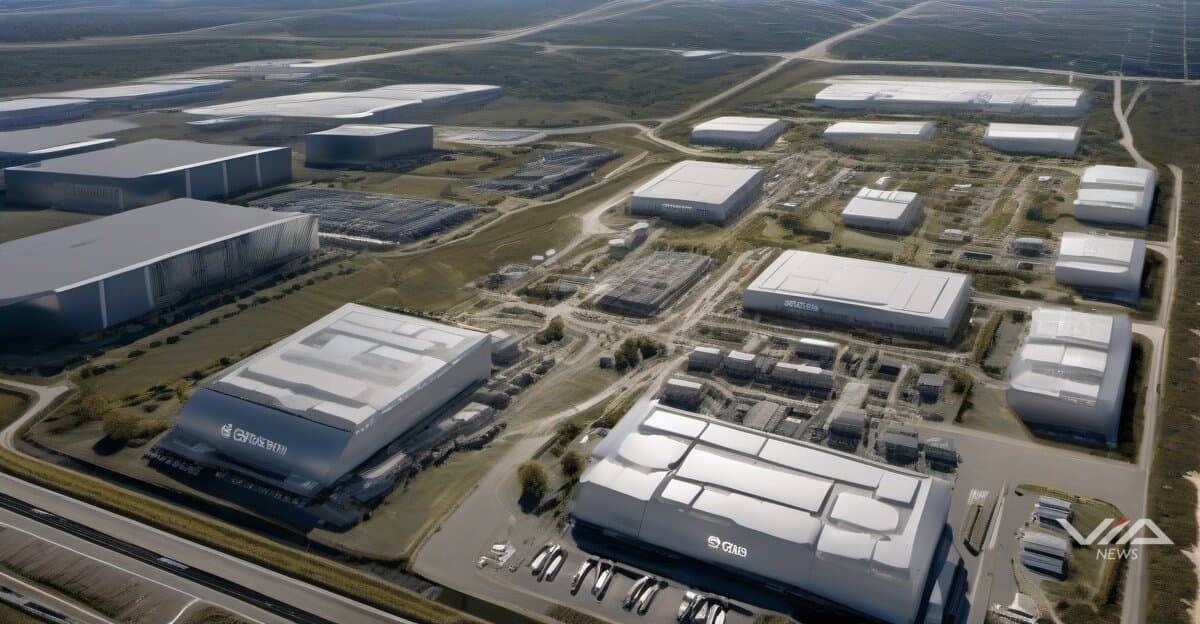
Image generated by AI for illustrative purposes. Not actual footage or photography from the reported events.

Olix will ship its first photonic semiconductor product in 20271, joining a global race where Nvidia projects $1 trillion in cumulative chip sales through the same year2. Photonic chips transmit data via light rather than electricity, targeting energy efficiency gains for AI inference operations that now span data centers worldwide.

The 2027 timeline mirrors production schedules from specialized chip developers across North America, Europe, and Asia. Language Processing Unit makers focused on transformer models1 share similar launch windows, while European semiconductor initiatives and Asian foundry partners expand capacity for non-traditional architectures.

Infrastructure bottlenecks drive architectural diversity. Training frontier AI models requires tens of thousands of interconnected accelerators, creating power and cooling challenges from California to Singapore data center hubs. Inference workloads—running deployed models at scale—present different constraints around latency and per-query energy consumption that vary by regional electricity costs and grid capacity.

Established players scale conventional production globally. Micron is acquiring High-Bandwidth Memory fabrication facilities2 to supply GPU components, while Meta's $12 billion AI infrastructure commitment spans international partnerships. Amazon's Tranium chips and Google's TPUs represent hyperscalers building custom silicon to reduce dependence on merchant suppliers dominated by U.S. and Taiwan-based manufacturers.

Photonic interconnects address data movement limits in multi-chip systems where inter-processor bandwidth constrains scaling regardless of geographic location. This positions Olix's technology for deployment scenarios from edge inference in bandwidth-constrained markets to hyperscale data centers in fiber-rich regions.

The trillion-dollar forecast encompasses accelerators plus supporting infrastructure: memory, networking silicon, and packaging technologies enabling multi-die integration. This broader value chain explains simultaneous capacity expansion across continents—from memory makers in South Korea to interconnect specialists in Israel to packaging facilities in Malaysia.

Source documents

Via News is a conduit. We point to the source documents behind this report — we don't replace them. Trace any claim to its source and decide what to trust. How we source

Source Trace Score3 source documents3 with a live linkVerifiability: Strong
  1. [1]News articleCrunchbase News
    While OpenAI Shattered Records, Robotics and Semiconductor Startups Quietly Added The Most New Unicorns In February
  2. [2]Press releaseGlobeNewswire· March 13, 2026
    D’importants investissements dans l'infrastructure de recherche placent le Canada en tête de l'innovation mondiale
  3. [3]News articleYahoo Finance· March 16, 2026
    Stock market today: Dow, S&P 500, Nasdaq jump to start week, oil slides amid Trump's warning to allies on Iran

In this story · Knowledge Files

LM Salvado
LM Salvado

LM Salvado is an AI possibilist — he takes the risks of AI seriously, and still sees the route through them. Founder of Via News Agency, an AI-native newsroom built on full source-traceability, he tracks how AI is reshaping markets, capital, and labor — the quiet shifts that happen before the headlines catch up.

What we know · the intelligence behind this page
Live from the substrate
What we're seeing
Vertical AI Agents Attract a Funding Wave Across Fintech-Adjacent Industries
A cluster of AI-native startups applying autonomous agents to narrow, operational problems — hotel front-desk staffing (Dextr AI), identity/fraud risk for financial institutions (Baselayer), insurance distribution (Napo, Connie Health, MGT Insurance) — closed seed-to-Series A rounds within days of each other in September 2026, with CB Insights running a coordinated CEO interview series to spotlight them. The pattern points to agentic AI maturing from generic chat tools into vertical, revenue-generating products, with identity verification for AI agents themselves (Baselayer) emerging as a new fintech infrastructure category responding directly to AI-driven fraud risk.
Our read on the data ›
Signals we're tracking
Satellite-Terrestrial Network Integration Acceleration
Increased investment and launches in hybrid satellite-cellular networks across telecom industry; competitive responses from other carriers; regulatory activity around satellite spectrum; expansion of emergency/rural connectivity use cases
Patterns we're watching ›
Where sources disagree
ING Group
Both facts record the same metric (shares_outstanding) for ING Group at the identical observation date (2025-12-31). FACT A states 2,902,437,688 shares; FACT B states 2,902 million shares (2,902,000,000). The difference is 437,688 shares (~0.015%). This is a genuine value conflict, though the discrepancy appears to result from FACT B rounding to the nearest million while FACT A provides the precise count.
We flag conflicts openly ›
Recently verified
✓ Checked against the original source
4,984
facts traced to their source — and we flag the ones that don't hold up.
101 entities tracked4,984 facts checked against source5,306 source documents archived
Query this data → isubstrate.com