
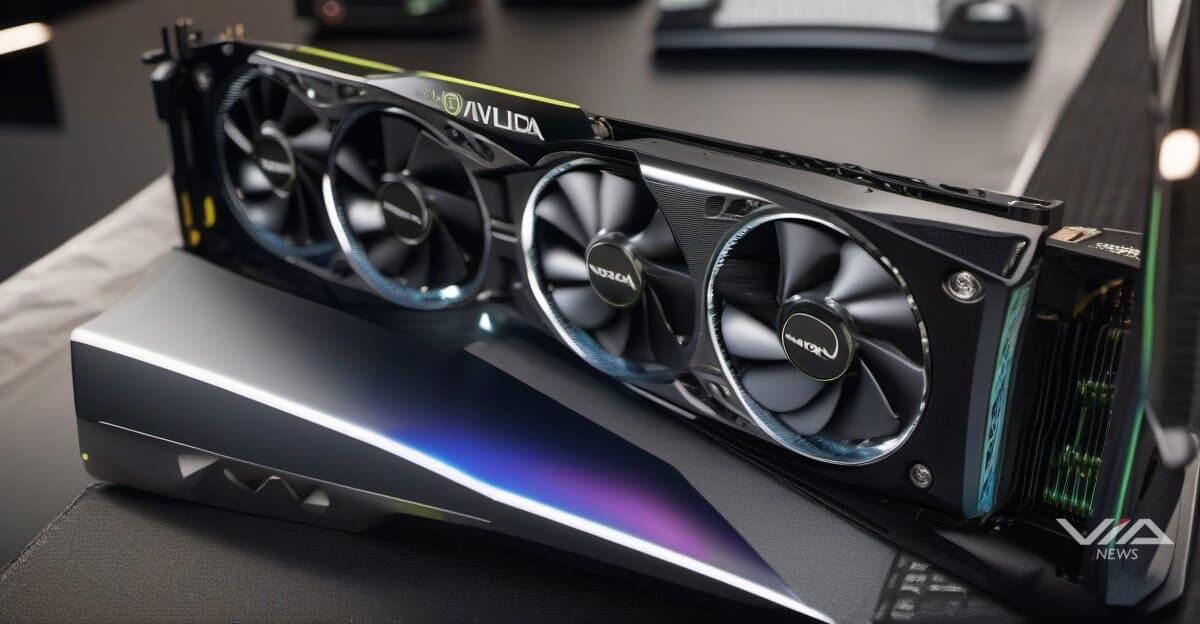
Nvidia reports Q4 2025 earnings on February 25, 2026, delivering the first major signal of whether global AI hardware demand holds through Q1 2026. The company's datacenter GPU shipments and forward guidance will indicate if hyperscalers across North America, Europe, and Asia sustain the accelerated spending that drove chip stocks higher in 2025.
Broadcom's positive year-to-date stock performance through January 2026 suggests infrastructure demand remains elevated globally. Microsoft's Azure growth in Q3 2025 showed cloud providers expanding capacity. These indicators position Nvidia's earnings as a critical test of whether capital expenditure on AI accelerators continues at 2025 levels across major markets.
The GPU market now depends on sustained orders from Microsoft, Amazon, Google, and Meta in North America, plus growing demand from Asian cloud providers. These companies drove Nvidia's datacenter revenue to record levels in 2024-2025. Any slowdown in hardware purchases would signal a shift in global AI infrastructure buildout timing.
Intel's Core Ultra Series 3 processors will power over 200 PC designs worldwide, expanding AI processing beyond datacenters. Ensurge Micropower develops microbattery technology for AI-enabled edge devices. Both indicate hardware diversification as AI workloads spread from centralized GPUs to endpoint devices across international markets.
Analysts will scrutinize three metrics on February 25: datacenter revenue growth rate, Q1 2026 guidance, and GPU allocation to cloud versus enterprise customers globally. Nvidia's stock trades at valuations that assume continued revenue expansion. Guidance below consensus would pressure semiconductor stocks broadly across US, European, and Asian exchanges.
AI accelerator design wins matter beyond Nvidia. AMD competes for datacenter share internationally, while custom chips from Amazon (Trainium), Google (TPU), and Microsoft (Maia) reduce reliance on third-party GPUs. Nvidia's market share trajectory will clarify whether global hyperscalers commit to multi-vendor strategies or maintain GPU concentration.
February 25 earnings arrive as AI companies worldwide balance infrastructure costs against revenue growth. Strong demand and raised guidance would confirm AI hardware spending extends through at least mid-2026 globally. Weak results would suggest the first pause in the GPU boom that began in early 2023.
Sources:
1 Yahoo Finance, "How Microsoft’s (MSFT) OpenAI Partnership Is Bringing in a New Wave of Customers" (March 20, 2026)
2 Nasdaq, "Wall Street Is Wrong About This AI Cloud Stock for 2026" (March 19, 2026)
3 Yahoo Finance, "AMD Expands AI Portfolio With New Ryzen Chips: Can the Tech Deliver?" (March 05, 2026)
4 Yahoo Finance, "How The Intel (INTC) Investment Story Is Shifting With AI Hopes And Execution Risks" (March 03, 2026)
5 Yahoo Finance, "Can Corning's Multi-Year AI-Focused Deal With Meta Boost Its Shares?" (January 30, 2026)