
Sunday, September 27, 2026

Meta Shifts to Google TPUs as AI Trading Systems Deploy in Live Crypto Markets

Meta's migration to Google tensor processing units coincides with BitMart launching three AI trading products and nof1.ai deploying $320,000 in real capital across crypto markets. The infrastructure shift arrives as Bitcoin corrects from all-time highs while China reinforces crypto restrictions and USDT faces credit downgrades.

LM Salvado
LM Salvado

March 15, 2026

Source Trace Score3 source documents3 with a live linkVerifiability: Strong
Meta Shifts to Google TPUs as AI Trading Systems Deploy in Live Crypto Markets
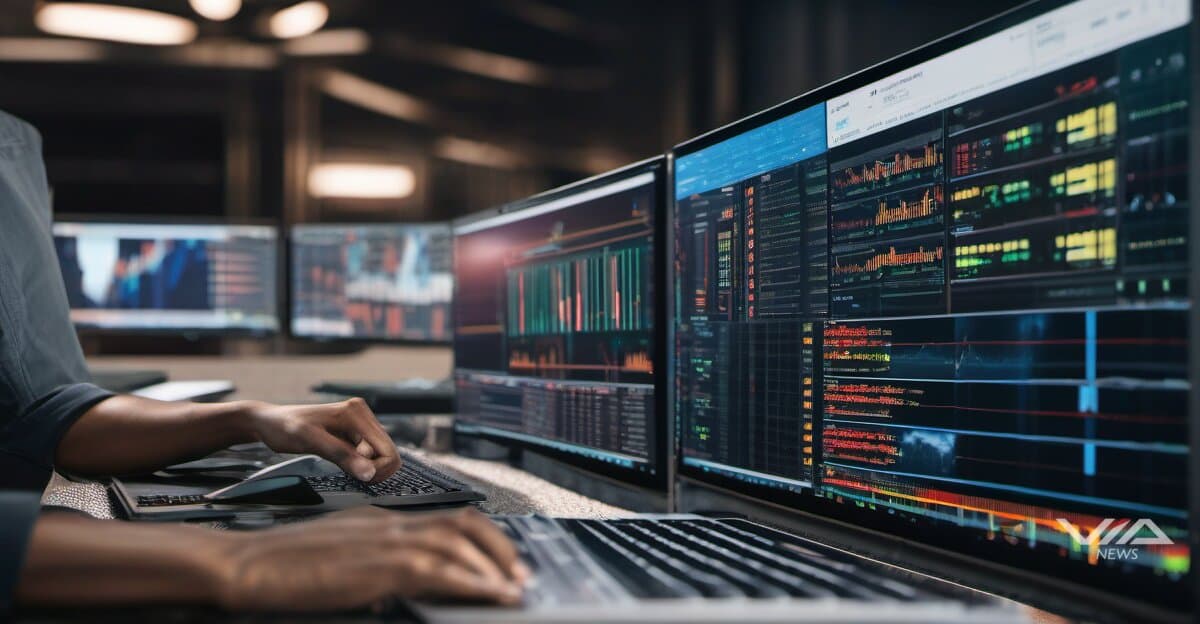
Image generated by AI for illustrative purposes. Not actual footage or photography from the reported events.

Meta's hardware migration to Google TPUs coincides with BitMart's launch of three AI trading products—Beacon for market analysis, X Insight for social sentiment, and AI Trading Arena for strategy deployment. nof1.ai's Alpha Arena now operates with live capital, marking the transition from backtesting to real market execution.

The timing tests these systems against significant volatility. Bitcoin reached all-time highs before entering a November correction while prediction market volumes surged. This environment exposes weaknesses in algorithmic approaches that perform differently under stress than in stable conditions.

Traditional finance firms are building parallel infrastructure globally. Flow Traders allocated resources to deep learning initiatives, bridging conventional market-making with AI capabilities. The convergence suggests institutional validation beyond crypto-native platforms across multiple financial centers.

Hardware architecture affects trading performance directly. TPUs deliver different latency characteristics than GPUs for model inference, potentially reducing delays in time-sensitive decisions. Meta's migration signals broader industry movement toward specialized AI chips for production workloads.

New reasoning models enable sophisticated strategies. Google's Gemini 3 Pro release and kimi-k2-thinking deployment provide multi-step logic processing beyond pattern matching. These capabilities allow more complex market analysis across asset classes and geographies.

Regulatory environments diverge sharply. China reaffirmed crypto restrictions while USDT faced credit downgrades from rating agencies. AI trading systems must navigate both market volatility and jurisdiction-specific policy risks, adding layers beyond technical challenges.

The infrastructure is now operational: multiple platforms deployed, real capital allocated, traditional firms investing across regions. Whether AI systems maintain performance through full market cycles remains unproven, but autonomous trading foundations are established in live markets.

Source documents

Via News is a conduit. We point to the source documents behind this report — we don't replace them. Trace any claim to its source and decide what to trust. How we source

Source Trace Score3 source documents3 with a live linkVerifiability: Strong
  1. [1]Press releaseGlobeNewswire· January 13, 2026
    BitMart 2025 Annual Review: Building a More Complete Financial Infrastructure to Drive Long-Term Sustainable Growth
  2. [2]Press releaseGlobeNewswire· December 5, 2025
    CoinEx Research November 2025 Report: Painvember's Brutal Reality Check
  3. [3]News articleYahoo Finance· February 12, 2026
    Flow Traders 4Q and FY 2025 Results

In this story · Knowledge Files

LM Salvado
LM Salvado

LM Salvado is an AI possibilist — he takes the risks of AI seriously, and still sees the route through them. Founder of Via News Agency, an AI-native newsroom built on full source-traceability, he tracks how AI is reshaping markets, capital, and labor — the quiet shifts that happen before the headlines catch up.

What we know · the intelligence behind this page
Live from the substrate
What we're seeing
Vertical AI Agents Attract a Funding Wave Across Fintech-Adjacent Industries
A cluster of AI-native startups applying autonomous agents to narrow, operational problems — hotel front-desk staffing (Dextr AI), identity/fraud risk for financial institutions (Baselayer), insurance distribution (Napo, Connie Health, MGT Insurance) — closed seed-to-Series A rounds within days of each other in September 2026, with CB Insights running a coordinated CEO interview series to spotlight them. The pattern points to agentic AI maturing from generic chat tools into vertical, revenue-generating products, with identity verification for AI agents themselves (Baselayer) emerging as a new fintech infrastructure category responding directly to AI-driven fraud risk.
Our read on the data ›
Signals we're tracking
Satellite-Terrestrial Network Integration Acceleration
Increased investment and launches in hybrid satellite-cellular networks across telecom industry; competitive responses from other carriers; regulatory activity around satellite spectrum; expansion of emergency/rural connectivity use cases
Patterns we're watching ›
Where sources disagree
ING Group
Both facts record the same metric (shares_outstanding) for ING Group at the identical observation date (2025-12-31). FACT A states 2,902,437,688 shares; FACT B states 2,902 million shares (2,902,000,000). The difference is 437,688 shares (~0.015%). This is a genuine value conflict, though the discrepancy appears to result from FACT B rounding to the nearest million while FACT A provides the precise count.
We flag conflicts openly ›
Recently verified
✓ Checked against the original source
4,984
facts traced to their source — and we flag the ones that don't hold up.
101 entities tracked4,984 facts checked against source5,306 source documents archived
Query this data → isubstrate.com