
Sunday, September 27, 2026

Global AI Expansion Faces 3-4% Memory Shortage Through 2026 as Chip Production Lags Demand

DRAM and NAND shortages of 3-4% will constrain AI deployment worldwide through 2026 as memory production fails to match GPU rollout speeds. New semiconductor fabs require $15 billion investments and 18-month construction timelines, guaranteeing supply lags persist. Cloud providers across North America, Europe, and Asia report GPU clusters sitting idle awaiting compatible high-bandwidth memory.

ViaNews Editorial Team

February 25, 2026

Source Trace Score12 source documents12 with a live linkVerifiability: Strong
Global AI Expansion Faces 3-4% Memory Shortage Through 2026 as Chip Production Lags Demand
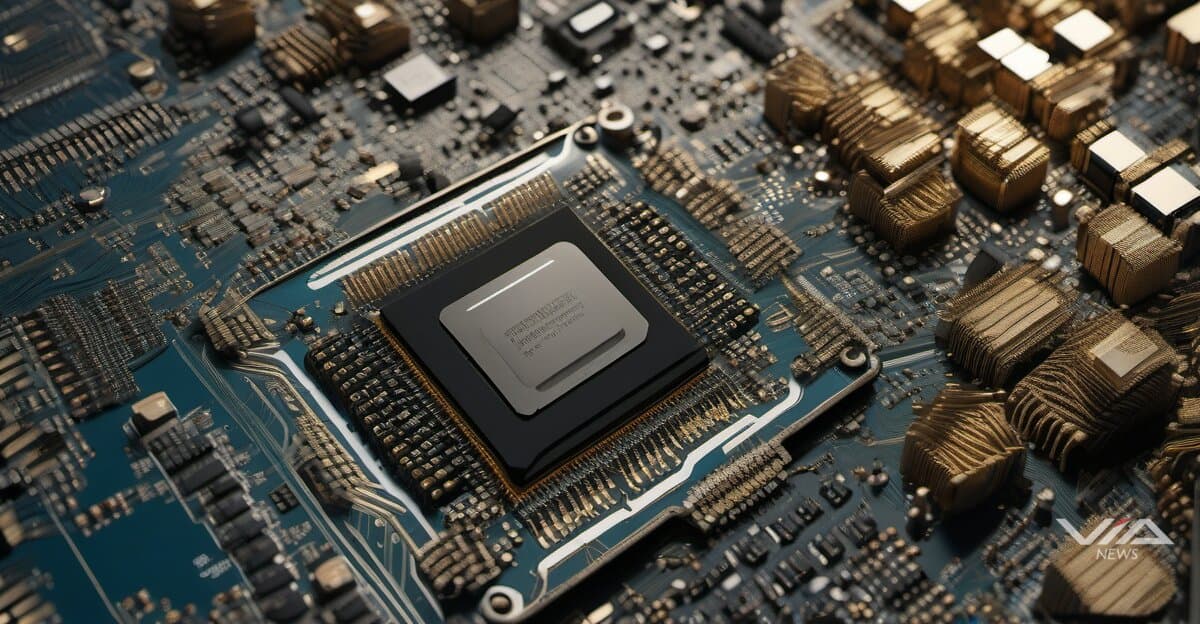
Image generated by AI for illustrative purposes. Not actual footage or photography from the reported events.

DRAM and NAND shortages of 3-4% will limit AI infrastructure deployment globally through 2026. Memory production cannot match the pace of GPU rollouts, creating bottlenecks at data centers from Silicon Valley to Singapore.

High-bandwidth memory requirements for AI workloads exceed traditional data center specifications. GPU clusters demand substantially more DRAM per processing unit than conventional servers, straining global supply chains concentrated in South Korea, Taiwan, and Japan.

New semiconductor fabs cost $15 billion minimum and require 18 months to build and operationalize. This timeline locks in supply-demand imbalances—factories ordered today arrive after demand spikes have already occurred.

Nvidia's infrastructure expansion drives memory consumption faster than manufacturers anticipated. Hyperscale operators worldwide report compute resources idle while awaiting memory configurations that meet AI workload specifications.

The cyclical nature of DRAM investment compounds shortages. Manufacturers expand capacity only during boom periods when cash flow supports multi-billion-dollar commitments. Current semiconductor indices sit at record highs despite persistent constraints.

Intel's 18A process node and Micron's US fab expansion represent Western responses to secure domestic memory supply amid geopolitical concerns. These initiatives target AI-specific memory rather than general-purpose production, reflecting strategic competition with Asian semiconductor leaders.

Equipment supplier Camtek projects double-digit growth in 2026, with Q1 revenues around $120 million. The guidance reflects sustained capital investment in memory production infrastructure across manufacturing regions.

Memory availability now determines GPU utilization rates at cloud facilities globally. Training runs face extended queuing as available memory gets allocated to inference workloads generating immediate revenue.

Industry observers expect the supply gap to narrow in late 2026 as new fab capacity comes online in the US, Europe, and Asia. Accelerating AI adoption may outpace production gains, potentially extending constraints into 2027 across all major markets.

Source documents

Via News is a conduit. We point to the source documents behind this report — we don't replace them. Trace any claim to its source and decide what to trust. How we source

Source Trace Score12 source documents12 with a live linkVerifiability: Strong
  1. [1]News articleYahoo Finance· February 23, 2026
    Adeia Announces Record Fourth Quarter and Full Year 2025 Financial Results
  2. [2]News articleYahoo Finance· February 18, 2026
    CAMTEK ANNOUNCES RECORD RESULTS FOR THE FOURTH QUARTER & FULL YEAR 2025
  3. [3]Press releaseGlobeNewswire· November 11, 2025
    Grab Pilots High-Accuracy GPS Positioning System to Improve Location and Navigation Accuracy of GrabMaps in Singapore
  4. [4]News articleIEEE Spectrum
    How and When the Memory Chip Shortage Will End
  5. [5]Press releaseGlobeNewswire· January 16, 2026
    Micron Celebrates Official Groundbreaking at New York Megafab Site
  6. [6]News articleYahoo Finance· February 15, 2026
    Rampant AI Demand for Memory Is Fueling a Growing Chip Crisis
  7. [7]News articleUk· January 16, 2026
    Stocks to watch next week: Netflix, Intel, Burberry, JD Wetherspoon and JD Sports
  8. [8]Press releaseGlobeNewswire· February 5, 2026
    Trillion-Yuan Innovation Hub Empowers Growth, SIXUNITED Targets RMB 10 Billion Revenue and 15 Million AI Terminals by 2026
  9. [9]News articleYahoo Finance· February 22, 2026
    5 big analyst AI moves: Nvidia stock ’likely to outperform in 2H26’
  10. [10]News articleYahoo Finance· December 8, 2025
    Apple won’t be the same in 2026. Meet the company’s next generation of leaders and rising stars after its biggest executive exodus in years
  11. [11]News articleYahoo Finance· February 24, 2026
    Panasonic Automotive Systems secures industry-wide endorsement for its initiative to standardize VirtIO device virtualization technology
  12. [12]News articleYahoo Finance· February 23, 2026
    Stock market today: Dow drops 800 points as S&P 500, Nasdaq slide on Trump tariff fears, AI 'scare trade'

In this story · Knowledge Files

What we know · the intelligence behind this page
Live from the substrate
What we're seeing
Vertical AI Agents Attract a Funding Wave Across Fintech-Adjacent Industries
A cluster of AI-native startups applying autonomous agents to narrow, operational problems — hotel front-desk staffing (Dextr AI), identity/fraud risk for financial institutions (Baselayer), insurance distribution (Napo, Connie Health, MGT Insurance) — closed seed-to-Series A rounds within days of each other in September 2026, with CB Insights running a coordinated CEO interview series to spotlight them. The pattern points to agentic AI maturing from generic chat tools into vertical, revenue-generating products, with identity verification for AI agents themselves (Baselayer) emerging as a new fintech infrastructure category responding directly to AI-driven fraud risk.
Our read on the data ›
Signals we're tracking
Satellite-Terrestrial Network Integration Acceleration
Increased investment and launches in hybrid satellite-cellular networks across telecom industry; competitive responses from other carriers; regulatory activity around satellite spectrum; expansion of emergency/rural connectivity use cases
Patterns we're watching ›
Where sources disagree
ING Group
Both facts record the same metric (shares_outstanding) for ING Group at the identical observation date (2025-12-31). FACT A states 2,902,437,688 shares; FACT B states 2,902 million shares (2,902,000,000). The difference is 437,688 shares (~0.015%). This is a genuine value conflict, though the discrepancy appears to result from FACT B rounding to the nearest million while FACT A provides the precise count.
We flag conflicts openly ›
Recently verified
✓ Checked against the original source
4,984
facts traced to their source — and we flag the ones that don't hold up.
101 entities tracked4,984 facts checked against source5,306 source documents archived
Query this data → isubstrate.com