
Sunday, September 27, 2026

US Halts Nvidia H200 Chip Exports to China, Fragmenting Global AI Hardware Access Along Security Lines

Nvidia stopped H200 GPU production for China under new US export controls, cutting Chinese AI labs from hardware needed for trillion-parameter models. The ban creates a two-tier global AI market—American firms train faster with advanced chips while Chinese developers face 2-3 generation lags or must build domestic alternatives.

Source Trace Score1 source document1 with a live linkVerifiability: Basic
US Halts Nvidia H200 Chip Exports to China, Fragmenting Global AI Hardware Access Along Security Lines
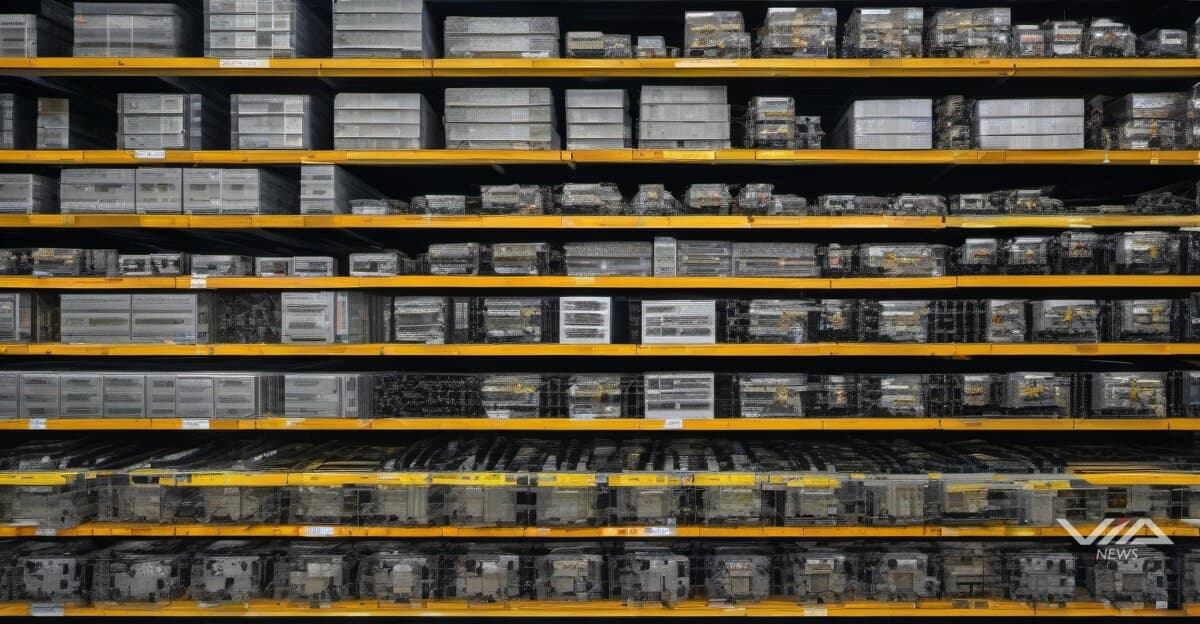
Image generated by AI for illustrative purposes. Not actual footage or photography from the reported events.

Nvidia halted H200 GPU shipments to China following US export restrictions targeting AI development, though the company is exploring permit applications for limited sales. The ban removes access to chips with 141GB memory and 4.8TB/s bandwidth—specifications Chinese labs need for large-scale model training that now flows exclusively to Western developers.

The restrictions split global AI hardware into security-aligned tiers. US firms with Chinese investment or operations face new scrutiny—Anthropic received a supply chain risk label despite $10B backing from Nvidia and resumed Pentagon talks after initially refusing defense work. OpenAI's robotics leadership departed over military contract disputes, while Oracle canceled joint data center plans with the company.

Chinese AI developers must choose between scaling back models, stockpiling older hardware, or waiting for domestic chip alternatives that trail US technology by multiple generations. Western labs gain training speed advantages but lose Chinese revenue—Nvidia's data center division earned $47.5B in fiscal 2024, with China previously ranking as a top-three market.

The compute gap compounds over training cycles. American teams using H200s and upcoming Blackwell chips can build larger, more capable models while Chinese counterparts optimize smaller architectures or develop workarounds. Hardware access directly shapes model performance in reasoning, multimodal tasks, and benchmarks—turning export policy into a mechanism for maintaining technological lead.

Europe, India, and other regions navigate between US and Chinese tech ecosystems as the AI supply chain fractures. Nvidia's permit exploration signals companies will navigate bureaucracy for partial market access, but the two-tier structure appears permanent. The risk designation on Anthropic shows even US-based labs face compliance reviews based on funding sources, extending security considerations beyond hardware sales into AI lab partnerships and investment structures across borders.

Source documents

Via News is a conduit. We point to the source documents behind this report — we don't replace them. Trace any claim to its source and decide what to trust. How we source

Source Trace Score1 source document1 with a live linkVerifiability: Basic
  1. [1]News articleYahoo Finance· March 9, 2026
    Tech stocks today: OpenAI's robotics leader resigns after Pentagon deal, Anthropic prepares to battle ban

In this story · Knowledge Files

What we know · the intelligence behind this page
Live from the substrate
What we're seeing
Vertical AI Agents Attract a Funding Wave Across Fintech-Adjacent Industries
A cluster of AI-native startups applying autonomous agents to narrow, operational problems — hotel front-desk staffing (Dextr AI), identity/fraud risk for financial institutions (Baselayer), insurance distribution (Napo, Connie Health, MGT Insurance) — closed seed-to-Series A rounds within days of each other in September 2026, with CB Insights running a coordinated CEO interview series to spotlight them. The pattern points to agentic AI maturing from generic chat tools into vertical, revenue-generating products, with identity verification for AI agents themselves (Baselayer) emerging as a new fintech infrastructure category responding directly to AI-driven fraud risk.
Our read on the data ›
Signals we're tracking
Satellite-Terrestrial Network Integration Acceleration
Increased investment and launches in hybrid satellite-cellular networks across telecom industry; competitive responses from other carriers; regulatory activity around satellite spectrum; expansion of emergency/rural connectivity use cases
Patterns we're watching ›
Where sources disagree
ING Group
Both facts record the same metric (shares_outstanding) for ING Group at the identical observation date (2025-12-31). FACT A states 2,902,437,688 shares; FACT B states 2,902 million shares (2,902,000,000). The difference is 437,688 shares (~0.015%). This is a genuine value conflict, though the discrepancy appears to result from FACT B rounding to the nearest million while FACT A provides the precise count.
We flag conflicts openly ›
Recently verified
✓ Checked against the original source
4,984
facts traced to their source — and we flag the ones that don't hold up.
101 entities tracked4,984 facts checked against source5,306 source documents archived
Query this data → isubstrate.com