
Sunday, September 27, 2026

Nevada's Data Centers Will Consume 35% of State Power by 2030—a Global Pattern Already Unfolding

Nevada data centers are projected to consume 35% of the state's electricity by 2030, according to a 2026 study. The finding reflects a worldwide trend: AI infrastructure is now a systemic constraint on power grids from Ireland to Singapore. Capital is accelerating into gas, renewables, and nuclear generation tied directly to data center demand.

LM Salvado
LM Salvado

May 28, 2026

Nevada's Data Centers Will Consume 35% of State Power by 2030—a Global Pattern Already Unfolding
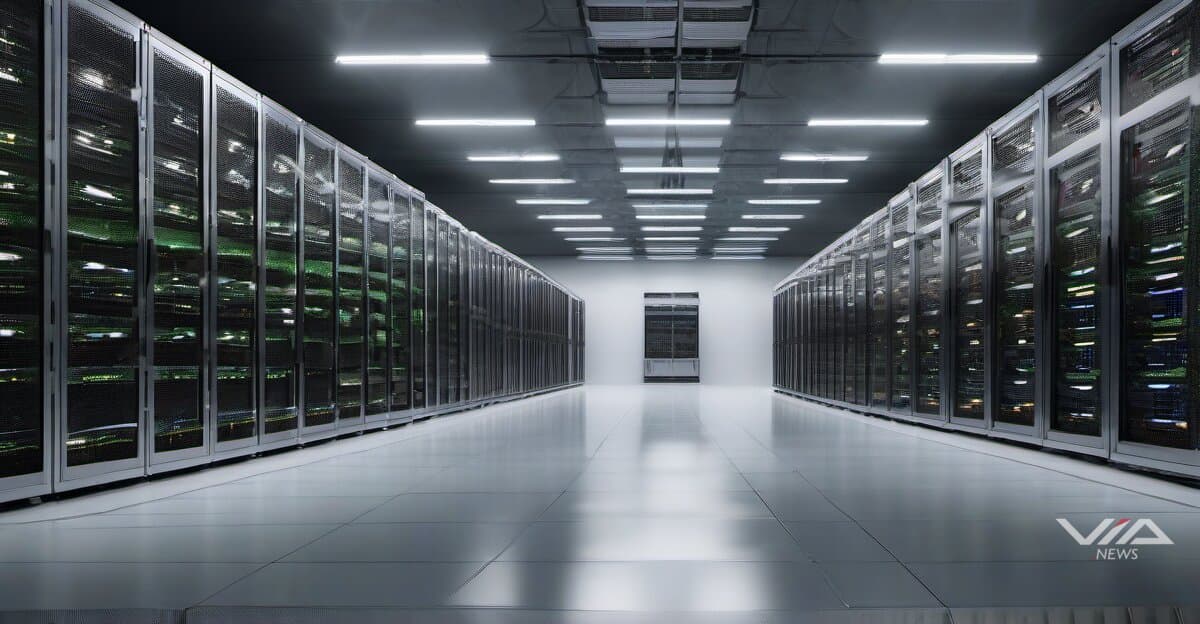
Image generated by AI for illustrative purposes. Not actual footage or photography from the reported events.
1 The projection marks a global inflection point: AI infrastructure is now a systemic constraint on power grids worldwide, not just in the American West.

The pattern is already visible internationally.Singapore imposed a moratorium on new data center construction over grid pressure. The UK, Germany, and the Netherlands face similar capacity crunches as hyperscalers compete for limited power.

As AI training and inference workloads scale, operators are exhausting available capacity in major markets. Development pipelines stall where utilities cannot commit to required load growth timelines. The problem is acute in Europe, where energy markets remain volatile.

The cost equation is shifting globally. Rising electricity prices compress margins on cloud and AI services priced assuming stable power costs. Operators are pivoting to long-term power purchase agreements, on-site generation, and geographies with surplus capacity—often at the cost of latency and redundancy.

Capital is moving accordingly. Investment in AI-linked power generation is accelerating across three categories: natural gas peakers, utility-scale renewables paired with storage, and nuclear—including small modular reactors under development in the US, UK, Canada, and South Korea.1 Hyperscalers and data center REITs are acquiring generation assets directly, bypassing traditional utility procurement timelines.

Efficiency is improving but insufficient. Energy cost per AI inference has dropped sharply as hardware has advanced. But aggregate demand grows faster than per-unit gains. Nvidia, AMD, Google, and Amazon compete partly on performance-per-watt metrics that directly affect operating costs at scale.

The grid constraint creates structural advantages for operators who locked in power early and for jurisdictions with surplus generation. It creates headwinds for late entrants and regions that approved data center development without modeling cumulative load.

Nevada is a leading indicator. Similar inflection points are approaching in Virginia, Texas, the US Midwest—and internationally in Poland, Malaysia, and northern Japan—wherever data center concentration has outpaced grid buildout.

In this story · Knowledge Files

About this analysis

This is a Via News analysis. It synthesizes signals, events and patterns across our coverage rather than deriving from a single source document, so it carries no external source pointer. Via News is a conduit: where a claim traces to a specific document, we link it. How we source

LM Salvado
LM Salvado

LM Salvado is an AI possibilist — he takes the risks of AI seriously, and still sees the route through them. Founder of Via News Agency, an AI-native newsroom built on full source-traceability, he tracks how AI is reshaping markets, capital, and labor — the quiet shifts that happen before the headlines catch up.

What we know · the intelligence behind this page
Live from the substrate
What we're seeing
Vertical AI Agents Attract a Funding Wave Across Fintech-Adjacent Industries
A cluster of AI-native startups applying autonomous agents to narrow, operational problems — hotel front-desk staffing (Dextr AI), identity/fraud risk for financial institutions (Baselayer), insurance distribution (Napo, Connie Health, MGT Insurance) — closed seed-to-Series A rounds within days of each other in September 2026, with CB Insights running a coordinated CEO interview series to spotlight them. The pattern points to agentic AI maturing from generic chat tools into vertical, revenue-generating products, with identity verification for AI agents themselves (Baselayer) emerging as a new fintech infrastructure category responding directly to AI-driven fraud risk.
Our read on the data ›
Signals we're tracking
Satellite-Terrestrial Network Integration Acceleration
Increased investment and launches in hybrid satellite-cellular networks across telecom industry; competitive responses from other carriers; regulatory activity around satellite spectrum; expansion of emergency/rural connectivity use cases
Patterns we're watching ›
Where sources disagree
ING Group
Both facts record the same metric (shares_outstanding) for ING Group at the identical observation date (2025-12-31). FACT A states 2,902,437,688 shares; FACT B states 2,902 million shares (2,902,000,000). The difference is 437,688 shares (~0.015%). This is a genuine value conflict, though the discrepancy appears to result from FACT B rounding to the nearest million while FACT A provides the precise count.
We flag conflicts openly ›
Recently verified
✓ Checked against the original source
4,984
facts traced to their source — and we flag the ones that don't hold up.
101 entities tracked4,984 facts checked against source5,306 source documents archived
Query this data → isubstrate.com