
Sunday, September 27, 2026

Four US Hyperscalers Commit $650B to AI Infrastructure as Custom Chip Race Goes Global

America's four largest AI hyperscalers are deploying a combined $650B in capital expenditure, with multiple Broadcom custom accelerator clients nearing simultaneous production launch. The buildout spans data centers, power systems, and semiconductors manufactured largely in Taiwan and South Korea. Broadcom and Nvidia are positioned as primary beneficiaries, with earnings revisions expected across chip, power, and networking suppliers over the next two to four quarters.

LM Salvado
LM Salvado

May 19, 2026

Four US Hyperscalers Commit $650B to AI Infrastructure as Custom Chip Race Goes Global
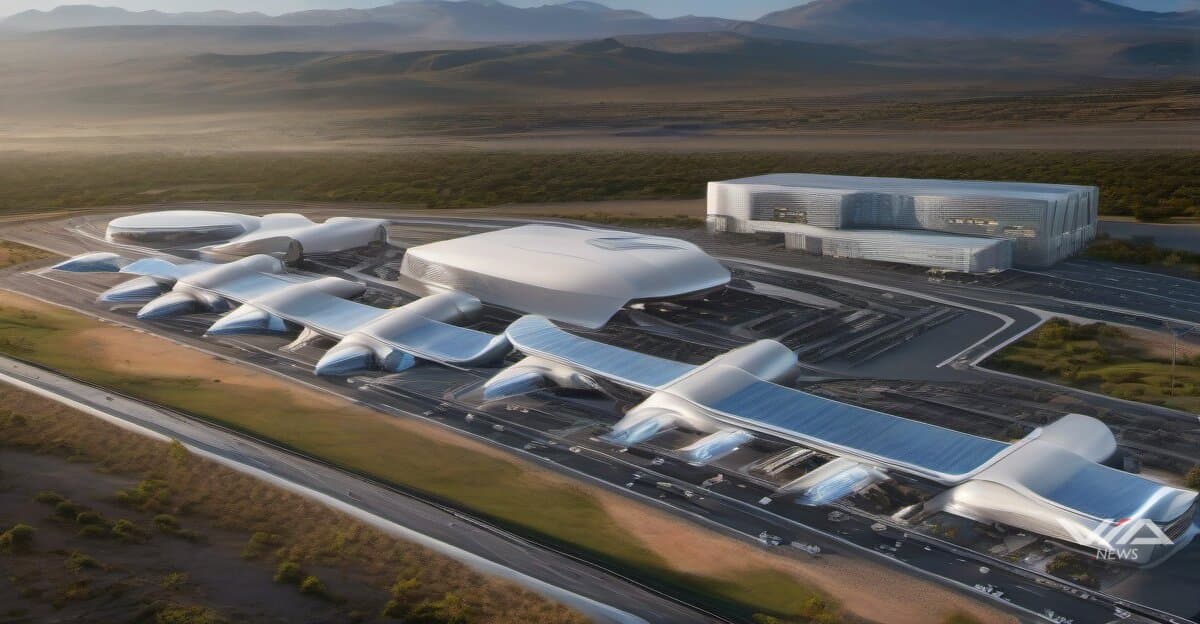
Image generated by AI for illustrative purposes. Not actual footage or photography from the reported events.

America's four largest AI companies are committing a combined ~billions in capital expenditure — and their custom silicon programs, manufactured primarily across Asia's semiconductor supply chain, are converging on launch simultaneously.1

Multiple Broadcom clients developing custom AI accelerators are nearing production at roughly the same time.1 Hyperscalers plan infrastructure years ahead. Coordinated launch windows reflect a shared view that the next wave of AI workloads will demand dedicated silicon at scale — and that TSMC, ASML, and Asian packaging suppliers must be locked in early.

Custom chips give hyperscalers a structural advantage over merchant silicon. Google's TPUs, Meta's MTIA, and similar programs let companies optimize for specific training and inference tasks rather than buying general-purpose GPUs at a premium. Broadcom has become the dominant Western partner for this approach, supplying ASIC design and packaging expertise that hyperscalers rarely build in-house.

The billions figure spans data center construction, power infrastructure, networking, and semiconductor procurement.1 Dense AI clusters require liquid cooling and power delivery that standard facilities cannot support — a windfall for industrial suppliers from Germany to Japan to the United States.

Networking is the critical bottleneck. As custom accelerators multiply across hyperscaler fleets, the interconnect fabric becomes a constraint. High-bandwidth networking suppliers are positioned alongside chip designers for a multi-quarter demand surge.1

For Broadcom (AVGO), simultaneous client launches concentrate near-term revenue from custom ASIC tape-outs and networking ASICs. Nvidia (NVDA) benefits separately: merchant GPU demand from third-party cloud customers and enterprise deployments remains strong globally, including in Asia and Europe. The two dynamics run in parallel.

Upward earnings revisions are expected across chip designers, power management suppliers, and cooling vendors over the next two to four quarters.1

At billions committed publicly across four companies, a cyclical pullback becomes politically difficult — hyperscalers have signaled these budgets to investors, creating accountability that makes mid-cycle cuts costly. For global supply chain partners from Seoul to Dresden, that floor matters.

In this story · Knowledge Files

About this analysis

This is a Via News analysis. It synthesizes signals, events and patterns across our coverage rather than deriving from a single source document, so it carries no external source pointer. Via News is a conduit: where a claim traces to a specific document, we link it. How we source

LM Salvado
LM Salvado

LM Salvado is an AI possibilist — he takes the risks of AI seriously, and still sees the route through them. Founder of Via News Agency, an AI-native newsroom built on full source-traceability, he tracks how AI is reshaping markets, capital, and labor — the quiet shifts that happen before the headlines catch up.

What we know · the intelligence behind this page
Live from the substrate
What we're seeing
Vertical AI Agents Attract a Funding Wave Across Fintech-Adjacent Industries
A cluster of AI-native startups applying autonomous agents to narrow, operational problems — hotel front-desk staffing (Dextr AI), identity/fraud risk for financial institutions (Baselayer), insurance distribution (Napo, Connie Health, MGT Insurance) — closed seed-to-Series A rounds within days of each other in September 2026, with CB Insights running a coordinated CEO interview series to spotlight them. The pattern points to agentic AI maturing from generic chat tools into vertical, revenue-generating products, with identity verification for AI agents themselves (Baselayer) emerging as a new fintech infrastructure category responding directly to AI-driven fraud risk.
Our read on the data ›
Signals we're tracking
Satellite-Terrestrial Network Integration Acceleration
Increased investment and launches in hybrid satellite-cellular networks across telecom industry; competitive responses from other carriers; regulatory activity around satellite spectrum; expansion of emergency/rural connectivity use cases
Patterns we're watching ›
Where sources disagree
ING Group
Both facts record the same metric (shares_outstanding) for ING Group at the identical observation date (2025-12-31). FACT A states 2,902,437,688 shares; FACT B states 2,902 million shares (2,902,000,000). The difference is 437,688 shares (~0.015%). This is a genuine value conflict, though the discrepancy appears to result from FACT B rounding to the nearest million while FACT A provides the precise count.
We flag conflicts openly ›
Recently verified
✓ Checked against the original source
4,984
facts traced to their source — and we flag the ones that don't hold up.
101 entities tracked4,984 facts checked against source5,306 source documents archived
Query this data → isubstrate.com