
Sunday, September 27, 2026

DRAM Prices Set to Double in 2026, Squeezing AI Infrastructure Costs Worldwide

DRAM prices are forecast to rise 125% across 2026, with a 58–63% surge expected in Q2 alone. The shock will hit AI cloud providers globally as memory — not compute — becomes the binding constraint on infrastructure expansion. South Korean and US chipmakers stand to gain while AI startups face compressed runways.

LM Salvado
LM Salvado

May 12, 2026

DRAM Prices Set to Double in 2026, Squeezing AI Infrastructure Costs Worldwide
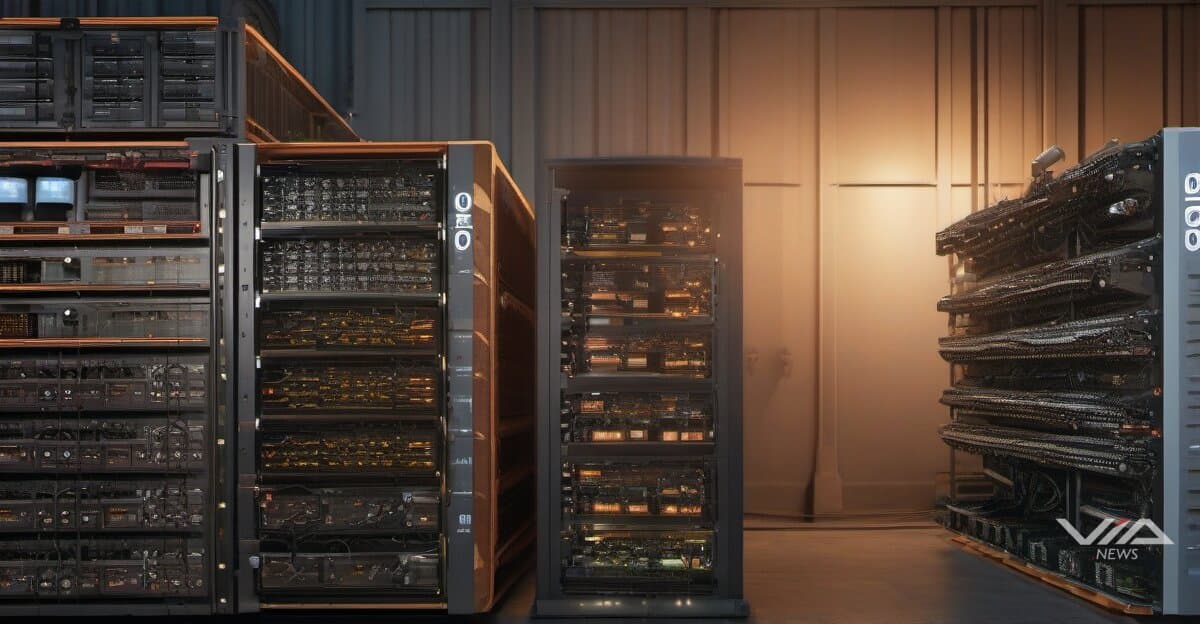
Image generated by AI for illustrative purposes. Not actual footage or photography from the reported events.

The driver is structural. AI model training and inference are hitting memory capacity limits worldwide. As models scale and inference deployments serve millions of requests daily, DRAM — not compute — is becoming the bottleneck on infrastructure expansion.

The impact is unevenly distributed across the global AI economy. Cloud providers in the US, Europe, and Asia Pacific face sharply higher server costs. Memory hardware represents a large share of GPU server bills, and a full-year increase of this scale means materially higher infrastructure capex in H2 2026.1 AI startups burning capital on inference workloads face compressed runways. AI SaaS companies with heavy compute costs may miss earnings estimates as hardware expenses outpace revenue growth.1

The winners are concentrated in East Asia. South Korea's SK Hynix and US-listed Micron — the two dominant suppliers of high-bandwidth and standard DRAM for AI servers — are positioned to outperform as prices climb.1 Samsung, which trails in HBM supply, faces a more complex picture. The pricing surge reinforces South Korea's leverage in global AI supply chains.

This creates a strategic divergence. Companies that lock in long-term supply contracts — or vertically integrate memory procurement — gain a durable cost advantage. Those buying at spot prices through H2 2026 absorb the full surge. For hyperscalers in the US, EU, and China, procurement strategy is now a competitive variable.

The broader AI infrastructure buildout — data centers, power capacity, undersea cables — has dominated capital allocation globally. The DRAM signal narrows the next constraint: it is not bandwidth or energy, but specific memory components at scale.

For AI companies planning capacity through the rest of 2026, memory procurement is no longer a line item. It is a strategic decision that will determine which providers can scale inference profitably — and which cannot.

In this story · Knowledge Files

About this analysis

This is a Via News analysis. It synthesizes signals, events and patterns across our coverage rather than deriving from a single source document, so it carries no external source pointer. Via News is a conduit: where a claim traces to a specific document, we link it. How we source

LM Salvado
LM Salvado

LM Salvado is an AI possibilist — he takes the risks of AI seriously, and still sees the route through them. Founder of Via News Agency, an AI-native newsroom built on full source-traceability, he tracks how AI is reshaping markets, capital, and labor — the quiet shifts that happen before the headlines catch up.

What we know · the intelligence behind this page
Live from the substrate
What we're seeing
Vertical AI Agents Attract a Funding Wave Across Fintech-Adjacent Industries
A cluster of AI-native startups applying autonomous agents to narrow, operational problems — hotel front-desk staffing (Dextr AI), identity/fraud risk for financial institutions (Baselayer), insurance distribution (Napo, Connie Health, MGT Insurance) — closed seed-to-Series A rounds within days of each other in September 2026, with CB Insights running a coordinated CEO interview series to spotlight them. The pattern points to agentic AI maturing from generic chat tools into vertical, revenue-generating products, with identity verification for AI agents themselves (Baselayer) emerging as a new fintech infrastructure category responding directly to AI-driven fraud risk.
Our read on the data ›
Signals we're tracking
Satellite-Terrestrial Network Integration Acceleration
Increased investment and launches in hybrid satellite-cellular networks across telecom industry; competitive responses from other carriers; regulatory activity around satellite spectrum; expansion of emergency/rural connectivity use cases
Patterns we're watching ›
Where sources disagree
ING Group
Both facts record the same metric (shares_outstanding) for ING Group at the identical observation date (2025-12-31). FACT A states 2,902,437,688 shares; FACT B states 2,902 million shares (2,902,000,000). The difference is 437,688 shares (~0.015%). This is a genuine value conflict, though the discrepancy appears to result from FACT B rounding to the nearest million while FACT A provides the precise count.
We flag conflicts openly ›
Recently verified
✓ Checked against the original source
4,984
facts traced to their source — and we flag the ones that don't hold up.
101 entities tracked4,984 facts checked against source5,306 source documents archived
Query this data → isubstrate.com