
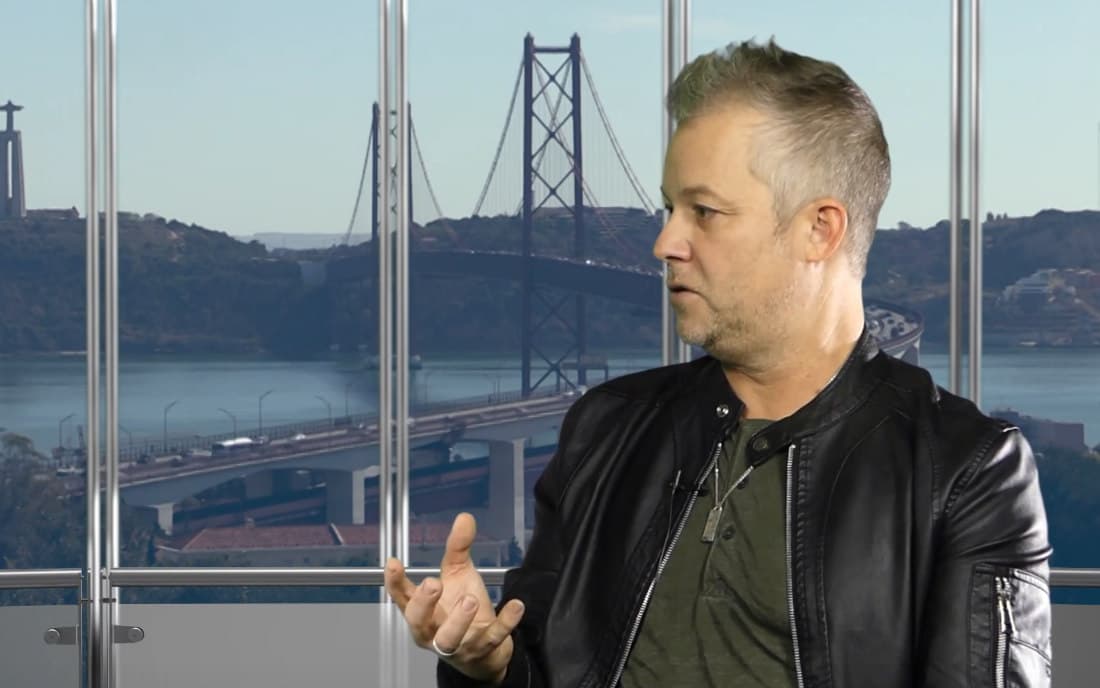
Investors can be a "big distraction" for startups that are in the early stages of their entrepreneurial journey, says the CEO of NomadX, who believes that founders should beware of investment baiting.
"We were thinking about actually raising some money at the end of [2018], but we realized we weren't quite ready for it yet. If you get the money too soon, you make a lot of bad decisions or you start scaling an unprofitable business too soon," David Nicol Williams, who is also chairman and co-founder at NomadX, told Via News in a recent exclusive interview.
NomadX is a platform focused on location-independent professionals or digital nomads. It offers apartments, private bedrooms, and co-living spaces for rent direct from hosts for as little as a month and at competitive prices, with a start in Portugal.
Dave describes investors as a "big distraction" for early-stage startups. "I think it's just better as an entrepreneur to focus on trying to deliver on the project and iterate to find that market fit. Market fit is the position where you can scale the business. Once you have achieved market fit, that's the time to start looking toward investors to help you scale the business."
Investment Baiting
He says entrepreneurs are highly likely to lose money if they go for investment too soon, which would only land them in the vicious circle of losing money and making more money from investors.
"Investors might like that" because their whole business model is based on such a scenario, Dave added.
"Generally most investors are gonna come in early… They're gonna put some money in. Anytime there's a future round for investment, they're the first to maintain their investment usually. And they want to do follow-on rounds because the idea is that they put in let's say a couple of hundred thousand dollars in the company. The next round they want to put a million in and then maybe they want to put ten million in, and they're trying to grow you to like a 100+ million dollar company because they might have a portfolio of ten companies. Six of those companies probably went out of business. Two are doing okay, and two are crushing it," he explained.
"So it's like if you're one of the companies that are doing really well, they're gonna keep pushing money toward you because you're supposed to fund all the bad decisions they made on the other businesses. So as much as you're getting VC funding, you're still only maybe one or two out of the portfolio that is going to have a successful exit, and the rest of the guys—although they got funded—might not get anything out of it at the end of the day and you're also not able to exit early," added NomadX's co-founder.
"Once you have achieved market fit, that's the time to start looking toward investors to help you scale the business."
David Nicol Williams, NomadX's CEO and chairman
"Bubble Burst"
Dave says a "bubble burst" is on the horizon with all the investments being made in new technologies and "if the bubble bursts, then you're left with all these investors at a high valuation."
"There's a lot of innovation going on in the industry. So a lot of these companies that got funded before—if they're not making their numbers—I'd expect them to kind of get wiped out. We haven't seen that yet in Portugal, but I think that's the next phase. Then you'll see a whole other group of entrepreneurs coming through. We've already seen this in the States and other places with the blockchain, the AI, voice recognition, and all these new technologies that are out there."
He also noted that he thinks digital currency and anything related to big data would shape the future of technology.