
Sunday, September 27, 2026

Venezuela Has Launched its Own Digital Currency: The Petro

Cecilia Demartini

February 22, 2018
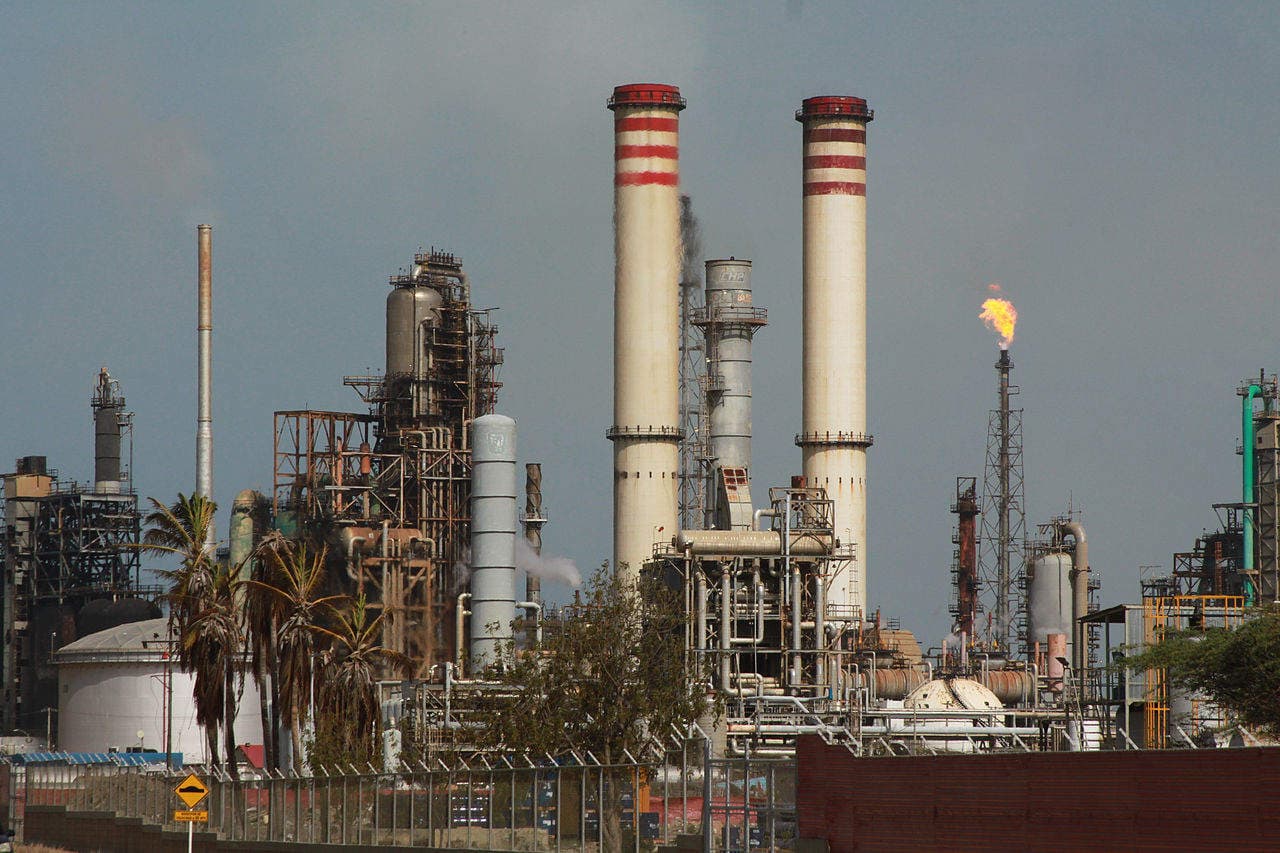
Amuay oil refinery in Venezuela
MONTEVIDEO, Uruguay (ViaNews) – On Tuesday, Venezuela announced its own Cryptocurrency, called The Petro. A total of 100 million Petro coins – with an estimated value of US$6 billion - are going to be issued according to Venezuela´s Government. A private pre-sale of 38,4 million Petros has been launched after the official announcement, aiming to attract potential investors, the pre-sale is due to end by March 19th. Additionally, 44 million Petros will be issued from March 20 as part of a first public offering. The state will keep the remaining 17,6 million. "We are officially and successfully starting the launch of our cryptocurrency, The Petro, and therefore its pre-sale process," announced Venezuela´s Vice President Tareck El Aissami on Tuesday. As stated by the vice president, The launch of The Petro is being made "according to the best standards in the global cryptocurrency community, in order to generate confidence and security in national and international markets." The Petro is a new payment mechanism launched in a country that is going through serious liquidity problems. Venezuela struggles with the shortage of medicine, goods, and food. The Petro may be an attempt to the country to start moving towards again, amid the announcement of early Presidential elections to next April 22 which has been condemning by the US along with some Latin American and European nations. The country has been declared in partial default due to its late debt payments while inflation remains the highest in the world for the last three years. The International Monetary Fund (IMF) has predicted an inflation increase in Venezuela over 2000 percent by the end of 2018 while projects a total 3.3 percent in the world for the same period. Back in August last year, President Trump announced a series of financial sanctions against Venezuela. Among the sanctions imposed on the nation by Washington are banning debt trades for bonds issued by the government and its state-owned oil company PDVSA.

An Oil-related Digital Currency

The cryptocurrency is supported by Venezuela's oil and mineral reserves. Almost 95 percent of Venezuela's income comes from oil exports. A sale price has been established. It represents the equivalent to one oil barrel´s value by mid-January, US$ 60, but President Maduro said it was “subject to change.” "We will be working on all things related to strategic alliances" – referring to the cryptocurrency market – stated Venezuela's President, Nicolás Maduro.

Digital Assets

Bitcoin and Ethereum lead the way in the cryptocurrency world. As a matter of fact, Bitcoin has become popular in the country while the Bolívar, Venezuela's national currency continues to lose value in a hyperinflation scenario. Furthermore, crypto-currencies are not regulated or issued by central banks, operating under a technology known as “Blockchain”, and having a decentralized element in its favor. As Ethereum Co-Founder Dr. Gavin Wood has stated on the difference between the two of them: “Bitcoin is first and foremost a currency; this is one particular application of a Blockchain. However, it is far from the only application. To take a past example of a similar situation, e-mail is one particular use of the internet, and for sure helped popularise it, but there are many others.” Ethereum is an open software platform which enables developers to build and deploy decentralized applications as well. On the contrary, The Petro is issued and regulated by a Government. Back in December 2017, Venezuelan President Nicolás Maduro has announced the Government plans to launch a national digital currency.
What we know · the intelligence behind this page
Live from the substrate
What we're seeing
Vertical AI Agents Attract a Funding Wave Across Fintech-Adjacent Industries
A cluster of AI-native startups applying autonomous agents to narrow, operational problems — hotel front-desk staffing (Dextr AI), identity/fraud risk for financial institutions (Baselayer), insurance distribution (Napo, Connie Health, MGT Insurance) — closed seed-to-Series A rounds within days of each other in September 2026, with CB Insights running a coordinated CEO interview series to spotlight them. The pattern points to agentic AI maturing from generic chat tools into vertical, revenue-generating products, with identity verification for AI agents themselves (Baselayer) emerging as a new fintech infrastructure category responding directly to AI-driven fraud risk.
Our read on the data ›
Signals we're tracking
Satellite-Terrestrial Network Integration Acceleration
Increased investment and launches in hybrid satellite-cellular networks across telecom industry; competitive responses from other carriers; regulatory activity around satellite spectrum; expansion of emergency/rural connectivity use cases
Patterns we're watching ›
Where sources disagree
ING Group
Both facts record the same metric (shares_outstanding) for ING Group at the identical observation date (2025-12-31). FACT A states 2,902,437,688 shares; FACT B states 2,902 million shares (2,902,000,000). The difference is 437,688 shares (~0.015%). This is a genuine value conflict, though the discrepancy appears to result from FACT B rounding to the nearest million while FACT A provides the precise count.
We flag conflicts openly ›
Recently verified
✓ Checked against the original source
4,984
facts traced to their source — and we flag the ones that don't hold up.
101 entities tracked4,984 facts checked against source5,306 source documents archived
Query this data → isubstrate.com