CARACAS, Venezuela (ViaNews) - Ending 2017, Venezuelan Government announced its intention to issue a new crypto asset called Petro (derived from petroleum) which would be backed by proven oil reserves.
President Nicolás Maduro was thus answering to President Donald Trump's decision to blockade the financial movements of the South American country which has the biggest proven oil reserves in the world. Trump imposed these sanctions because –allegedly- “Venezuelan government is not democratic”.
The Petro would be based on the blockchain opensource technology the same principle used by Bitcoin, Ethereum, Kodakcoin, and more than one thousand other new coins which have flooded the market since the invention of Bitcoin by Satoshi Nakamoto, (presumed to be a pseudonym) in 2008.
Cryptocurrencies provide the means to transfer money without the participation, control, and fees of the banking system, but they can be very volatile. In less than two months, the Bitcoin price has dropped from over $14,000 to less than $4,000; back again to over $12,000 and yesterday (February 23) to less than $10,000.
Generally, markets are afraid cryptocurrencies might be forming a giant financial bubble. Their value is driven by the market, as there is no intrinsic value to them.
Backed Up by Real Oil
On the contrary, the Petro is backed by real oil reserves, and each Petro corresponds to the price of one barrel of Venezuelan oil.
At 00:30 hours February 21, Venezuela officially started the presale of the Petro, offering 100.000.000 Petros at $60 each, the actual price of Venezuelan oil barrels. During the first 20 hours, there were confirmed buying initiatives for near $735.000 million, mostly from the Far East.
Venezuela hopes that the Petro will allow the Government to dodge the US and EU economic sanctions, which impede the payment of much-needed food, spare parts, and medicines.
The Petro will be accepted to buy crude oil, pay taxes, buy gasoline and airplane fuel. Exports of Venezuelan aluminum and iron ore will also have to be paid in Petros, at least partially, and all payments in Petros will get a 10% discount.
[caption id="attachment_3804" align="aligncenter" width="640"]
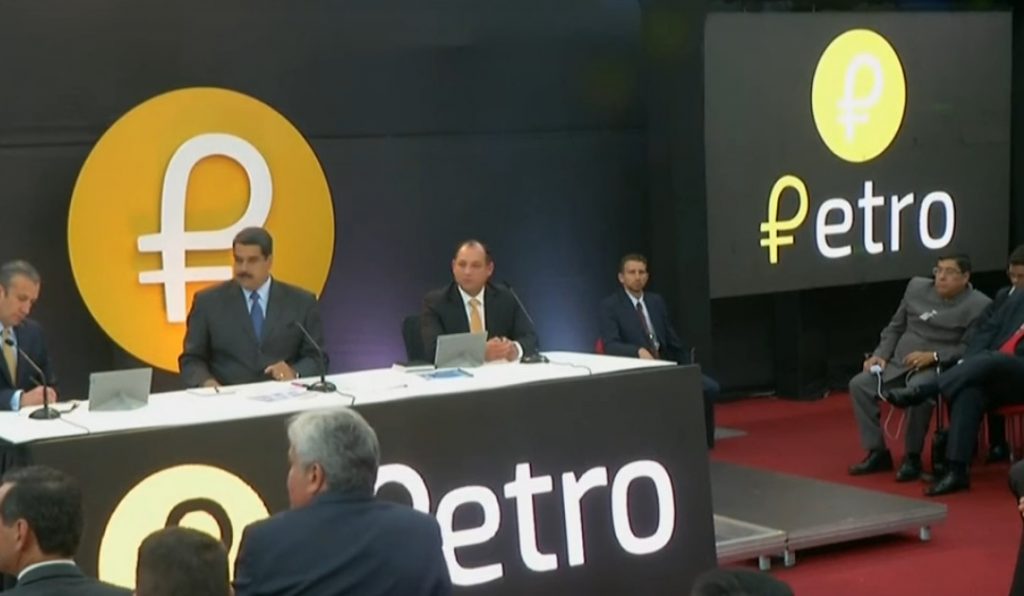
Maduro on Venezuela State TV about the Petro cryptocurrency.[/caption]
Venezuelans laymen are not clear yet as whether they will be able to buy Petros with their local currency the Bolivar, which is not freely exchanged into harder currencies, but somehow they expect there will be a way for them to use Petros, for saving and protecting themselves against the hyperinflation, allegedly fueled by US and EU economic sanctions.
After two days of presale, during which Government claims having received over $1 billion in firm buying proposals, the Iran and Turkish governments also announced they were preparing to issue their own blockchain-based currencies.
The Turkish Industry Secretary announced on February 23, the new currency will be called Turkcoin and Iran´s Technology Secretary tweeted that the Iranian “Post Bank” will be in charge of issuing a new “Iranian cloud-based” currency.
Earlier this month of February, President Maduro and OPEC Secretary General, Mohammad Sanusi Barkindo, met in Caracas and discussed the possibility of using the Petro for all Opec and non-Opec oil transactions.
The present emission of 100 million Petros, which will be backed up by one oil barrel each (worth near $60 as of today) sums 60 billion dollars.
Venezuela total external debt is $ 97.3 billion, which amounts to only 0.52 % of its total proven oil and gold reserves.
Each Petro can be divided into ten million parts. The white paper and instructions on how to buy Petros can be found at //www.elpetro.gob.ve/Whitepaper_Petro_en.pdf
The initial presale accounts for 38.4% of the total emission. 44% will be offered in public sale and 17.6% will be kept in possession of Venezuela’s Government, for further development of blockchain technology and cryptomining infrastructure.
[caption id="attachment_3802" align="aligncenter" width="1000"]
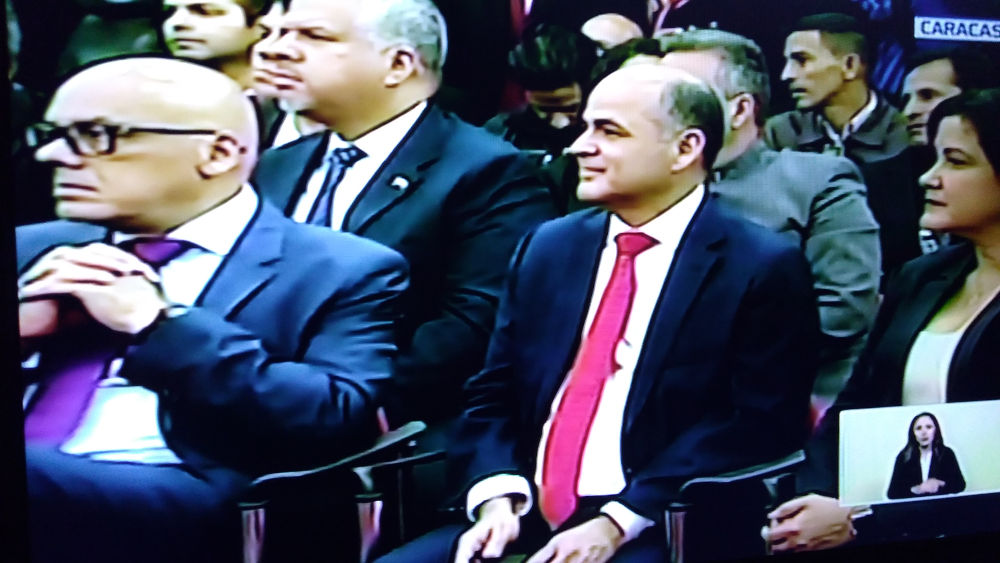
Venezuela state TV about Petro Cryptocurrency. From noon clockwise: Dr. Victcor Cano, EcoMinery Minister, General Manuel Quevedo Oil Minister and Dr. Jorge Rodríguez Communications Vice President.[/caption]
The Petro is backed by oil reserves of Field Number 1 of the Hugo Chavez sector of the Orinoco Oil Belt. This emission is premined. There has been -not yet official- information that new emissions of gold and diamond-backed emissions will soon be issued. As mentioned by Dr. Victor Cano, head of the Ministry of Popular Power for Ecological Mining, during the television broadcasting of the Petro launching.

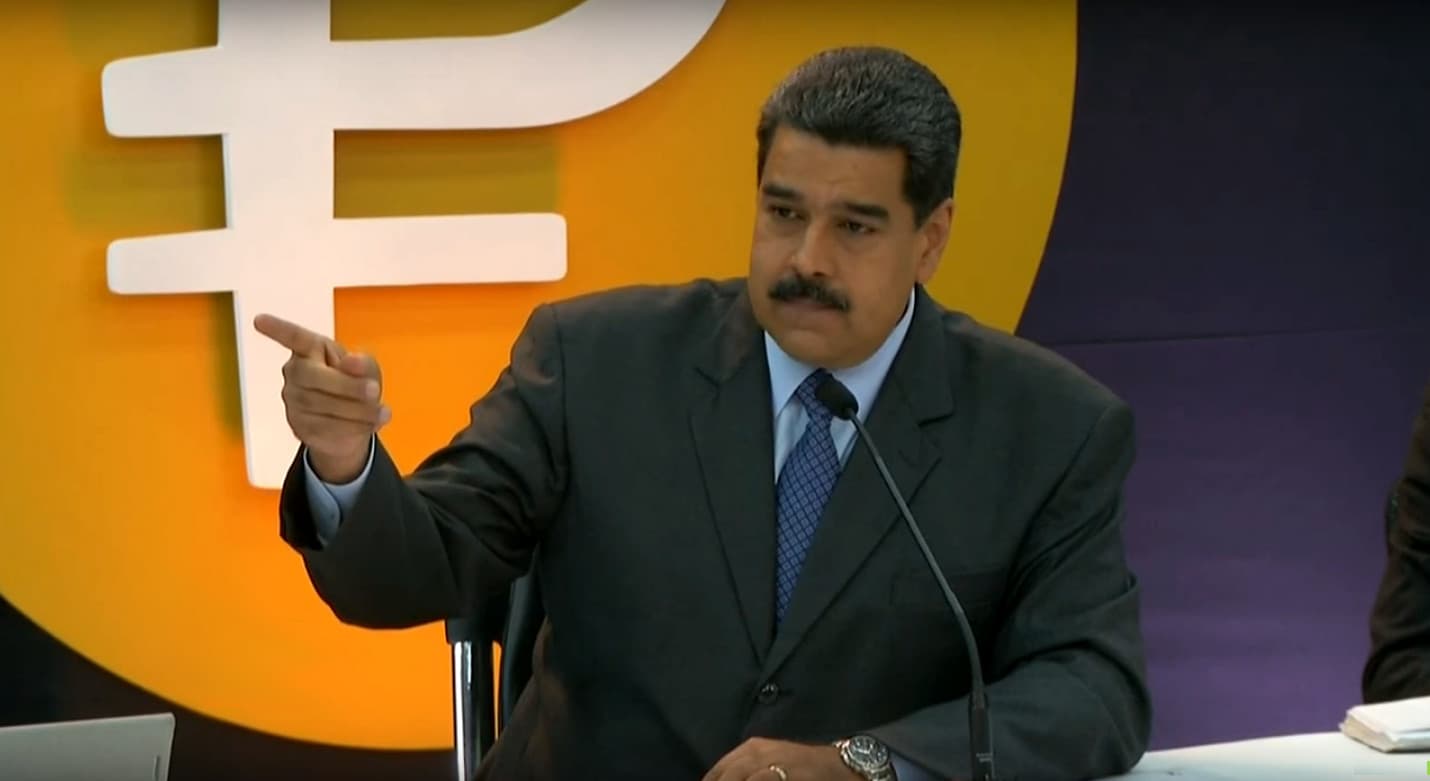
 Maduro on Venezuela State TV about the Petro cryptocurrency.[/caption]
Venezuelans laymen are not clear yet as whether they will be able to buy Petros with their local currency the Bolivar, which is not freely exchanged into harder currencies, but somehow they expect there will be a way for them to use Petros, for saving and protecting themselves against the hyperinflation, allegedly fueled by US and EU economic sanctions.
After two days of presale, during which Government claims having received over $1 billion in firm buying proposals, the Iran and Turkish governments also announced they were preparing to issue their own blockchain-based currencies.
The Turkish Industry Secretary announced on February 23, the new currency will be called Turkcoin and Iran´s Technology Secretary tweeted that the Iranian “Post Bank” will be in charge of issuing a new “Iranian cloud-based” currency.
Earlier this month of February, President Maduro and OPEC Secretary General, Mohammad Sanusi Barkindo, met in Caracas and discussed the possibility of using the Petro for all Opec and non-Opec oil transactions.
The present emission of 100 million Petros, which will be backed up by one oil barrel each (worth near $60 as of today) sums 60 billion dollars.
Venezuela total external debt is $ 97.3 billion, which amounts to only 0.52 % of its total proven oil and gold reserves.
Each Petro can be divided into ten million parts. The white paper and instructions on how to buy Petros can be found at //www.elpetro.gob.ve/Whitepaper_Petro_en.pdf
The initial presale accounts for 38.4% of the total emission. 44% will be offered in public sale and 17.6% will be kept in possession of Venezuela’s Government, for further development of blockchain technology and cryptomining infrastructure.
[caption id="attachment_3802" align="aligncenter" width="1000"]
Maduro on Venezuela State TV about the Petro cryptocurrency.[/caption]
Venezuelans laymen are not clear yet as whether they will be able to buy Petros with their local currency the Bolivar, which is not freely exchanged into harder currencies, but somehow they expect there will be a way for them to use Petros, for saving and protecting themselves against the hyperinflation, allegedly fueled by US and EU economic sanctions.
After two days of presale, during which Government claims having received over $1 billion in firm buying proposals, the Iran and Turkish governments also announced they were preparing to issue their own blockchain-based currencies.
The Turkish Industry Secretary announced on February 23, the new currency will be called Turkcoin and Iran´s Technology Secretary tweeted that the Iranian “Post Bank” will be in charge of issuing a new “Iranian cloud-based” currency.
Earlier this month of February, President Maduro and OPEC Secretary General, Mohammad Sanusi Barkindo, met in Caracas and discussed the possibility of using the Petro for all Opec and non-Opec oil transactions.
The present emission of 100 million Petros, which will be backed up by one oil barrel each (worth near $60 as of today) sums 60 billion dollars.
Venezuela total external debt is $ 97.3 billion, which amounts to only 0.52 % of its total proven oil and gold reserves.
Each Petro can be divided into ten million parts. The white paper and instructions on how to buy Petros can be found at //www.elpetro.gob.ve/Whitepaper_Petro_en.pdf
The initial presale accounts for 38.4% of the total emission. 44% will be offered in public sale and 17.6% will be kept in possession of Venezuela’s Government, for further development of blockchain technology and cryptomining infrastructure.
[caption id="attachment_3802" align="aligncenter" width="1000"] Venezuela state TV about Petro Cryptocurrency. From noon clockwise: Dr. Victcor Cano, EcoMinery Minister, General Manuel Quevedo Oil Minister and Dr. Jorge Rodríguez Communications Vice President.[/caption]
The Petro is backed by oil reserves of Field Number 1 of the Hugo Chavez sector of the Orinoco Oil Belt. This emission is premined. There has been -not yet official- information that new emissions of gold and diamond-backed emissions will soon be issued. As mentioned by Dr. Victor Cano, head of the Ministry of Popular Power for Ecological Mining, during the television broadcasting of the Petro launching.
Venezuela state TV about Petro Cryptocurrency. From noon clockwise: Dr. Victcor Cano, EcoMinery Minister, General Manuel Quevedo Oil Minister and Dr. Jorge Rodríguez Communications Vice President.[/caption]
The Petro is backed by oil reserves of Field Number 1 of the Hugo Chavez sector of the Orinoco Oil Belt. This emission is premined. There has been -not yet official- information that new emissions of gold and diamond-backed emissions will soon be issued. As mentioned by Dr. Victor Cano, head of the Ministry of Popular Power for Ecological Mining, during the television broadcasting of the Petro launching.