
On current Legitimacy and Transparency of Venezuelan National Election Council
Attilio Lafontant Di Niscia
December 1, 2017
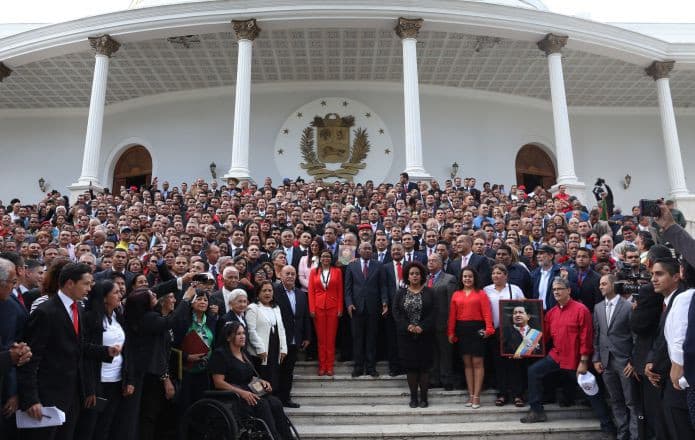
CARACAS, Venezuela (ViaNews) - The National Electoral Council (CNE), a branch of the Venezuelan government to oversee and guarantee the transparency of elections and referendums is on international news, allegedly for not doing its job.
Apparently, there is a growing deep politicization of public elections in Venezuela over the recent years. Remarkably, since 2016, the electoral power officials faced pressure to hold the referendum called by the "Table of Democratic Unity", a catch-all electoral coalition of Venezuelan opposition political parties.
The petition to remove President Nicolás Maduro from office by democratic ways was held back, allegedly for political reasons, demonstrating that the national electoral organ lacked transparency and autonomy. Moreover, it might have shown that the electoral list top decisions makers are under the influence of the presidential office and key actors of the United Socialist Party of Venezuela (PSUV)1.
Historically, it seems the government has been avoiding free elections in the country, maybe fearing they wouldn't win in a transparent electoral process. The last CNE presidencies have fervently shown they are part of the PSUV, which isn't a sign of healthy separation between public powers.
President Maduro assured that the creation of the National Constituent Assembly (ANC), a temporary parliament with a mandate to draft or reform the Constitution, would guarantee, as if by magic, peace, justice, and unity among Venezuelans in the midst of social and economic chaos2.
At the end of July (2017), votes were held so the government could begin the process of drafting a new constitution by staging the ANC for the next two years. The election result showed that more than 8 million voters supported such a government-led motion that was from the outset led by the government conservative leadership.
A relevant case of the ANC election was the "Smartmatic" voting machines. In declarations to the New York Times, a "Smartmatic" company representative stated that the "figures released by the electoral process were manipulated"
The use of the CNE for partisan purposes and the lack of transparency in the entire electoral process further damaged the political image of the government. Many Venezuelans (not to say the majority) rejected the result, calling it impossible3.
Although we will never know what the exact election results were, it's not surprising that for the municipal elections to be held on December 10, the government might use the same practices to remain in power.
Despite the efforts of Venezuelans and the international community towards transparency, it seems the electoral system keeps winning at convincing the population that Venezuela is indeed a democracy.