Sunday, September 27, 2026

Social Media is Transforming the Way Nigerians do Business

Sampson Uhuegbu

December 6, 2018

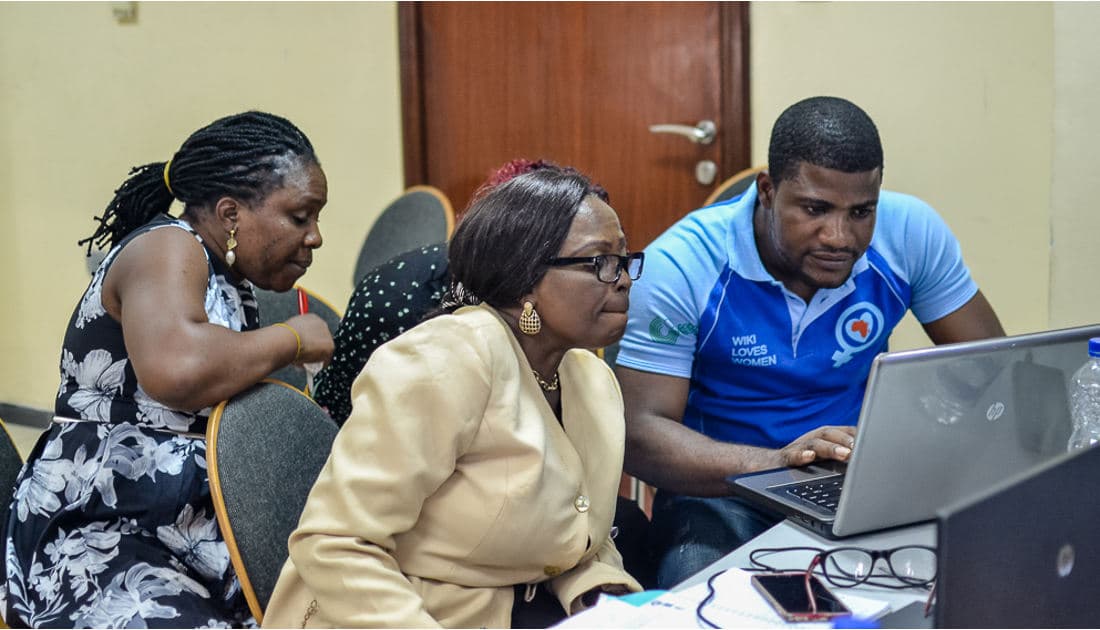
WIki Loves Women Event Women In Social Services- Promoting SDG in Nigeria. Photo by Kaizenify.
LAGOS, Nigeria (ViaNews) - Nigerians have gone full-on in what using social networks for business is about. Most businesses, entrepreneurs, and salesperson in the country are now using Facebook, WhatsApp, Twitter, Google, and YouTube to help create brand awareness, improve sales, and market their goods and services.

17 years of GSM technology in Nigeria

The GSM (Global Systems for Mobile communication) technology is in Nigeria for the last 17 years. This technology was introduced on August 6, 2001, the third year in office of the former president of the Federal Republic of Nigeria, Chief Olusegun Obasanjo. Back then, only the upper and the middle-class Nigerians had mobile phones while the lower class simply could not afford it. Today, things are very different, most Nigerians use mobile phones and high-speed communications is common.

Mobile Apps

Mobile applications have been widely used by Nigerians. According to the Google Play Store rank, in Nigeria, the most downloaded app is WhatsApp, followed by Youtube, and Messenger.

Nigeria as Africa's most important Technology Hub

Nigeria is an important African hub for people doing business in the region. Microsoft, Google, Facebook, Oracle, IBM, and Ericsson are all fully registered and running in Nigeria. Facebook has, according to the Guardian, opened the NG_Hub, the first African technology hub in Nigeria in Lagos. The hub wishes, according to the Guardian, to "further deepen advance technology, including Artificial Intelligence, Augmented Reality, Machine Learning, Internet of Things, among others in the country." According to the 2018 report released by GSMA, Nigeria is the second largest tech hub in Africa with 55 active tech hubs, South Africa comes first with 59 active tech hubs in the country.

What we know · the intelligence behind this page
Live from the substrate
What we're seeing
Vertical AI Agents Attract a Funding Wave Across Fintech-Adjacent Industries
A cluster of AI-native startups applying autonomous agents to narrow, operational problems — hotel front-desk staffing (Dextr AI), identity/fraud risk for financial institutions (Baselayer), insurance distribution (Napo, Connie Health, MGT Insurance) — closed seed-to-Series A rounds within days of each other in September 2026, with CB Insights running a coordinated CEO interview series to spotlight them. The pattern points to agentic AI maturing from generic chat tools into vertical, revenue-generating products, with identity verification for AI agents themselves (Baselayer) emerging as a new fintech infrastructure category responding directly to AI-driven fraud risk.
Our read on the data ›
Signals we're tracking
Satellite-Terrestrial Network Integration Acceleration
Increased investment and launches in hybrid satellite-cellular networks across telecom industry; competitive responses from other carriers; regulatory activity around satellite spectrum; expansion of emergency/rural connectivity use cases
Patterns we're watching ›
Where sources disagree
ING Group
Both facts record the same metric (shares_outstanding) for ING Group at the identical observation date (2025-12-31). FACT A states 2,902,437,688 shares; FACT B states 2,902 million shares (2,902,000,000). The difference is 437,688 shares (~0.015%). This is a genuine value conflict, though the discrepancy appears to result from FACT B rounding to the nearest million while FACT A provides the precise count.
We flag conflicts openly ›
Recently verified
✓ Checked against the original source
4,984
facts traced to their source — and we flag the ones that don't hold up.
101 entities tracked4,984 facts checked against source5,306 source documents archived
Query this data → isubstrate.com