
Sunday, September 27, 2026

Semiconductor Firm Cuts Chip Design Time 71% Using NVIDIA GPUs, Reshaping Global Competition

Astera Labs reduced chip verification from hours to minutes using NVIDIA B200 GPUs on AWS, achieving 3.5X speedup in design simulations. The breakthrough highlights widening gaps between semiconductor firms with GPU-accelerated workflows and those relying on traditional CPU-based tools. Access to leading-edge compute infrastructure increasingly determines competitive position in global chip development.

LM Salvado
LM Salvado

March 21, 2026

Semiconductor Firm Cuts Chip Design Time 71% Using NVIDIA GPUs, Reshaping Global Competition
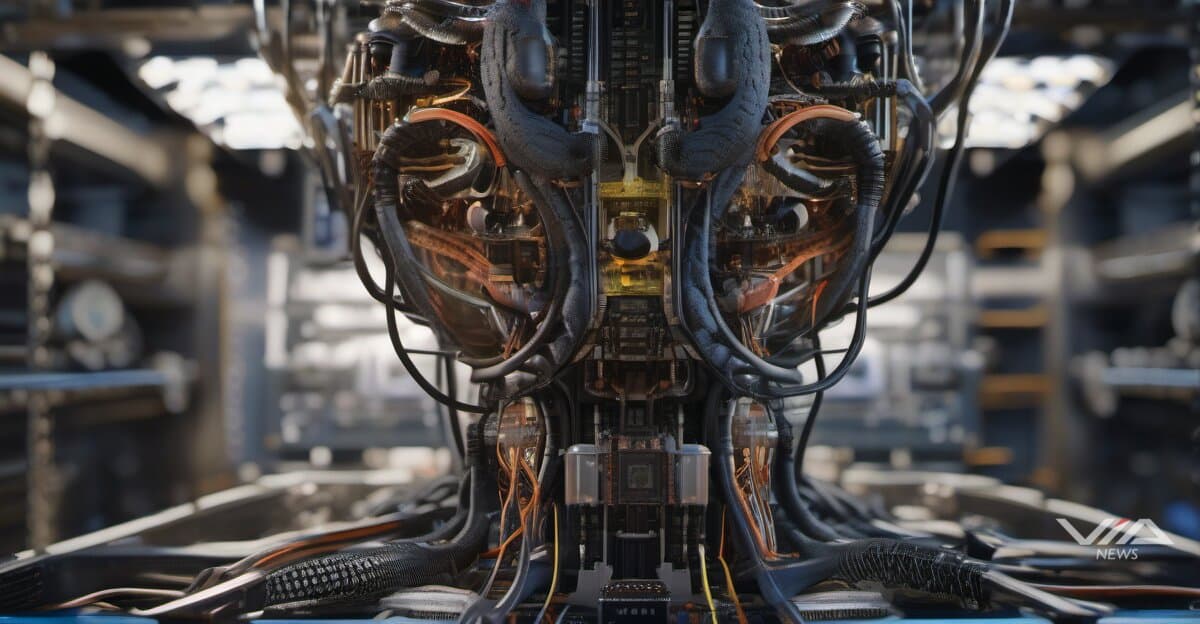
Image generated by AI for illustrative purposes. Not actual footage or photography from the reported events.

Astera Labs achieved 3.5X speedup for chip simulation running Synopsys PrimeSim on NVIDIA B200 GPU-accelerated AWS instances, reducing verification cycles from hours to minutes with 3.5X speedup.

The acceleration applies to electronic design automation workflows for AI connectivity chips. Jitendra Mohan from Astera Labs said B200 GPUs "significantly reduced simulation times and enhanced design capabilities" for advanced connectivity products.

The performance gap creates structural advantages in global semiconductor competition. Firms with GPU-accelerated simulation iterate designs faster, compress time-to-market, and respond quicker to architectural changes. The difference between same-day iterations versus overnight cycles compounds across development programs.

Traditional CPU-based simulation bottlenecks chip design as transistor counts scale faster than single-thread performance. GPU parallelism handles circuit simulation workloads analyzing thousands of nodes simultaneously—critical as AI chip complexity intensifies worldwide.

The technology stack combines NVIDIA's B200 architecture, Synopsys software optimized for GPU compute, and AWS cloud infrastructure. This removes capital barriers to advanced simulation capacity, enabling smaller firms and design teams in emerging markets to access tools previously limited to major corporations.

Astera Labs designs PCIe and CXL connectivity chips for AI data centers globally. Faster simulation directly impacts ability to ship products matching rapid evolution of AI accelerators from NVIDIA, AMD, Google, and Chinese manufacturers like Huawei.

Competitive implications extend across borders. Semiconductor companies without GPU-accelerated workflows—whether in the US, Europe, Taiwan, or elsewhere—face disadvantage as development velocity becomes critical differentiator. The technology creates feedback loop where AI hardware accelerates AI hardware development.

Mohan emphasized collaboration between Astera Labs, Synopsys, NVIDIA, and AWS is "transforming ability to design advanced connectivity solutions." The statement signals GPU acceleration shifting from optional to required infrastructure in competitive chip development worldwide.

In this story · Knowledge Files

About this analysis

This is a Via News analysis. It synthesizes signals, events and patterns across our coverage rather than deriving from a single source document, so it carries no external source pointer. Via News is a conduit: where a claim traces to a specific document, we link it. How we source

LM Salvado
LM Salvado

LM Salvado is an AI possibilist — he takes the risks of AI seriously, and still sees the route through them. Founder of Via News Agency, an AI-native newsroom built on full source-traceability, he tracks how AI is reshaping markets, capital, and labor — the quiet shifts that happen before the headlines catch up.

What we know · the intelligence behind this page
Live from the substrate
What we're seeing
Vertical AI Agents Attract a Funding Wave Across Fintech-Adjacent Industries
A cluster of AI-native startups applying autonomous agents to narrow, operational problems — hotel front-desk staffing (Dextr AI), identity/fraud risk for financial institutions (Baselayer), insurance distribution (Napo, Connie Health, MGT Insurance) — closed seed-to-Series A rounds within days of each other in September 2026, with CB Insights running a coordinated CEO interview series to spotlight them. The pattern points to agentic AI maturing from generic chat tools into vertical, revenue-generating products, with identity verification for AI agents themselves (Baselayer) emerging as a new fintech infrastructure category responding directly to AI-driven fraud risk.
Our read on the data ›
Signals we're tracking
Satellite-Terrestrial Network Integration Acceleration
Increased investment and launches in hybrid satellite-cellular networks across telecom industry; competitive responses from other carriers; regulatory activity around satellite spectrum; expansion of emergency/rural connectivity use cases
Patterns we're watching ›
Where sources disagree
ING Group
Both facts record the same metric (shares_outstanding) for ING Group at the identical observation date (2025-12-31). FACT A states 2,902,437,688 shares; FACT B states 2,902 million shares (2,902,000,000). The difference is 437,688 shares (~0.015%). This is a genuine value conflict, though the discrepancy appears to result from FACT B rounding to the nearest million while FACT A provides the precise count.
We flag conflicts openly ›
Recently verified
✓ Checked against the original source
4,984
facts traced to their source — and we flag the ones that don't hold up.
101 entities tracked4,984 facts checked against source5,306 source documents archived
Query this data → isubstrate.com