
Sunday, September 27, 2026

European solar gigafactory Holosolis faces €220M+ funding gap as global PV manufacturing costs climb

Holosolis is building a solar photovoltaic gigafactory in Europe requiring over €220 million, with final costs undetermined as the project advances. The venture faces elevated funding risk in a sector where gigafactory budgets routinely overrun 15-30% globally, threatening project completion if follow-on capital rounds stall.

ViaNews Editorial Team

February 20, 2026

European solar gigafactory Holosolis faces €220M+ funding gap as global PV manufacturing costs climb
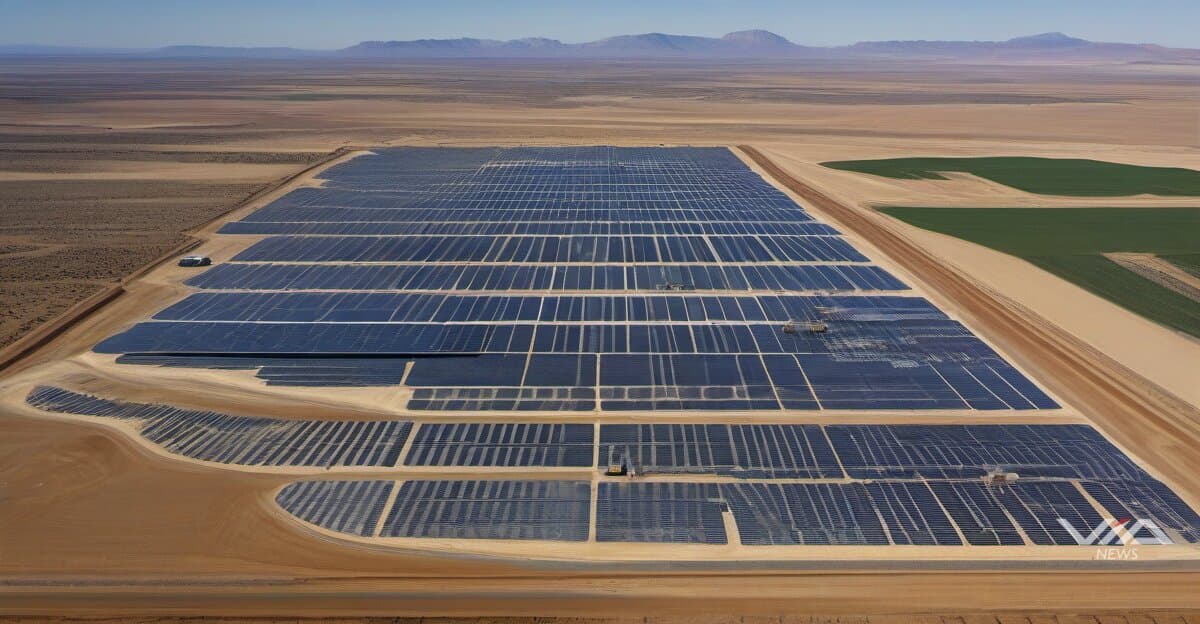
Image generated by AI for illustrative purposes. Not actual footage or photography from the reported events.

Holosolis is developing a European solar photovoltaic gigafactory requiring more than €220 million in capital, though the open-ended estimate signals undetermined final costs. The company confronts funding gap risk common across global cleantech infrastructure projects, where construction overruns can halt partially built facilities.

Solar gigafactories worldwide routinely exceed early budgets by 15-30% due to scope changes, equipment inflation, and supply chain delays. Asian manufacturers—dominant in global PV production—have navigated these pressures with state-backed finance and vertical integration. European entrants like Holosolis face tighter private capital markets and higher borrowing costs, compounding execution risk.

The project's viability depends on securing sequential funding tranches aligned with construction milestones. Gigafactories carry high fixed costs and generate no revenue until reaching nameplate capacity. Partial completion delivers no cash flow, making funding continuity from groundbreaking through commissioning critical. Mid-construction capital shortfalls have stranded multiple cleantech projects globally over the past decade.

EU policy support, including subsidies under the Net-Zero Industry Act, aims to reshore solar manufacturing from Asia. Yet institutional investors weigh policy stability, demand forecasts, and competition from lower-cost Chinese producers when committing growth-stage capital. Rising interest rates across developed markets have tightened credit conditions for capital-intensive industrial projects.

Holosolis has not disclosed a fixed construction timeline, lead investors, or capital structure details. The absence of a firm budget suggests early-stage engineering, typically preceding final investment decisions. Projects at this phase face the highest probability of cost revision and funding delays.

Developers globally mitigate funding gaps through syndicated debt, strategic offtake agreements with utilities, or anchor equity from industrial partners. Without disclosed partnerships, Holosolis depends on attracting institutional or government-backed capital in tranches that match build progress. The project's success hinges on closing the full capital stack before breaking ground or securing contingent facilities covering overruns.


Sources:
1 Yahoo Finance, "November 2025: The new priorities of European tech investing" (December 16, 2025)

What we know · the intelligence behind this page
Live from the substrate
What we're seeing
Vertical AI Agents Attract a Funding Wave Across Fintech-Adjacent Industries
A cluster of AI-native startups applying autonomous agents to narrow, operational problems — hotel front-desk staffing (Dextr AI), identity/fraud risk for financial institutions (Baselayer), insurance distribution (Napo, Connie Health, MGT Insurance) — closed seed-to-Series A rounds within days of each other in September 2026, with CB Insights running a coordinated CEO interview series to spotlight them. The pattern points to agentic AI maturing from generic chat tools into vertical, revenue-generating products, with identity verification for AI agents themselves (Baselayer) emerging as a new fintech infrastructure category responding directly to AI-driven fraud risk.
Our read on the data ›
Signals we're tracking
Satellite-Terrestrial Network Integration Acceleration
Increased investment and launches in hybrid satellite-cellular networks across telecom industry; competitive responses from other carriers; regulatory activity around satellite spectrum; expansion of emergency/rural connectivity use cases
Patterns we're watching ›
Where sources disagree
ING Group
Both facts record the same metric (shares_outstanding) for ING Group at the identical observation date (2025-12-31). FACT A states 2,902,437,688 shares; FACT B states 2,902 million shares (2,902,000,000). The difference is 437,688 shares (~0.015%). This is a genuine value conflict, though the discrepancy appears to result from FACT B rounding to the nearest million while FACT A provides the precise count.
We flag conflicts openly ›
Recently verified
✓ Checked against the original source
4,984
facts traced to their source — and we flag the ones that don't hold up.
101 entities tracked4,984 facts checked against source5,306 source documents archived
Query this data → isubstrate.com