
Sunday, September 27, 2026

Datavault AI Risks SEC Action Over Meme Coin Dividend as Crypto Regulation Fragments Globally

Datavault AI's board has set a distribution date for meme coin dividends despite potential SEC enforcement action for unregistered securities violations. The move highlights diverging global approaches to crypto regulation, with U.S. enforcement contrasting sharply with permissive frameworks in Asia and Europe. Board members face personal liability under securities laws that vary widely across jurisdictions.

ViaNews Editorial Team

February 21, 2026

Datavault AI Risks SEC Action Over Meme Coin Dividend as Crypto Regulation Fragments Globally
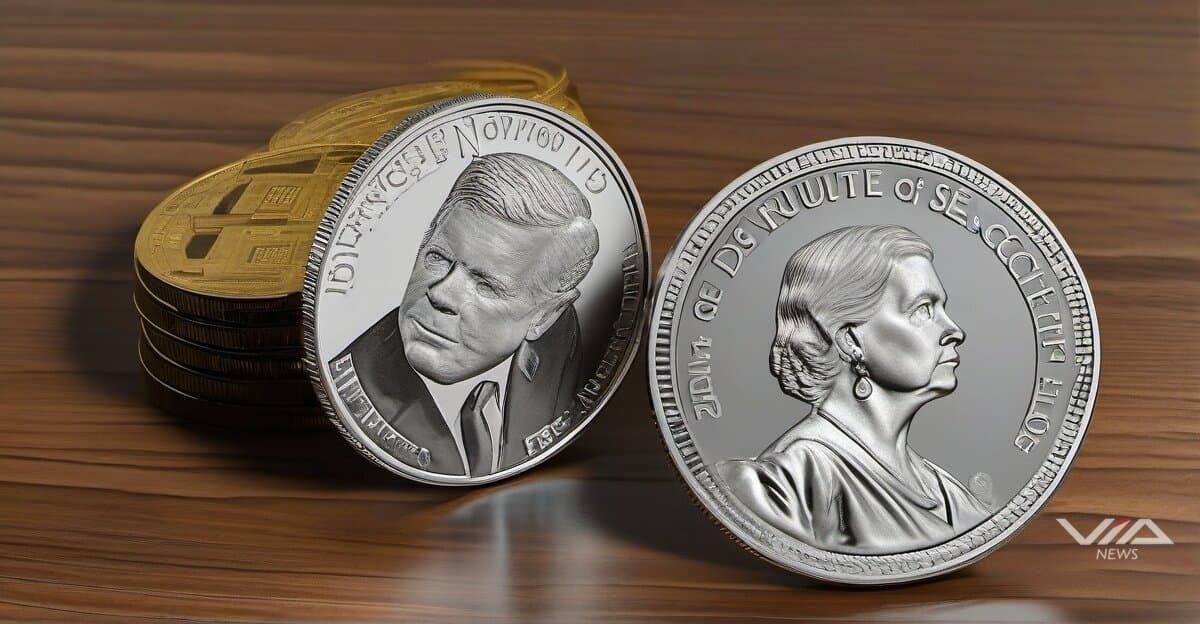
Image generated by AI for illustrative purposes. Not actual footage or photography from the reported events.

Datavault AI's board has approved a meme coin dividend distribution that may trigger SEC enforcement action, exposing directors to personal liability under U.S. securities law. The decision comes as global regulators take divergent approaches to crypto-based shareholder compensation.

The board retains discretion to alter the record date, change the payment date, or cancel the distribution entirely. This flexibility suggests awareness of regulatory risks in a jurisdiction where the SEC has pursued enforcement actions against crypto token distributions since 2017.

U.S. securities rules require registration for most offerings unless specific exemptions apply. Crypto dividends occupy legal gray area, with the SEC applying the Howey Test to determine whether distributions create investment contracts. Recent enforcement cases have resulted in penalties from cease-and-desist orders to multimillion-dollar fines.

The regulatory landscape differs sharply across borders. Singapore's MAS and Hong Kong's SFC have issued clearer frameworks for token distributions, while EU markets await full MiCA implementation in 2026. Japan requires crypto dividends to comply with Financial Instruments and Exchange Act provisions but provides more defined pathways than U.S. regulators.

Meme coins carry heightened risk due to speculative nature and lack of utility. The SEC scrutinizes whether token distributions create profit expectations from others' efforts, a standard that has ensnared multiple projects in enforcement actions.

Board members face individual liability in securities cases, extending beyond monetary penalties to potential trading bans and director disqualifications. This personal exposure differs from jurisdictions like Switzerland, where token distributions meeting certain criteria receive regulatory clarity through FINMA guidance.

The board's cancellation rights indicate legal counsel has flagged securities law risks. Companies facing similar uncertainty typically seek no-action letters from the SEC, though the agency has granted few such assurances for novel crypto distributions.

The case underscores compliance challenges for fintech companies implementing blockchain-based programs without established frameworks. As crypto regulation fragments globally, companies must navigate conflicting standards across jurisdictions where shareholders and token holders reside.

In this story · Knowledge Files

What we know · the intelligence behind this page
Live from the substrate
What we're seeing
Vertical AI Agents Attract a Funding Wave Across Fintech-Adjacent Industries
A cluster of AI-native startups applying autonomous agents to narrow, operational problems — hotel front-desk staffing (Dextr AI), identity/fraud risk for financial institutions (Baselayer), insurance distribution (Napo, Connie Health, MGT Insurance) — closed seed-to-Series A rounds within days of each other in September 2026, with CB Insights running a coordinated CEO interview series to spotlight them. The pattern points to agentic AI maturing from generic chat tools into vertical, revenue-generating products, with identity verification for AI agents themselves (Baselayer) emerging as a new fintech infrastructure category responding directly to AI-driven fraud risk.
Our read on the data ›
Signals we're tracking
Satellite-Terrestrial Network Integration Acceleration
Increased investment and launches in hybrid satellite-cellular networks across telecom industry; competitive responses from other carriers; regulatory activity around satellite spectrum; expansion of emergency/rural connectivity use cases
Patterns we're watching ›
Where sources disagree
ING Group
Both facts record the same metric (shares_outstanding) for ING Group at the identical observation date (2025-12-31). FACT A states 2,902,437,688 shares; FACT B states 2,902 million shares (2,902,000,000). The difference is 437,688 shares (~0.015%). This is a genuine value conflict, though the discrepancy appears to result from FACT B rounding to the nearest million while FACT A provides the precise count.
We flag conflicts openly ›
Recently verified
✓ Checked against the original source
4,984
facts traced to their source — and we flag the ones that don't hold up.
101 entities tracked4,984 facts checked against source5,306 source documents archived
Query this data → isubstrate.com