
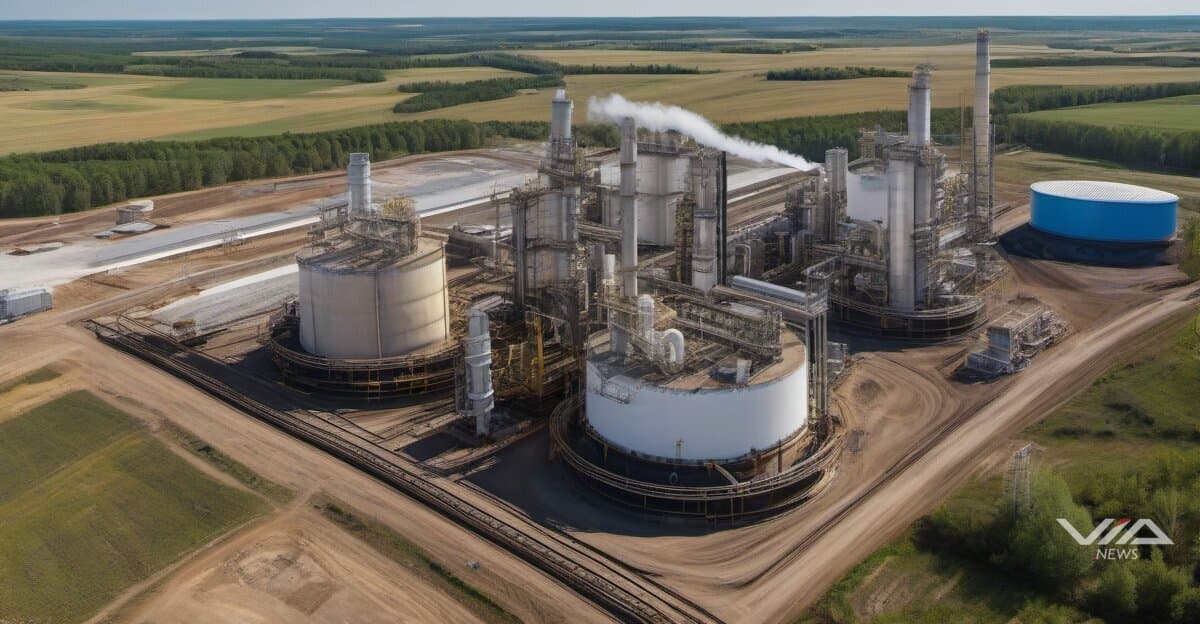
The global mining landscape is undergoing a fundamental reorganization as DPM Metals Inc. advances its Čoka Rakita gold project in Serbia toward first concentrate production in January 2029—a development that reflects broader shifts in how nations worldwide are reassessing their resource sovereignty and strategic mineral independence.
A feasibility study released in November 2025 outlined compelling economics for the Serbian operation, with an after-tax net present value of $782 million at $1,900 per ounce gold and a 36% internal rate of return. The project's all-in sustaining costs of $644 per ounce position it in the first quartile globally—comparable to low-cost producers in Nevada, Western Australia, and Ghana—a competitive advantage emerging as resource-rich nations from Indonesia to Chile implement increasingly assertive mineral policies.
The development requires initial capital investment of $448 million, with mine development accounting for $129 million and processing facilities requiring $63 million. DPM Metals President and Chief Executive Officer David Rae emphasized the project's robust returns across various gold price scenarios, noting that even at conservative $1,500 per ounce pricing, the operation delivers a 24.3% IRR with a 2.3-year payback period.
For Europe—a continent that produces less than 3% of global gold output while consuming substantially more—the Čoka Rakita project represents more than a commercial mining venture. It arrives as the European Union joins China, the United States, and India in pursuing greater self-sufficiency in strategic resources following pandemic-era supply disruptions and geopolitical tensions that have reshaped international commodity flows. The operation will generate life-of-mine cash flows exceeding $1.2 billion while creating employment in Serbia's historic mining corridor, where extraction activities date to Roman times.
Operating costs averaging $538 cash cost per ounce—comprising $203 for mining, $156 for processing, and $88 for general administration—demonstrate structural advantages that place the project among the world's lowest-cost gold producers, a critical factor as central banks from China to Poland have accelerated gold purchases, adding over 1,000 tonnes annually to reserves since 2022.
The European Union's Critical Raw Materials Act, which aims to source at least 10% of annual consumption domestically by 2030, mirrors similar initiatives in the United States (Inflation Reduction Act), Canada (Critical Minerals Strategy), and Australia (Critical Minerals Strategy). While gold itself isn't classified as critical, the project's development of mining infrastructure and technical expertise contributes to broader regional capacity building in extractive industries—a strategic consideration for a continent that imports 100% of its rare earth elements and relies heavily on external sources for copper, lithium, and cobalt.
Market implications extend beyond immediate project economics in an environment where gold has emerged as a hedge against currency volatility and geopolitical uncertainty. The feasibility study's sensitivity analysis reveals substantial value creation potential: at $2,500 per ounce—levels approached during recent periods of international tension—NPV increases to $1.317 billion with a 49.5% IRR and 1.4-year payback. This optionality provides investors with asymmetric upside exposure while the first-quartile cost structure offers protection in scenarios of sustained lower prices.
Serbia's positioning as a mining jurisdiction reflects a broader pattern of Eastern European nations—including Poland, Bulgaria, and North Macedonia—reassessing dormant mineral resources as geopolitical considerations increasingly influence investment decisions in extractive industries. The Čoka Rakita project benefits from established regulatory frameworks and existing infrastructure while employing conventional processing methods. The operation includes $52 million allocated for tailings and water treatment facilities, reflecting international environmental standards that have become prerequisites for project financing and social license to operate.
As production approaches, the Serbian project joins a new generation of gold mines entering development across non-traditional jurisdictions—from Finland's Arctic regions to Ecuador's Andean highlands—illustrating how resource geography continues to evolve in response to technological advances, changing economics, and shifting geopolitical priorities that are redrawing the global mining map.