
Sunday, September 27, 2026

Monetary Policy

13 articles

Warsh Takes Fed Chair, Triggering Global Rate Repricing Risk for Fintech and Growth Assets

Warsh Takes Fed Chair, Triggering Global Rate Repricing Risk for Fintech and Growth Assets

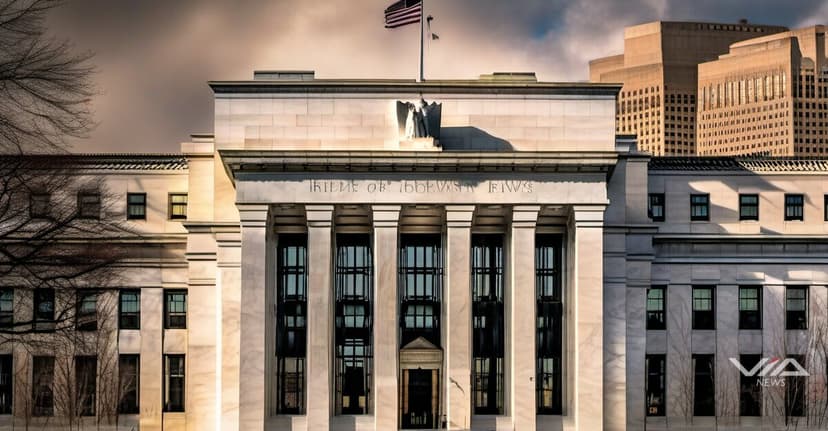
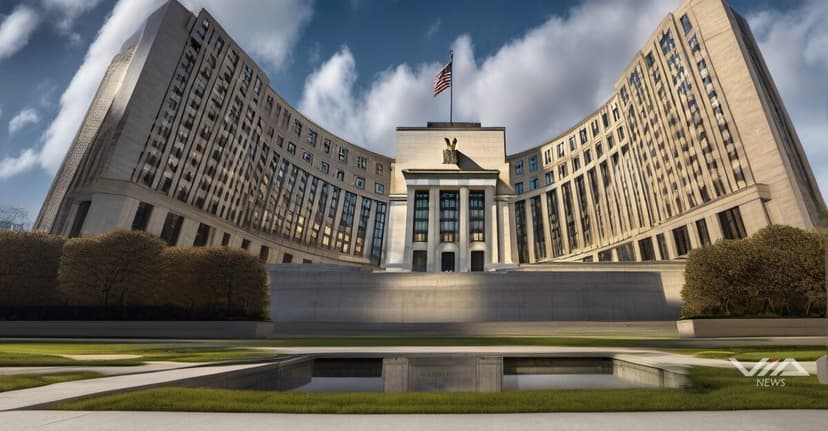
Kevin Warsh replaced Jerome Powell as U.S. Federal Reserve Chair in May 2026, introducing a structurally hawkish monetary posture with direct consequences for global asset pricing. Higher U.S. terminal rates threaten fintech and AI valuations from New York to Singapore, while emerging markets face amplified dollar-debt pressure. Bond market behavior and Fed funds futures will set the pace of the worldwide repricing.

LM Salvado•
Fed's 8-4 Rate Vote Sends Shockwaves Through Global Bond Markets as Iran War Keeps Inflation Hot

Fed's 8-4 Rate Vote Sends Shockwaves Through Global Bond Markets as Iran War Keeps Inflation Hot

The Federal Reserve held rates at 3.50–3.75% in a fractious 8-4 vote on May 22, with Governor Waller warning Iran War supply shocks may force further tightening. Treasury yields are nearing two-decade highs, triggering a worldwide bond selloff that is squeezing emerging market sovereigns and corporate borrowers from London to Singapore. Markets are already pricing in another hike.

LM Salvado•
Warsh Confirmed as Fed Chair; Markets Price 50% Hike as Global Debt Selloff Spreads

Warsh Confirmed as Fed Chair; Markets Price 50% Hike as Global Debt Selloff Spreads

Kevin Warsh has taken the Federal Reserve chair as CME FedWatch puts rate-hike probability at 50%, reversing the cut expectations that dominated Jerome Powell's final months. Treasury yields have surged across all maturities, triggering a global debt selloff that has forced G7 finance ministers to convene. The transition reshapes credit conditions worldwide, with dollar strength and tighter US policy rippling into sovereign bond markets from London to Tokyo.

LM Salvado•
Global Bond Selloff Accelerates as Fed Leadership Vacuum Drives Treasury Yields to Multi-Year Highs

Global Bond Selloff Accelerates as Fed Leadership Vacuum Drives Treasury Yields to Multi-Year Highs

Treasury yields hit multi-year highs after Jerome Powell's departure created a Fed leadership vacuum, collapsing rate-cut bets and repricing markets toward potential hikes. The tightening is synchronized globally — the ECB signaled a June hike, Japan is pressing for early tightening, and G7 finance chiefs are scrambling to address a worldwide debt selloff. Kevin Warsh inherits a fractured committee and a financial system rewiring strategy around higher-for-longer rates.

LM Salvado•
ECB Postpones Rate Decision as Oil Crashes 11% on Iran Strait Reopening

ECB Postpones Rate Decision as Oil Crashes 11% on Iran Strait Reopening

The European Central Bank delayed policy decisions until June after Iran's reopening of the Strait of Hormuz sent WTI crude down 11% on April 18, sparking global equity rallies. The postponement reflects uncertainty whether the energy shock will create lasting inflation pressures across European economies. Central banks worldwide are now monitoring whether the oil price collapse proves temporary or signals sustained relief from the Iran crisis.

LM Salvado•
ECB Considers Emergency April Rate Move as Oil Surge Tests Central Banks Globally

ECB Considers Emergency April Rate Move as Oil Surge Tests Central Banks Globally

The European Central Bank may adjust interest rates in April if energy prices remain elevated, ECB policymaker Madis Muller said, as Middle East tensions push oil up 3%. The move contrasts with Fed stability, where only 0.2% of traders expect rate cuts to 3.25-3.5% by end-2026. Europe's heavy energy import dependence makes it more vulnerable to supply shocks than the US.

LM Salvado•
Global Central Banks Reverse Course on Rates as Iran Conflict Drives Energy Prices

Global Central Banks Reverse Course on Rates as Iran Conflict Drives Energy Prices

The Federal Reserve and European Central Bank are signaling rate hikes through 2026, abandoning dovish stances from months ago as Iran conflict pushes energy prices higher. Market expectations have shifted dramatically, with 52% probability now priced for rate increases versus December's anticipation of two cuts in 2025.

LM Salvado•
Five Central Banks Hold Rates March 17-26 as 92,000 US Job Losses, 36% Oil Spike Create Global Policy Dilemma

Five Central Banks Hold Rates March 17-26 as 92,000 US Job Losses, 36% Oil Spike Create Global Policy Dilemma

Central banks across three continents face synchronized policy decisions March 17-26 amid conflicting signals: February's 92,000 US job losses versus a 36% oil price surge from Iran conflict. The Federal Reserve, European Central Bank, Banco de México, Bank of Russia, and Brazil's Central Bank are expected to hold restrictive rates despite labor weakness, prioritizing inflation control over growth support.

ViaNews Editorial Team•
Israel, Nigeria Central Banks Join Global Shift Toward Rate Cuts as ECB Watches Euro

Israel, Nigeria Central Banks Join Global Shift Toward Rate Cuts as ECB Watches Euro

Israel's central bank governor committed to cautious rate cuts despite political pressure, joining Nigeria, South Korea, and Thailand in a coordinated global easing trend. ECB's Kocher signaled openness to further cuts if euro appreciation dampens inflation, marking a sharp reversal from the 2022-2023 tightening cycle that spanned developed and emerging markets.

ViaNews Editorial Team•
US Social Security Insolvency Date Moves to 2032 as $5.5tn Debt Bill Strains Federal Reserve

US Social Security Insolvency Date Moves to 2032 as $5.5tn Debt Bill Strains Federal Reserve

America's $5.5 trillion debt expansion will push Social Security bankruptcy three years earlier to 2032, triggering 24% benefit cuts worth $18,400 annually per retired couple. The fiscal crisis coincides with the May 2026 end of Fed Chair Jerome Powell's term, raising global concerns about central bank independence as Washington faces deficits rivaling Southern Europe's debt crises.

ViaNews Editorial Team•
What we know · the intelligence behind this page
Live from the substrate
What we're seeing
Enterprise AI Agents Scale Up Through Partnerships and Funding, But Data Readiness Lags Ambition
A wave of vertical AI-agent startups (Swarm, Veridox, Avallon AI, DA2, F2, Earthian, Meanwhile, Covecta, Penguin AI, Maisa AI) is being funded and profiled just as major infrastructure players — Microsoft/Mistral, Siemens/NVIDIA, and Manulife/Microsoft — cement enterprise AI governance and compute partnerships. Yet a Google Cloud report shows AI agents still lack access to the majority of company data (only 45% on average), and insider selling at incumbent C3.ai signals investor caution even as adoption intent (100% planned agentic AI use within two years) races ahead of actual data infrastructure.
Our read on the data ›
Signals we're tracking
Satellite-Terrestrial Network Integration Acceleration
Increased investment and launches in hybrid satellite-cellular networks across telecom industry; competitive responses from other carriers; regulatory activity around satellite spectrum; expansion of emergency/rural connectivity use cases
Patterns we're watching ›
Where sources disagree
Berkshire Hathaway
Both facts report Berkshire Hathaway's cash position on 2026-01-01 with identical observation timestamps, but claim vastly different values: 380 billion USD vs 400 USD. These cannot both be true for the same entity at the same point in time. The magnitude of the discrepancy (a factor of ~10^9) rules out rounding, unit conversion, or methodological differences.
We flag conflicts openly ›
Recently verified
✓ Checked against the original source
4,984
facts traced to their source — and we flag the ones that don't hold up.
101 entities tracked4,984 facts checked against source5,306 source documents archived
Query this data → isubstrate.com