
Sunday, September 27, 2026

Black Angel Mine in Greenland Targets 2028 Start as Arctic Mining Accelerates

The Black Angel mining project in Greenland aims for Phase 1 operations in 2028, joining a wave of Arctic resource development as climate change opens new extraction opportunities. Infrastructure upgrades and technical validation are underway at the site, which previously operated from 1973 to 1990. The project reflects growing international interest in Greenland's mineral reserves amid global competition for critical resources.

Source Trace Score1 source document1 with a live linkVerifiability: Basic
Black Angel Mine in Greenland Targets 2028 Start as Arctic Mining Accelerates
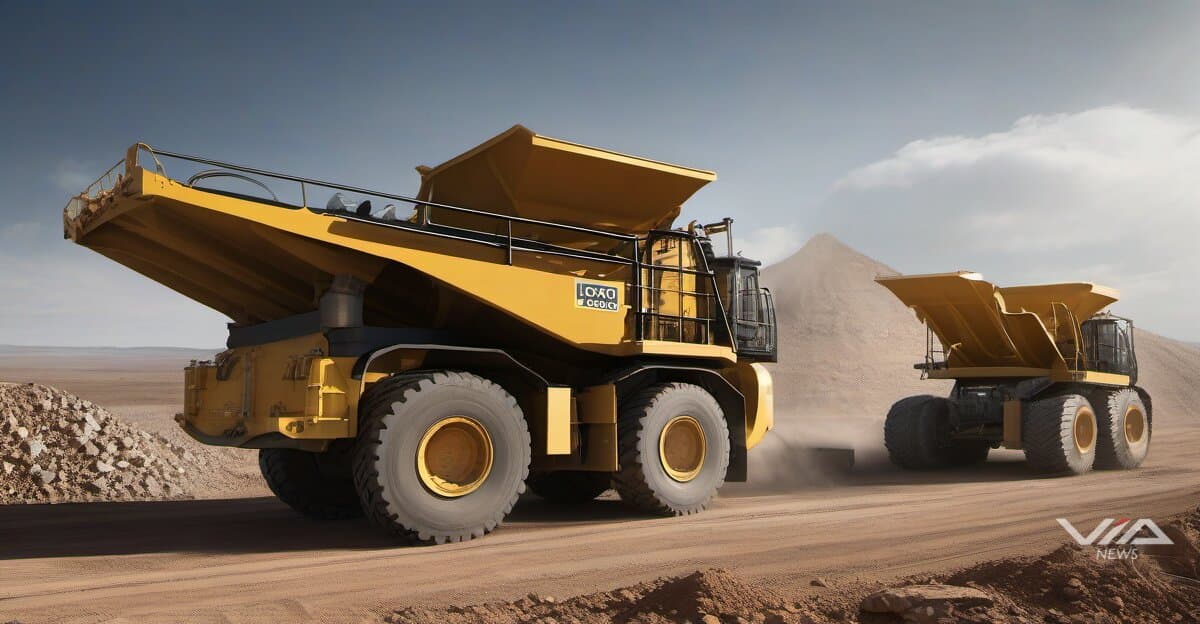
Image generated by AI for illustrative purposes. Not actual footage or photography from the reported events.

The Black Angel mining project in Greenland targets Phase 1 operations by 2028, part of accelerating Arctic resource development as warming temperatures make northern deposits more accessible. The site, located near Maamorilik in western Greenland, previously produced zinc and lead from 1973 to 1990.

Infrastructure work is advancing to support commercial operations. The project team is upgrading facilities and assessing technical requirements for the 2028 launch. Current investments focus on processing facilities, transportation systems, and operational support infrastructure necessary for Arctic mining conditions.

Technical feasibility assessments show progress toward commercial production targets. The project's confidence rating stands at 0.8, indicating solid advancement while acknowledging remaining milestones before full-scale operations begin. Phase 1 will test commercial viability and inform subsequent expansion decisions.

Greenland's mining sector is drawing international attention as global powers compete for critical minerals. The autonomous Danish territory holds significant deposits of rare earth elements, zinc, and other resources. China, the United States, and European nations are all pursuing Arctic mining opportunities as traditional sources face depletion.

The 2028 timeline provides roughly two years for infrastructure completion and technical preparations. Arctic mining projects typically require substantial upfront capital and extended development periods due to harsh conditions and remote locations. Black Angel follows this pattern, prioritizing technical certainty over rapid deployment.

Infrastructure readiness will determine the launch schedule. Technical milestones include facility commissioning, systems testing, and operational protocol validation. Meeting these requirements demands sustained progress on current development work while navigating Arctic-specific engineering challenges.

The phased approach allows operational adjustments based on initial performance data. Mining operations will scale according to infrastructure capacity and market conditions. Project economics depend on successful infrastructure completion and technical validation before revenue generation begins.

Source documents

Via News is a conduit. We point to the source documents behind this report — we don't replace them. Trace any claim to its source and decide what to trust. How we source

Source Trace Score1 source document1 with a live linkVerifiability: Basic
  1. [1]Press releaseGlobeNewswire· February 25, 2026
    Framleiðslumarkmið og afkomuspá ársins 2026
What we know · the intelligence behind this page
Live from the substrate
What we're seeing
Vertical AI Agents Attract a Funding Wave Across Fintech-Adjacent Industries
A cluster of AI-native startups applying autonomous agents to narrow, operational problems — hotel front-desk staffing (Dextr AI), identity/fraud risk for financial institutions (Baselayer), insurance distribution (Napo, Connie Health, MGT Insurance) — closed seed-to-Series A rounds within days of each other in September 2026, with CB Insights running a coordinated CEO interview series to spotlight them. The pattern points to agentic AI maturing from generic chat tools into vertical, revenue-generating products, with identity verification for AI agents themselves (Baselayer) emerging as a new fintech infrastructure category responding directly to AI-driven fraud risk.
Our read on the data ›
Signals we're tracking
Satellite-Terrestrial Network Integration Acceleration
Increased investment and launches in hybrid satellite-cellular networks across telecom industry; competitive responses from other carriers; regulatory activity around satellite spectrum; expansion of emergency/rural connectivity use cases
Patterns we're watching ›
Where sources disagree
ING Group
Both facts record the same metric (shares_outstanding) for ING Group at the identical observation date (2025-12-31). FACT A states 2,902,437,688 shares; FACT B states 2,902 million shares (2,902,000,000). The difference is 437,688 shares (~0.015%). This is a genuine value conflict, though the discrepancy appears to result from FACT B rounding to the nearest million while FACT A provides the precise count.
We flag conflicts openly ›
Recently verified
✓ Checked against the original source
4,984
facts traced to their source — and we flag the ones that don't hold up.
101 entities tracked4,984 facts checked against source5,306 source documents archived
Query this data → isubstrate.com