
Understanding Yemen Situation after Killing of Ali Abdullah Saleh
Amier Rashed
December 6, 2017
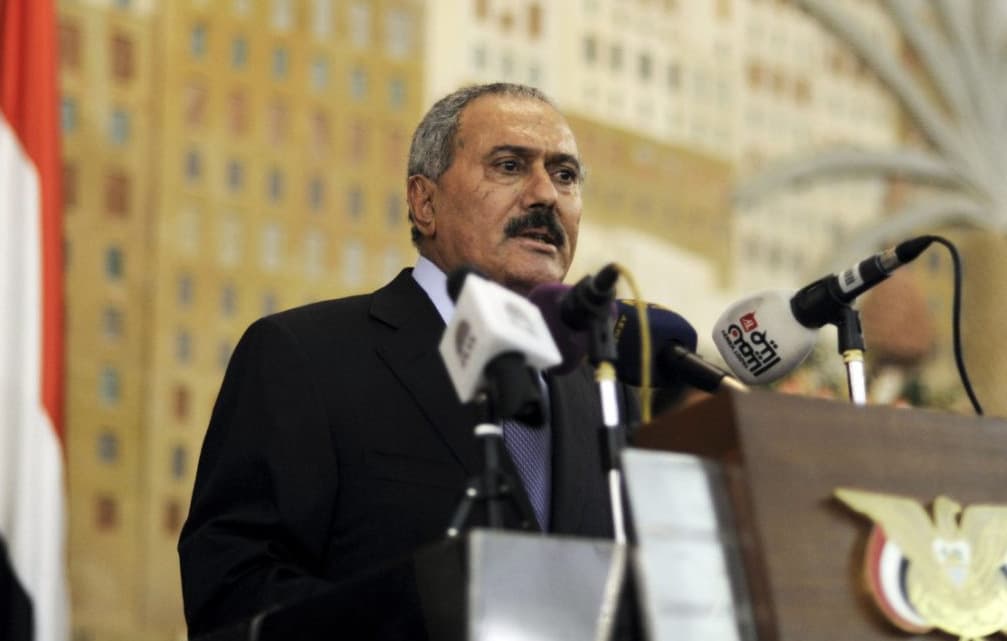
CAIRO, Egypt (ViaNews) - The situation in Yemen is a complex one. A civil war has been ongoing for over 2 years, but the death of Ali Abdullah Saleh this week changes a lot not just in Yemen, but also in the entire region.
Let’s go back a few years in order to adequately capture the situation and get a good grasp on who is on whose side. Yemeni president Ali Abdullah Saleh and his government had always been enemies and at war with a group of rebels called the Houthis. To be more specific, the two sides had been at war since 2004. Saudi Arabia and other Gulf countries were Saleh’s allies and supported him in his war against the Houthis. The main reason behind this is that the Houthis are mainly Shia and are Iran’s allies.
To make things clearer it has to be said that Iran and the Gulf countries are enemies. Each side has tried to impose itself as the leading power in the Middle East. Of course one of the main reasons they just can’t get along is that Muslims in Saudi Arabia and fellow Gulf countries are mainly Sunni while Iranian Muslims are Shia. There are a few fundamental differences between Sunnis and Shia, but that goes beyond the scope of the current situation and the differences have been around for over a thousand years.
Up until 2011, President Saleh and his Arab allies were united against Houthis in Yemen. In 2012 in the midst of the Arab Spring and multiple revolutions Saleh was forced to step down and Saudi Arabia backed Abdu Rabbu Mansour Hadi became the new president of Yemen.
Ali Abdullah Saleh had been president of Yemen for over 30 years and didn’t accept the current situation, looking for a way back to being president. Saudi Arabia was already backing Hadi so Saleh’s only alternative was to form an unlikely alliance with those he spent years being at war with, the Houthis. His plan succeeded and he became president of Yemen again while Hadi had to escape to Saudi Arabia.
The alliance between Saleh and his government on one hand and the Houthis on the other was a formidable one. Houthis had the manpower and weapons while Saleh provided government facilities and intelligence. Recently, however; there were rumors that he was about to switch sides again and become Saudi Arabia’s ally once more. The Houthis didn’t waste much time and shot him dead in an attack on his convoy.
Saleh’s son has issued a statement through Saudi Arabian media stating that the war is not over and that he won’t rest until every last Houthi is thrown out of Yemen. He was quoted saying “the hands of the enemies of God and the country.” And that he would “confront the enemies of the homeland and humanity, who are trying to obliterate its identity and its gains and to humiliate Yemen and Yemenis”.
It’s not expected that the war will end anytime soon. In fact, many believe that things are about to get worse. Saleh had a strong following in Yemen as well as the allegiance of many army leaders while the Houthis are determined to win this battle and have the backing of Iran to their aid.
The worst humanitarian crisis in the world according to the UN will potentially get even worse. Power is up for grabs in Yemen and neither side looks like backing down. This could also be a turning point in the power balance in the region as each of Saudi Arabia and Iran try to win this in order to establish more power and superiority over the other.