
Sunday, September 27, 2026

Revolutionary Radiation-Proof Material Developed by Turkish Scientists

Ozge Guzel

June 8, 2018
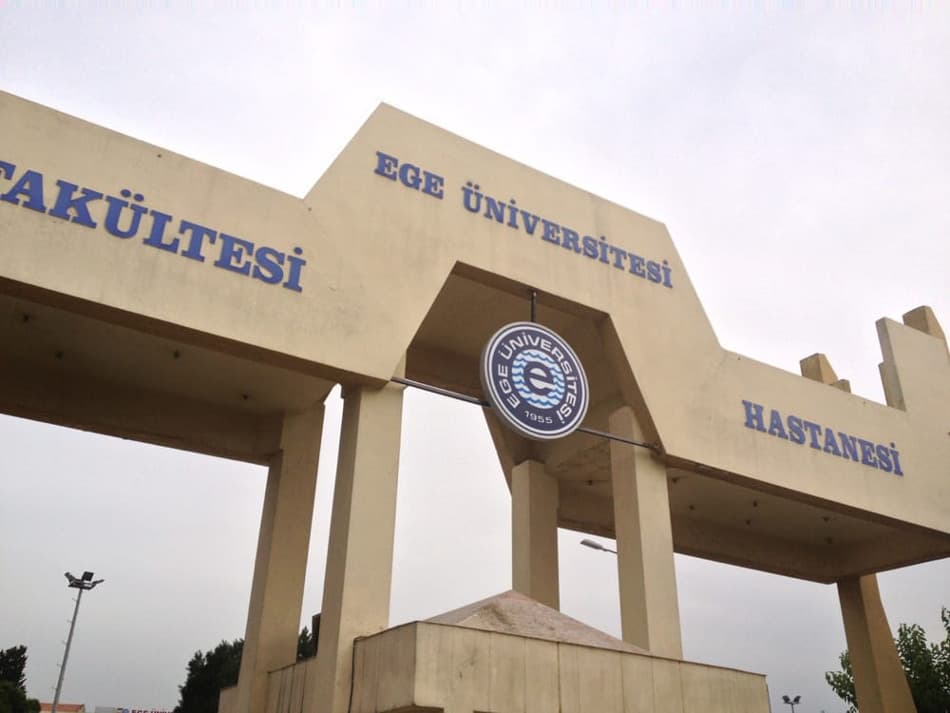
Ege Public university in Bornova, Turkey.
ANKARA, Turkey (ViaNews) - A group of doctorate students in the Institute of Nuclear Sciences Department at Ege University developed a clothing material for their medical staff who had been exposed to radiation on a daily basis due to their professions. Professor Fatma Yurt Onaran said to Diken, a Turkish newspaper, that the medical staff working in the radiology and nuclear medicine fields usually had to wear lead composite aprons but these aprons were weighty and disadvantageous. Onaran also explained that these aprons have a short lifespan because of the toxic effects, height, and fragility of lead, the material used in the product. She went on saying, “In this project, my doctorate students and I have focused on the production of a new material that can minimize these disadvantages and we have developed a material made of metal-polymer composites.” Onaran stressed the new material is much lighter and more flexible than the lead aprons, and an even more effective radiation shielding effect. “This new material will be nontoxic, light, environmentally friendly, and convenient. We have already patented our new shielding material and have also prepared a prototype of thyroid protectors”, said Prof. Onaran. Contributors to this project besides Prof Onaran are Alparslan Erol, Isa Pocan, Emre Yanbay, Onur Alp Ersoz, and Fatma Yurt Lambrecht. According to the the Turkish publication, Hurriyet, the rector of the university, Prof. Dr Necdet Budak, emphasized the importance of this new development. “This is a significant development for Turkey as well. Our country is foreign-dependent with regard to the importing of these x-ray and gamma resistant materials. I believe this scientific development will put an end to this dependence. Our universities are full of bright and talented students. We will support our students and academics until we achieve commercial success and improve our economy.”

Categories

Tags

What we know · the intelligence behind this page
Live from the substrate
What we're seeing
Vertical AI Agents Attract a Funding Wave Across Fintech-Adjacent Industries
A cluster of AI-native startups applying autonomous agents to narrow, operational problems — hotel front-desk staffing (Dextr AI), identity/fraud risk for financial institutions (Baselayer), insurance distribution (Napo, Connie Health, MGT Insurance) — closed seed-to-Series A rounds within days of each other in September 2026, with CB Insights running a coordinated CEO interview series to spotlight them. The pattern points to agentic AI maturing from generic chat tools into vertical, revenue-generating products, with identity verification for AI agents themselves (Baselayer) emerging as a new fintech infrastructure category responding directly to AI-driven fraud risk.
Our read on the data ›
Signals we're tracking
Satellite-Terrestrial Network Integration Acceleration
Increased investment and launches in hybrid satellite-cellular networks across telecom industry; competitive responses from other carriers; regulatory activity around satellite spectrum; expansion of emergency/rural connectivity use cases
Patterns we're watching ›
Where sources disagree
ING Group
Both facts record the same metric (shares_outstanding) for ING Group at the identical observation date (2025-12-31). FACT A states 2,902,437,688 shares; FACT B states 2,902 million shares (2,902,000,000). The difference is 437,688 shares (~0.015%). This is a genuine value conflict, though the discrepancy appears to result from FACT B rounding to the nearest million while FACT A provides the precise count.
We flag conflicts openly ›
Recently verified
✓ Checked against the original source
4,984
facts traced to their source — and we flag the ones that don't hold up.
101 entities tracked4,984 facts checked against source5,306 source documents archived
Query this data → isubstrate.com