
Could US Entity List be a Tool to Harness Pakistan Strategic Organization?
Hussain Shahid
November 25, 2017
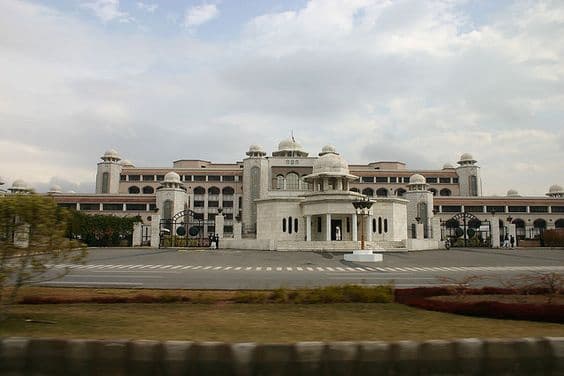
Islamabad, Pakistan (ViaNews) - Is the USA Government trying to strangulate the Pakistan elite businesses who are directly or indirectly linked to sensitive equipment or strategic industries? Could the U.S. Entity List be a tool harness Pakistan strategic organization?
Not many know about the Entity List, a document provided by the US Bureau of Industry and Security (BIS). According to a Pakistanese source that wishes to remain anonymous, even the country's Ministry of Finance, the Pakistan's Federal Board of Revenue or the Securities (FBR) & Exchange Commission of Pakistan (SECP) have very little knowledge about it.
The Entity List specifies the license requirements that are imposed on each listed person or business. The list can be found on the US Government website, under BIS, which is a department working directly under US Department of Commerce. According to their website, "The primary goal of BIS is to advance the United States' national security, foreign policy, and economic objectives by ensuring an effective export control and treaty compliance system and promoting continued U.S. strategic technology leadership."
The allegation is that BIS might be targeting businesses around the globe who are working either against the US interests or related to them.
The Entity List is frequently updated to include recent changes and amendments.
Pakistan, despite being a major ally in the war against terrorism, is heavily cited on this list. This trend has rather increased after President Trump's recent outburst on Pakistan for harboring terrorist and not taking action against Taliban’s hideouts inside the country.
In Pakistan, the political elite has been apparently apathetic facing this scenario. The Government and the political system are littered with corruption charges and allegedly trying to defend their own skin. Rumors point out to the fact that Pakistanese authorities have been taking this matter seriously for strategic organizations, but leaving less prominent businesses unattended. Some businesses have suffered Millions Dollar’s loss and many have commercial ties with the USA and Europe, which might be having a direct impact on the businesses strategic partnerships.
The Pakistan nuclear program is also struggling to do business with strategic organizations. There is a general sense, here in Pakistan, that strategic organizations are not producing Islamic bombs, but erecting new powerhouses to overcome the country's electricity shortfall. The glaring example is the inauguration of the 5th nuclear power plant at Chasma in September 2017, by the Pakistanese Prime Minister.
Lingering questions persist on how will the Pakistan Government protect the interests of businesses who have been targeted by BIS? Presently, targeted businesses are launching an online appeal, without a single example of a ban that has been lifted. No efforts have been made by the different country's business chambers or by the SECP to launch Complaints against the businesses listed on the list.
Pakistan is going through a difficult economic and social situation and our leaders could, at least, launch a campaign to protest against the effects of the BIS Entity List.