
Sunday, September 27, 2026

Minnesota Nickel Project's Tech Risk Threatens Global EV Battery Supply Chain

Talon Metals' Minnesota nickel project faces processing technology risks that could disrupt North American EV battery supply, forcing automakers back to Indonesian and Russian sources. The project must achieve 99.8% purity from untested ore types—a failure would spike global nickel prices 15-20% and eliminate one of few U.S. domestic supply alternatives.

ViaNews Editorial Team

February 25, 2026

Minnesota Nickel Project's Tech Risk Threatens Global EV Battery Supply Chain
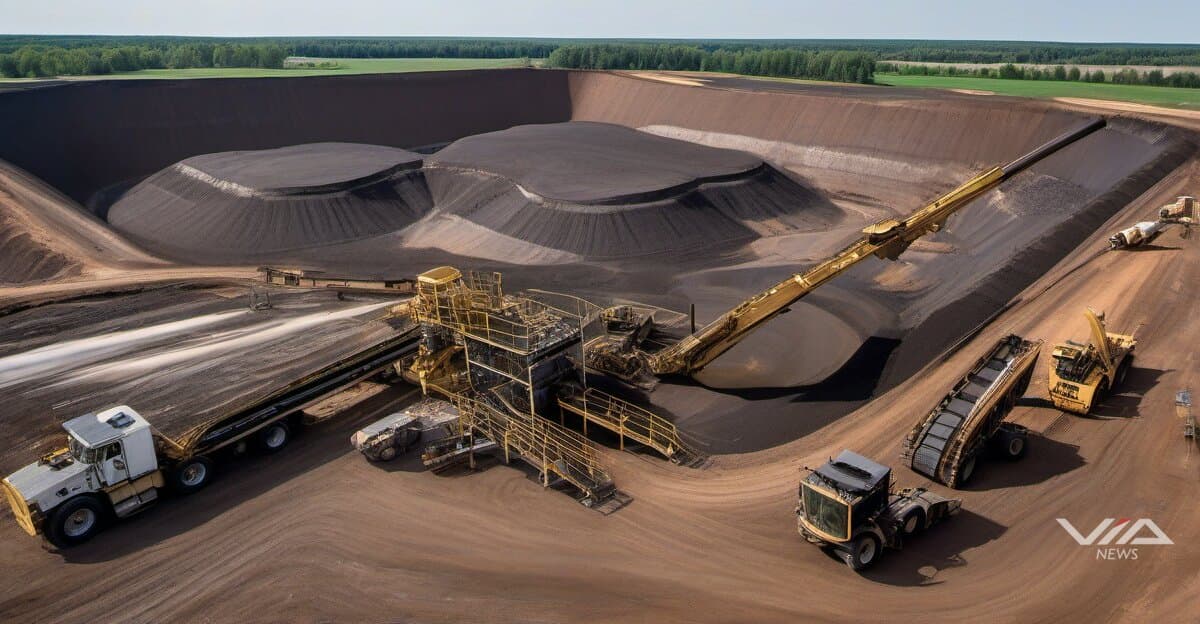
Image generated by AI for illustrative purposes. Not actual footage or photography from the reported events.

Talon Metals' Minnesota nickel project must achieve 99.8% battery-grade purity from ore types that differ significantly from proven Canadian Shield deposits. Processing technology failure—rated low probability but catastrophic impact—would eliminate a critical North American supply source as global EV battery production consumes 300,000 tons annually, growing 25% yearly through 2030.

U.S. and European automakers pursuing EV production rely on domestic nickel to reduce exposure to China-dominated supply chains. Indonesia controls 48% of global nickel output, while Russia supplies 11%. Talon's project represents one of few Western alternatives under development. A technical breakdown would force manufacturers back to Asian suppliers, increasing price volatility and geopolitical dependency.

Nickel trades at $16,500 per metric ton as of February 2026. A major Western project failure could spike prices 15-20% short-term as markets price in continued import reliance. Battery manufacturers including South Korea's LG Energy Solution and Japan's Panasonic require multi-year contracts with quality penalty clauses—processing failures would trigger defaults and project financing collapse.

The technology risk stems from scaling lab results to commercial volumes. Minnesota's Duluth Complex geology features different mineralization, sulfur content, and trace elements than deposits where most nickel processing methods were validated. Pilot plants provide initial data, but commercial-scale operations reveal problems invisible at smaller volumes.

The 0.7 confidence rating reflects limited production data from similar ore types. The severity classification as catastrophic acknowledges the binary outcome—extraction either proves economical or the project fails entirely. Investors pricing Talon equity must weigh this tail risk against domestic supply premiums that assume successful production.


Sources:
1 Yahoo Finance, "Lundin Mining to acquire additional stake in Lumina Copper" (March 10, 2026)
2 Yahoo Finance, "Lundin Mining Q4 Earnings Call Highlights" (February 24, 2026)
3 Yahoo Finance, "Lundin Mining Increases M&I Copper Mineral Resources by 37% and Updates Mineral Reserves" (February 19, 2026)
4 Yahoo Finance, "Lundin Mining finalises Eagle mine sale to Talon Metals" (January 12, 2026)

What we know · the intelligence behind this page
Live from the substrate
What we're seeing
Vertical AI Agents Attract a Funding Wave Across Fintech-Adjacent Industries
A cluster of AI-native startups applying autonomous agents to narrow, operational problems — hotel front-desk staffing (Dextr AI), identity/fraud risk for financial institutions (Baselayer), insurance distribution (Napo, Connie Health, MGT Insurance) — closed seed-to-Series A rounds within days of each other in September 2026, with CB Insights running a coordinated CEO interview series to spotlight them. The pattern points to agentic AI maturing from generic chat tools into vertical, revenue-generating products, with identity verification for AI agents themselves (Baselayer) emerging as a new fintech infrastructure category responding directly to AI-driven fraud risk.
Our read on the data ›
Signals we're tracking
Satellite-Terrestrial Network Integration Acceleration
Increased investment and launches in hybrid satellite-cellular networks across telecom industry; competitive responses from other carriers; regulatory activity around satellite spectrum; expansion of emergency/rural connectivity use cases
Patterns we're watching ›
Where sources disagree
ING Group
Both facts record the same metric (shares_outstanding) for ING Group at the identical observation date (2025-12-31). FACT A states 2,902,437,688 shares; FACT B states 2,902 million shares (2,902,000,000). The difference is 437,688 shares (~0.015%). This is a genuine value conflict, though the discrepancy appears to result from FACT B rounding to the nearest million while FACT A provides the precise count.
We flag conflicts openly ›
Recently verified
✓ Checked against the original source
4,984
facts traced to their source — and we flag the ones that don't hold up.
101 entities tracked4,984 facts checked against source5,306 source documents archived
Query this data → isubstrate.com