
Sunday, September 27, 2026

U.S. Uncoated Freesheet Capacity Drops as Chillicothe Mill Closes Amid Global Paper Decline

The Chillicothe Mill closure removes significant uncoated freesheet capacity from the U.S. market, part of a global trend as digital substitution erodes paper demand across developed economies. The shutdown affects supply chains, workforce, and reflects the structural decline facing commodity paper producers worldwide.

U.S. Uncoated Freesheet Capacity Drops as Chillicothe Mill Closes Amid Global Paper Decline
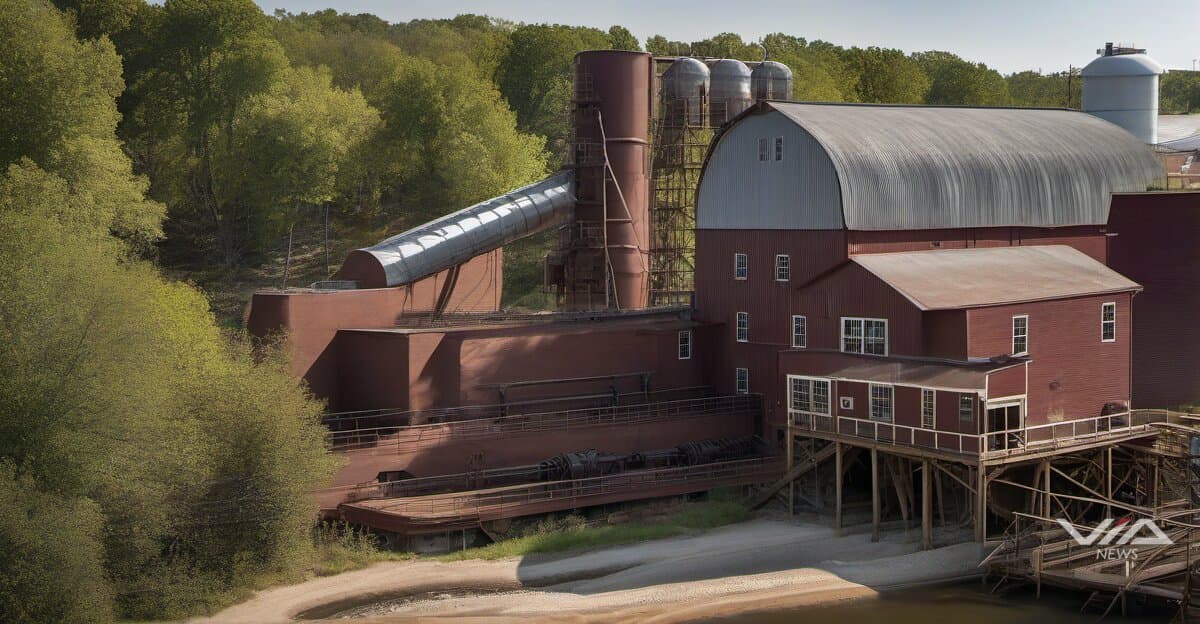
Image generated by AI for illustrative purposes. Not actual footage or photography from the reported events.

The Chillicothe Mill has shut down permanently, removing uncoated freesheet production capacity from the U.S. paper market as digital transformation drives global paper demand lower. The closure mirrors capacity rationalization underway across North America, Europe, and parts of Asia where office paper consumption has fallen steadily for over a decade.

The facility produced uncoated freesheet, a commodity grade used for office printing and commercial applications. U.S. producers have closed dozens of mills since 2010 as communications and publishing shift to digital platforms. Similar closures have occurred in Finland, Sweden, and Canada as producers align capacity with shrinking consumption.

Industry analysts expect tighter U.S. supply conditions to improve operating rates at surviving mills. Overcapacity has pressured margins industry-wide, forcing consolidation. European producers including Stora Enso and UPM have exited commodity grades in recent years, redirecting assets toward packaging and specialty products.

The shutdown disrupts established supply relationships. Commercial printers and corporate buyers must source from alternative mills, potentially extending lead times as remaining facilities absorb displaced demand. Global procurement teams face similar challenges as paper capacity exits multiple markets simultaneously.

Local economic impacts include workforce displacement and reduced tax revenue for the jurisdiction. Suppliers of chemicals, energy, and logistics services lose a customer account. Creditors face potential losses as facility asset values typically collapse after permanent closure, limiting recovery options.

The closure reflects operational fragility facing commodity paper producers unable to achieve cost competitiveness. Mills in high-cost regions face elimination pressure as industry fundamentals remain challenging. China and Indonesia have gained market share in some grades, though their producers also face demand headwinds.

Market participants will monitor whether the Chillicothe closure triggers additional U.S. shutdowns. Analysts will track operating rates and price indices for uncoated freesheet in coming quarters. Surviving producers may gain pricing leverage if capacity exits outpace demand decline globally.


Sources:
1 News Report, "Sylvamo outlines $115M–$130M Q4 adjusted EBITDA target as Riverdale supply ends and leadership trans" (November 07, 2025)

What we know · the intelligence behind this page
Live from the substrate
What we're seeing
Vertical AI Agents Attract a Funding Wave Across Fintech-Adjacent Industries
A cluster of AI-native startups applying autonomous agents to narrow, operational problems — hotel front-desk staffing (Dextr AI), identity/fraud risk for financial institutions (Baselayer), insurance distribution (Napo, Connie Health, MGT Insurance) — closed seed-to-Series A rounds within days of each other in September 2026, with CB Insights running a coordinated CEO interview series to spotlight them. The pattern points to agentic AI maturing from generic chat tools into vertical, revenue-generating products, with identity verification for AI agents themselves (Baselayer) emerging as a new fintech infrastructure category responding directly to AI-driven fraud risk.
Our read on the data ›
Signals we're tracking
Satellite-Terrestrial Network Integration Acceleration
Increased investment and launches in hybrid satellite-cellular networks across telecom industry; competitive responses from other carriers; regulatory activity around satellite spectrum; expansion of emergency/rural connectivity use cases
Patterns we're watching ›
Where sources disagree
ING Group
Both facts record the same metric (shares_outstanding) for ING Group at the identical observation date (2025-12-31). FACT A states 2,902,437,688 shares; FACT B states 2,902 million shares (2,902,000,000). The difference is 437,688 shares (~0.015%). This is a genuine value conflict, though the discrepancy appears to result from FACT B rounding to the nearest million while FACT A provides the precise count.
We flag conflicts openly ›
Recently verified
✓ Checked against the original source
4,984
facts traced to their source — and we flag the ones that don't hold up.
101 entities tracked4,984 facts checked against source5,306 source documents archived
Query this data → isubstrate.com