"You can have five or more drones, connect them to our platform and then fly them for delivery, security, farming, and many other needs."
Lucas Roitman, Designer & Visionary at Adia Robotics
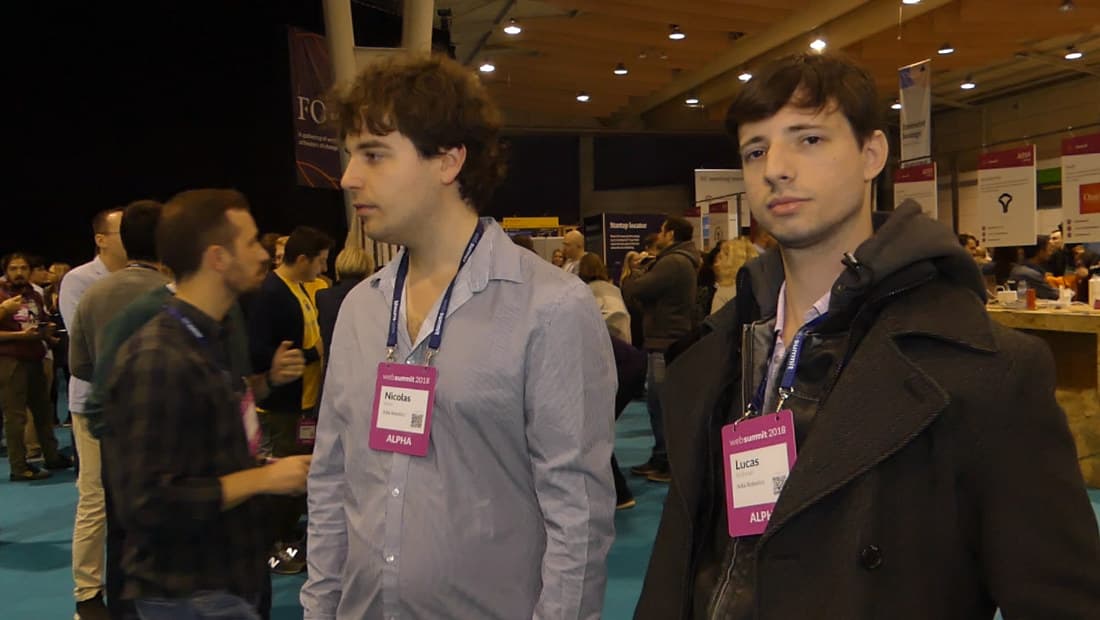
How are you finding the Web Summit so far? Nicolas: It's been quite interesting, we've been able to talk with a lot of investors, potential partners, clients, it's been great. Lucas: We've been talking with many investors and met with a lot of people that we didn't even know who are becoming good connections. Most times, they might know someone who's interested in investing, so it's a great experience."We bridge the gap from current flight to autonomy."
Lucas Roitman, Designer & Visionary at Adia Robotics
Tell us about Adia Robotics, what do you guys do? Lucas: We create software that allows you to manage multiple drones. You can have five or more drones, connect them to our platform and then fly them for delivery, security, farming, and many other needs. We bridge the gap from current flight to autonomy. You can remotely control drones over the Internet and slowly get them to be autonomous."If any of these drones fail, it can fall, and the other two drones can still hold its weight. It's one of the safest ways to do delivery out there in the market."
Nicolas Klein, Networking head at Adia Robotics
What kind of application does that work for? Nicolas: We can think of multiple, one of them is in agriculture. We're helping farmers to analyze the terrains so they don't have to bring their experts on site. We're bridging remote capabilities so that people who analyze the terrain don't need to go to the farms. If you go into delivery, that's where the really exciting stuff happens. The other day, we were playing out with a swarm demo of moving a pizza around with three different drones. The advantage of that is it's much more reliable and safe than with just one large drone. If any of these drones fail, it can fall, and the other two drones can still hold its weight. It's one of the safest ways to do delivery out there in the market."We see that they [drones] are moving more and more towards autonomy."
Lucas Roitman, Designer & Visionary at Adia Robotics
Lucas: Other companies have a really huge drone that's very dangerous but we have very small drones, just many of them. So it replaces a very dangerous flying machine with very safe flying machines. We also have some covers around the drone so it's totally safe."We are still innovating and still being on the edge of what can be done with drones. A lot of what people were only dreaming to be possible, today, it can be bought on an Amazon store for one thousand of dollars."
Nicolas Klein, Networking head at Adia Robotics
How do you see the drone industry evolving? Lucas: We see that they are moving more and more towards autonomy. We're also seeing a lot of flying car companies approaching us and investors approaching us to meet with other flying car companies."It’s very important to grow fast, but it's also important not to give up."
Lucas Roitman, Designer & Visionary at Adia Robotics
Nicolas: We have had to pivot our company a lot because initially, we were doing a lot of groundbreaking technologies and the market has been moving so fast that a lot of what was groundbreaking two years ago is now standard. We are still innovating and still being on the edge of what can be done with drones. A lot of what people were only dreaming to be possible, today, it can be bought on an Amazon store for one thousand dollars."Don't waste your time doing something that you don't care about. If you do, there's no way you'll resist giving up."
Nicolas Klein, Networking head at Adia Robotics
You guys built this company from scratch? Could you share a good piece of advice with young entrepreneurs? Lucas: It’s very important to grow fast, but it's also important not to give up. It's a really good lesson when things change in the market, and markets change very quickly, you need to adapt and not stick with an old idea that doesn't work anymore. For example, we were building our own technology from scratch for optical flow and now we have stopped doing that and we're only trying to add things without rebuilding the wheel. Nicolas: In line with that, do something that excites you. Don't waste your time doing something that you don't care about. If you do, there's no way you'll resist giving up.