
Sunday, September 27, 2026

Gas Prices Jump 85% After Iran Strikes Energy Sites, Fed Policy Shift Threatens Global Banks

Iranian strikes on energy infrastructure drove European natural gas prices up 85% and oil above $80, while proposed Federal Reserve policy changes add pressure on banks worldwide. Korean markets fell 12% and the S&P 500 dropped 2.5% as energy shocks collided with monetary uncertainty. Banks from Seoul to Frankfurt face dual risks from energy credit exposure and potential Fed-Treasury coordination that would reshape $7.7 trillion in central bank operations.

Source Trace Score3 source documents3 with a live linkVerifiability: Strong
Gas Prices Jump 85% After Iran Strikes Energy Sites, Fed Policy Shift Threatens Global Banks
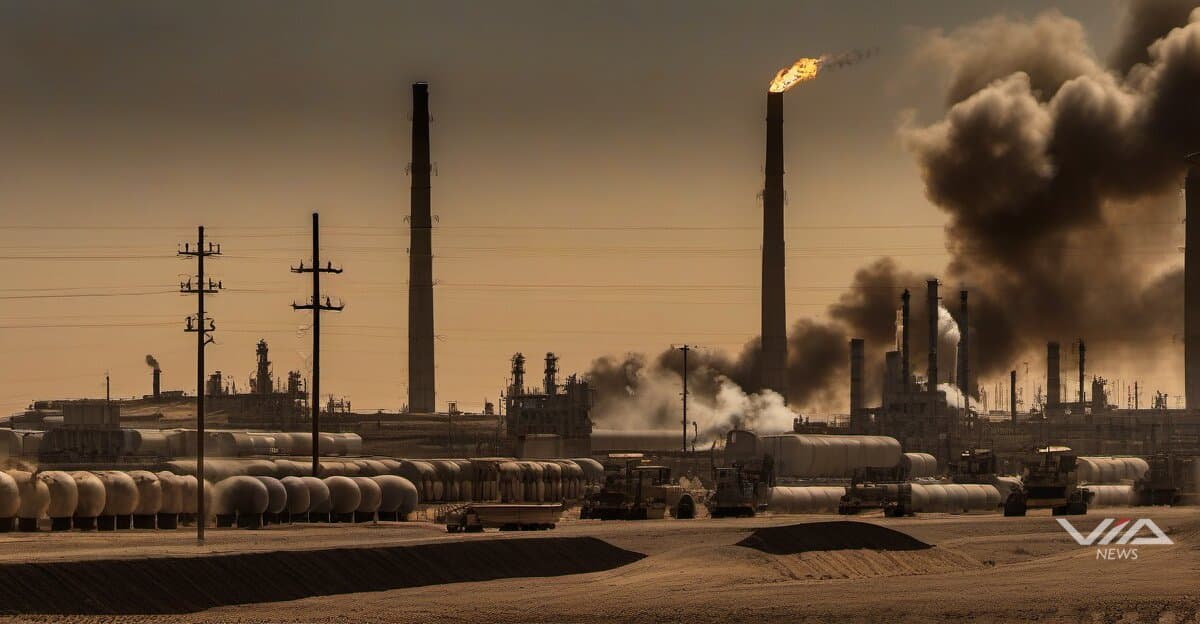
Image generated by AI for illustrative purposes. Not actual footage or photography from the reported events.

Iranian military strikes on energy infrastructure sent European natural gas prices surging 85%, pushing oil above $80 per barrel and triggering market selloffs from Seoul to New York. Korean markets plunged 12% while the S&P 500 declined 2.5% as energy shocks combined with Federal Reserve policy uncertainty.

Banks across Europe, Asia, and North America face compounding risks. Energy credit exposure creates immediate stress as volatility spikes, while proposed Fed-Treasury coordination threatens to upend how financial institutions manage $7.7 trillion in liquidity and capital requirements globally.

The proposed Fed-Treasury accord would synchronize the central bank's balance sheet reduction with government debt issuance. "Rather than insulating the Fed, it could look more like a framework for yield-curve control," said Tim Duy, noting the shift would create explicit fiscal-monetary coordination unprecedented in modern Fed history.

Former Fed Vice Chair Richard Clarida outlined coordination between the Fed, Treasury, and housing agencies Fannie Mae and Freddie Mac to shrink the balance sheet. This would fundamentally alter funding markets that banks from Tokyo to London rely on for daily operations.

European banks face acute vulnerability given their concentration in gas-dependent economies. German and Italian financial institutions with energy company debt must reassess default probabilities as prices spike. Asian banks with oil and gas credits face similar stress tests.

Michael Ball projects that mapping Fed balance sheet reduction to Treasury debt plans could prevent "accidental tightening of financial conditions." However, international banks would need to recalibrate risk models for a regime where U.S. central bank liquidity becomes tied to government financing—a shift with global implications given the dollar's reserve currency status.

Investment portfolios worldwide face duration risk if yield-curve control emerges. Fixed-income strategies from Singapore to Zurich built around Fed independence would require revision, potentially triggering rebalancing that amplifies market dislocations from the energy crisis.

The dual crisis creates feedback loops across continents: energy volatility increases demand for policy clarity, while policy uncertainty prevents effective risk pricing in energy markets. Banks must simultaneously stress-test for extended energy disruption and prepare for a monetary regime shift that could materialize within months.

Source documents

Via News is a conduit. We point to the source documents behind this report — we don't replace them. Trace any claim to its source and decide what to trust. How we source

Source Trace Score3 source documents3 with a live linkVerifiability: Strong
  1. [1]News articleYahoo Finance· February 9, 2026
    Warsh Call for Fed-Treasury Accord Stirs Debate in $30 Trillion Bond Market
  2. [2]News articleUk· March 3, 2026
    LIVE: Reeves to deliver spring statement as traders scale back Bank of England rate cut bets
  3. [3]News articleYahoo Finance· March 3, 2026
    Stock market today: Dow plunges over 1,100 points, S&P 500 and Nasdaq sink as oil surges amid war worries

In this story · Knowledge Files

What we know · the intelligence behind this page
Live from the substrate
What we're seeing
Vertical AI Agents Attract a Funding Wave Across Fintech-Adjacent Industries
A cluster of AI-native startups applying autonomous agents to narrow, operational problems — hotel front-desk staffing (Dextr AI), identity/fraud risk for financial institutions (Baselayer), insurance distribution (Napo, Connie Health, MGT Insurance) — closed seed-to-Series A rounds within days of each other in September 2026, with CB Insights running a coordinated CEO interview series to spotlight them. The pattern points to agentic AI maturing from generic chat tools into vertical, revenue-generating products, with identity verification for AI agents themselves (Baselayer) emerging as a new fintech infrastructure category responding directly to AI-driven fraud risk.
Our read on the data ›
Signals we're tracking
Satellite-Terrestrial Network Integration Acceleration
Increased investment and launches in hybrid satellite-cellular networks across telecom industry; competitive responses from other carriers; regulatory activity around satellite spectrum; expansion of emergency/rural connectivity use cases
Patterns we're watching ›
Where sources disagree
ING Group
Both facts record the same metric (shares_outstanding) for ING Group at the identical observation date (2025-12-31). FACT A states 2,902,437,688 shares; FACT B states 2,902 million shares (2,902,000,000). The difference is 437,688 shares (~0.015%). This is a genuine value conflict, though the discrepancy appears to result from FACT B rounding to the nearest million while FACT A provides the precise count.
We flag conflicts openly ›
Recently verified
✓ Checked against the original source
4,984
facts traced to their source — and we flag the ones that don't hold up.
101 entities tracked4,984 facts checked against source5,306 source documents archived
Query this data → isubstrate.com