
Sunday, September 27, 2026

China Targets $2.8B Monthly Casino Pipeline as Macao Faces Visitor Restrictions

Beijing is moving to restrict mainland Chinese access to Macao's casinos, threatening $2.8 billion in monthly capital flows. New visitor permit rules would require business justifications for entry, while payment restrictions could block WeChat Pay and Alipay transactions that fund 40% of casino profits.

China Targets $2.8B Monthly Casino Pipeline as Macao Faces Visitor Restrictions
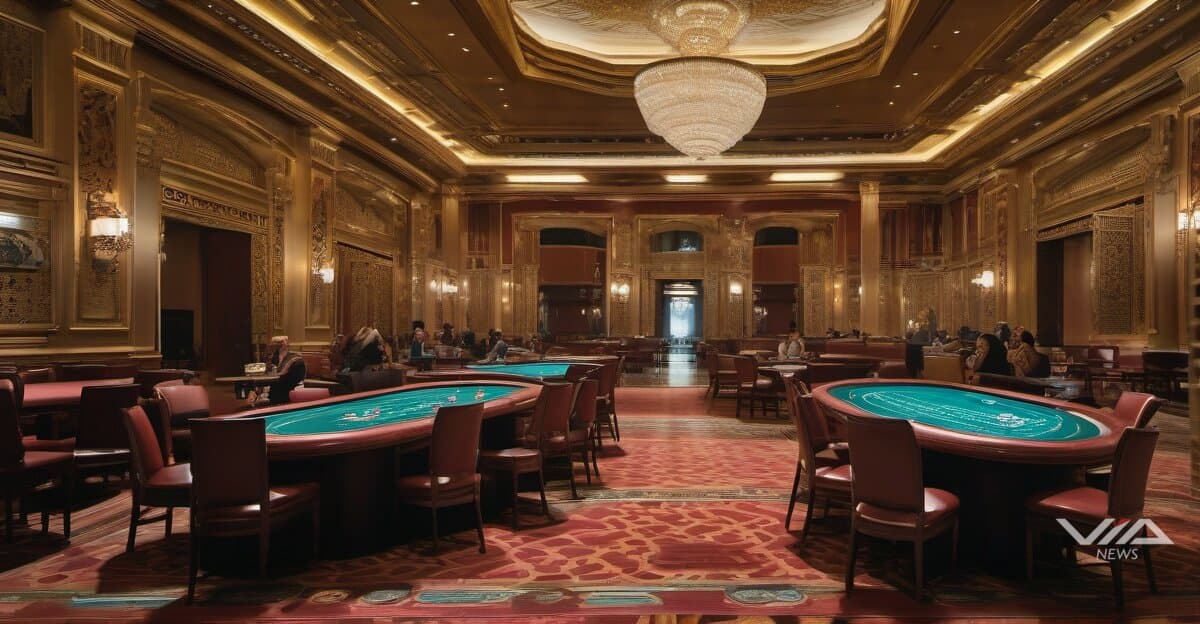
Image generated by AI for illustrative purposes. Not actual footage or photography from the reported events.

China is drafting visitor restrictions for Macao that could cut off $2.8 billion in monthly capital flows to the territory's casino industry, following established patterns from Taiwan and Hong Kong crackdowns.

Beijing is preparing permit rules requiring mainland Chinese to demonstrate legitimate business purposes before entering Macao, eliminating the current 48-hour visa-free access for Guangdong residents. Mainland visitors generated 71% of Macao's gaming revenue in 2025, making access barriers an existential threat to operators like Las Vegas Sands, MGM China, and Wynn Macau.

Payment controls present the immediate financial risk. Chinese regulators already cap UnionPay ATM withdrawals at ¥50,000 ($7,000) annually per person. Proposed restrictions on WeChat Pay and Alipay at casino cages would eliminate funding mechanisms for VIP gaming segments driving 40% of sector profits.

Las Vegas Sands reported $1.2 billion in Macao revenue for Q4 2025, down 8% year-over-year. The company's stock has dropped 14% since February 15 when regulatory reviews surfaced. Credit default swaps on Sands China debt widened 82 basis points to 240 bps, reflecting elevated default risk.

The crackdown mirrors China's 2019 group tour ban to Taiwan and 2020 restrictions on Hong Kong travel during political tensions. Beijing's anti-corruption campaigns have already decimated the VIP customer base of government officials and state enterprise executives.

Currency controls compound operator exposure. Macao casinos operate in patacas pegged to Hong Kong dollars, while mainland revenue depends on renminbi conversion. Capital restrictions strand operator funds in blocked accounts.

Casino operators invested heavily in non-gaming amenities under 2022 concession renewals. The Parisian Macao spent $300 million on retail and entertainment facilities. Those investments lose value if visitor flows collapse under Beijing's restrictions.


Sources:
1 Yahoo Finance, "Why Is Las Vegas Sands (LVS) Up 6.2% Since Last Earnings Report?" (February 27, 2026)
2 Yahoo Finance, "Las Vegas Sands (LVS) Q4 Earnings: Taking a Look at Key Metrics Versus Estimates" (January 29, 2026)

What we know · the intelligence behind this page
Live from the substrate
What we're seeing
Vertical AI Agents Attract a Funding Wave Across Fintech-Adjacent Industries
A cluster of AI-native startups applying autonomous agents to narrow, operational problems — hotel front-desk staffing (Dextr AI), identity/fraud risk for financial institutions (Baselayer), insurance distribution (Napo, Connie Health, MGT Insurance) — closed seed-to-Series A rounds within days of each other in September 2026, with CB Insights running a coordinated CEO interview series to spotlight them. The pattern points to agentic AI maturing from generic chat tools into vertical, revenue-generating products, with identity verification for AI agents themselves (Baselayer) emerging as a new fintech infrastructure category responding directly to AI-driven fraud risk.
Our read on the data ›
Signals we're tracking
Satellite-Terrestrial Network Integration Acceleration
Increased investment and launches in hybrid satellite-cellular networks across telecom industry; competitive responses from other carriers; regulatory activity around satellite spectrum; expansion of emergency/rural connectivity use cases
Patterns we're watching ›
Where sources disagree
ING Group
Both facts record the same metric (shares_outstanding) for ING Group at the identical observation date (2025-12-31). FACT A states 2,902,437,688 shares; FACT B states 2,902 million shares (2,902,000,000). The difference is 437,688 shares (~0.015%). This is a genuine value conflict, though the discrepancy appears to result from FACT B rounding to the nearest million while FACT A provides the precise count.
We flag conflicts openly ›
Recently verified
✓ Checked against the original source
4,984
facts traced to their source — and we flag the ones that don't hold up.
101 entities tracked4,984 facts checked against source5,306 source documents archived
Query this data → isubstrate.com