
Sunday, September 27, 2026

FDA Warning Letter to Kestra Rival Puts Global Wearable Defibrillator Market on Notice

A rival wearable cardioverter defibrillator (WCD) maker has received an FDA warning letter, according to a risk disclosure tied to Kestra Medical Technologies. The single-product US company depends on FDA clearances for its ASSURE device, and international investors are watching whether scrutiny spreads across the category.

LM Salvado
LM Salvado

July 17, 2026

FDA Warning Letter to Kestra Rival Puts Global Wearable Defibrillator Market on Notice
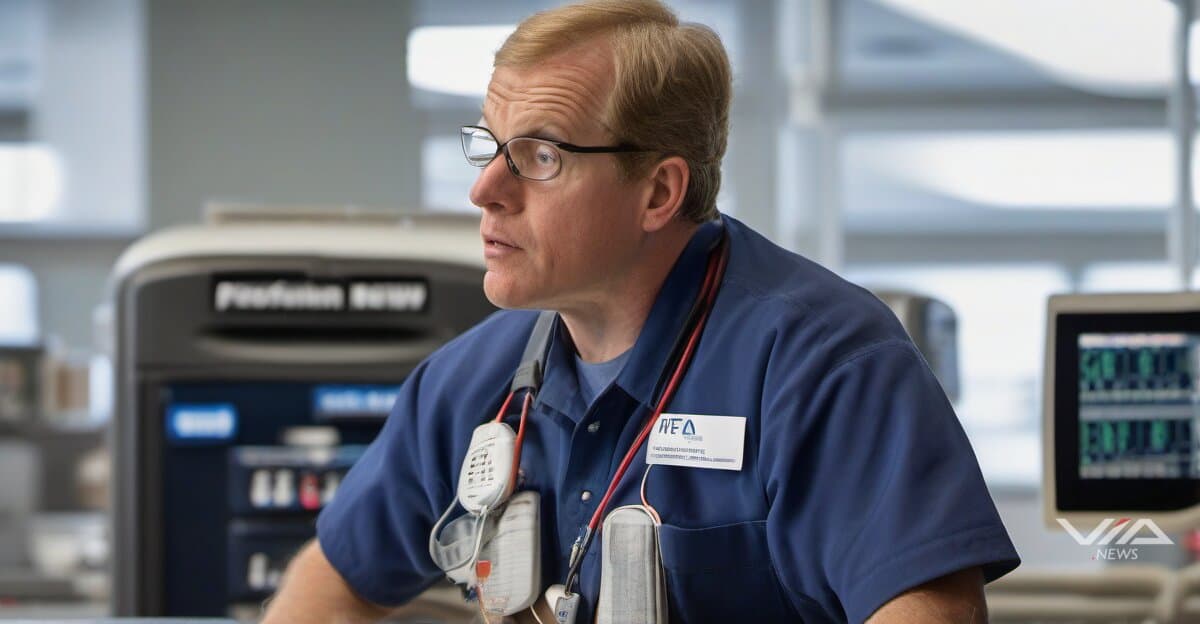
Image generated by AI for illustrative purposes. Not actual footage or photography from the reported events.

A rival wearable cardioverter defibrillator (WCD) maker has received an FDA warning letter, according to a risk assessment tied to Kestra Medical Technologies.1 Kestra's management believes the letter targeted the competitor's other operations, not its WCD division.1

The disclosure still signals category-wide risk for a device class regulated similarly across major markets, including the US FDA, the EU's Medical Device Regulation regime, and other national health authorities that often watch US enforcement trends. Kestra's sole commercial product, ASSURE, competes directly in this scrutinized category.1 The risk is rated "major" in severity with "low" likelihood.1

Kestra depends on continued FDA clearance for algorithm and product updates to ASSURE.1 With only one commercial product, any slowdown in US review pace or tighter enforcement carries outsized weight, a dependency global device makers with diversified portfolios can better absorb.

Brian Webster, Kestra's founder, president, CEO and director, leads the company through this environment.1 Webster built ASSURE into Kestra's core offering, tying near-term prospects closely to FDA's posture toward the broader WCD category.1

Warning letters directed at one company in a medical device category often prompt regulators to apply closer review to peer products worldwide, even absent a direct citation. Health authorities outside the US frequently reference FDA actions when assessing their own device approvals, meaning US scrutiny can ripple into other regulatory jurisdictions.

For Kestra, that dynamic raises the stakes on future submissions covering ASSURE algorithm updates or product iterations. Any perceived slowdown in FDA turnaround times, or tighter review standards across the WCD category, could affect Kestra's position against rivals with broader, more geographically diversified product lines.

The assessment characterizes the risk as low likelihood but major severity, reflecting a scenario where regulatory friction is not expected imminently but would have outsized consequences for a single-product company.1 International investors tracking Kestra will watch whether FDA's posture toward the competitor's warning letter extends into broader category-level enforcement, a trend with implications beyond the US market.

In this story · Knowledge Files

About this analysis

This is a Via News analysis. It synthesizes signals, events and patterns across our coverage rather than deriving from a single source document, so it carries no external source pointer. Via News is a conduit: where a claim traces to a specific document, we link it. How we source

LM Salvado
LM Salvado

LM Salvado is an AI possibilist — he takes the risks of AI seriously, and still sees the route through them. Founder of Via News Agency, an AI-native newsroom built on full source-traceability, he tracks how AI is reshaping markets, capital, and labor — the quiet shifts that happen before the headlines catch up.

What we know · the intelligence behind this page
Live from the substrate
What we're seeing
Vertical AI Agents Attract a Funding Wave Across Fintech-Adjacent Industries
A cluster of AI-native startups applying autonomous agents to narrow, operational problems — hotel front-desk staffing (Dextr AI), identity/fraud risk for financial institutions (Baselayer), insurance distribution (Napo, Connie Health, MGT Insurance) — closed seed-to-Series A rounds within days of each other in September 2026, with CB Insights running a coordinated CEO interview series to spotlight them. The pattern points to agentic AI maturing from generic chat tools into vertical, revenue-generating products, with identity verification for AI agents themselves (Baselayer) emerging as a new fintech infrastructure category responding directly to AI-driven fraud risk.
Our read on the data ›
Signals we're tracking
Satellite-Terrestrial Network Integration Acceleration
Increased investment and launches in hybrid satellite-cellular networks across telecom industry; competitive responses from other carriers; regulatory activity around satellite spectrum; expansion of emergency/rural connectivity use cases
Patterns we're watching ›
Where sources disagree
ING Group
Both facts record the same metric (shares_outstanding) for ING Group at the identical observation date (2025-12-31). FACT A states 2,902,437,688 shares; FACT B states 2,902 million shares (2,902,000,000). The difference is 437,688 shares (~0.015%). This is a genuine value conflict, though the discrepancy appears to result from FACT B rounding to the nearest million while FACT A provides the precise count.
We flag conflicts openly ›
Recently verified
✓ Checked against the original source
4,984
facts traced to their source — and we flag the ones that don't hold up.
101 entities tracked4,984 facts checked against source5,306 source documents archived
Query this data → isubstrate.com