
Sunday, September 27, 2026

Virtual Heart Simulations Reach 2,000 Clinical Cases as U.S. FDA Establishes Global Standard for Digital Trials

Patient-specific virtual heart simulations reached 2,000 clinical procedures in March 2026, seven years after the first pediatric case. The FDA's August 2024 guidelines for in silico trials create regulatory precedent that could influence medical device approval processes worldwide.

LM Salvado
LM Salvado

March 21, 2026

Virtual Heart Simulations Reach 2,000 Clinical Cases as U.S. FDA Establishes Global Standard for Digital Trials
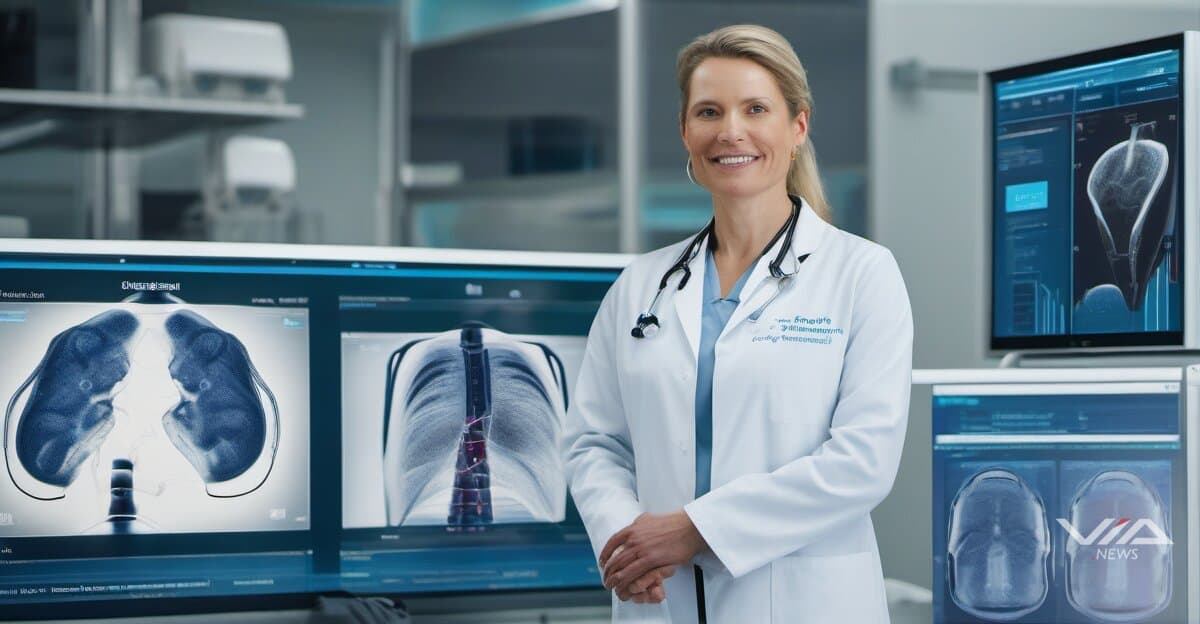
Image generated by AI for illustrative purposes. Not actual footage or photography from the reported events.

Virtual twin-guided medical procedures reached 2,000 cases globally in March 2026, seven years after a single pediatric heart surgery launched the clinical application of AI-powered patient simulations in May 2019.

The U.S. FDA published its first guidelines for in silico clinical trials in August 2024, establishing regulatory standards that could shape international approaches to validating medical devices through virtual patient simulations. The framework builds on the agency's 2015 participation in the Living Heart Project, which created the first fully functional virtual heart model.

In silico trials use computational models to simulate treatment responses in individual patients before physical procedures. The technology allows manufacturers to supplement traditional clinical trials with virtual patient data, potentially reducing the years and millions in costs required for physical testing across diverse populations.

The 2,000-procedure milestone suggests clinical adoption is expanding beyond early-adopter institutions, though the seven-year trajectory indicates gradual integration rather than rapid deployment. The pace likely reflects requirements for surgeon training, institutional validation protocols, and regulatory clarity across different healthcare systems.

The FDA's active role—from joining the Living Heart Project in 2015 to leading guideline development—represents a regulatory agency shaping AI healthcare tools rather than reacting to industry innovation. This proactive approach may influence how other national regulators approach computational validation standards.

Critical questions remain for global implementation: how many virtual simulations equal one physical trial, how to verify accuracy across genetically diverse patient populations, and whether approval timelines actually decrease. Real-world validation data from approved devices will determine if in silico trials deliver efficiency gains across different regulatory environments.

The technology's regulatory acceptance could set precedent for computational validation of medical interventions worldwide, particularly in markets that reference FDA standards for their own approval processes.

In this story · Knowledge Files

About this analysis

This is a Via News analysis. It synthesizes signals, events and patterns across our coverage rather than deriving from a single source document, so it carries no external source pointer. Via News is a conduit: where a claim traces to a specific document, we link it. How we source

LM Salvado
LM Salvado

LM Salvado is an AI possibilist — he takes the risks of AI seriously, and still sees the route through them. Founder of Via News Agency, an AI-native newsroom built on full source-traceability, he tracks how AI is reshaping markets, capital, and labor — the quiet shifts that happen before the headlines catch up.

What we know · the intelligence behind this page
Live from the substrate
What we're seeing
Vertical AI Agents Attract a Funding Wave Across Fintech-Adjacent Industries
A cluster of AI-native startups applying autonomous agents to narrow, operational problems — hotel front-desk staffing (Dextr AI), identity/fraud risk for financial institutions (Baselayer), insurance distribution (Napo, Connie Health, MGT Insurance) — closed seed-to-Series A rounds within days of each other in September 2026, with CB Insights running a coordinated CEO interview series to spotlight them. The pattern points to agentic AI maturing from generic chat tools into vertical, revenue-generating products, with identity verification for AI agents themselves (Baselayer) emerging as a new fintech infrastructure category responding directly to AI-driven fraud risk.
Our read on the data ›
Signals we're tracking
Satellite-Terrestrial Network Integration Acceleration
Increased investment and launches in hybrid satellite-cellular networks across telecom industry; competitive responses from other carriers; regulatory activity around satellite spectrum; expansion of emergency/rural connectivity use cases
Patterns we're watching ›
Where sources disagree
ING Group
Both facts record the same metric (shares_outstanding) for ING Group at the identical observation date (2025-12-31). FACT A states 2,902,437,688 shares; FACT B states 2,902 million shares (2,902,000,000). The difference is 437,688 shares (~0.015%). This is a genuine value conflict, though the discrepancy appears to result from FACT B rounding to the nearest million while FACT A provides the precise count.
We flag conflicts openly ›
Recently verified
✓ Checked against the original source
4,984
facts traced to their source — and we flag the ones that don't hold up.
101 entities tracked4,984 facts checked against source5,306 source documents archived
Query this data → isubstrate.com