
Sunday, September 27, 2026

Oil Tops $100 as US Blockades Strait of Hormuz, Central Banks Face Inflation-Growth Dilemma

Oil prices surged past $100 per barrel on April 14, 2026, after the United States ordered a blockade of the Strait of Hormuz—a chokepoint handling one-fifth of global oil traffic. Treasury yields swung as investors balanced safe-haven demand against inflation fears, creating a policy dilemma for central banks worldwide navigating energy shocks and growth risks.

LM Salvado
LM Salvado

April 15, 2026

Source Trace Score3 source documents3 with a live linkVerifiability: Strong
Oil Tops $100 as US Blockades Strait of Hormuz, Central Banks Face Inflation-Growth Dilemma
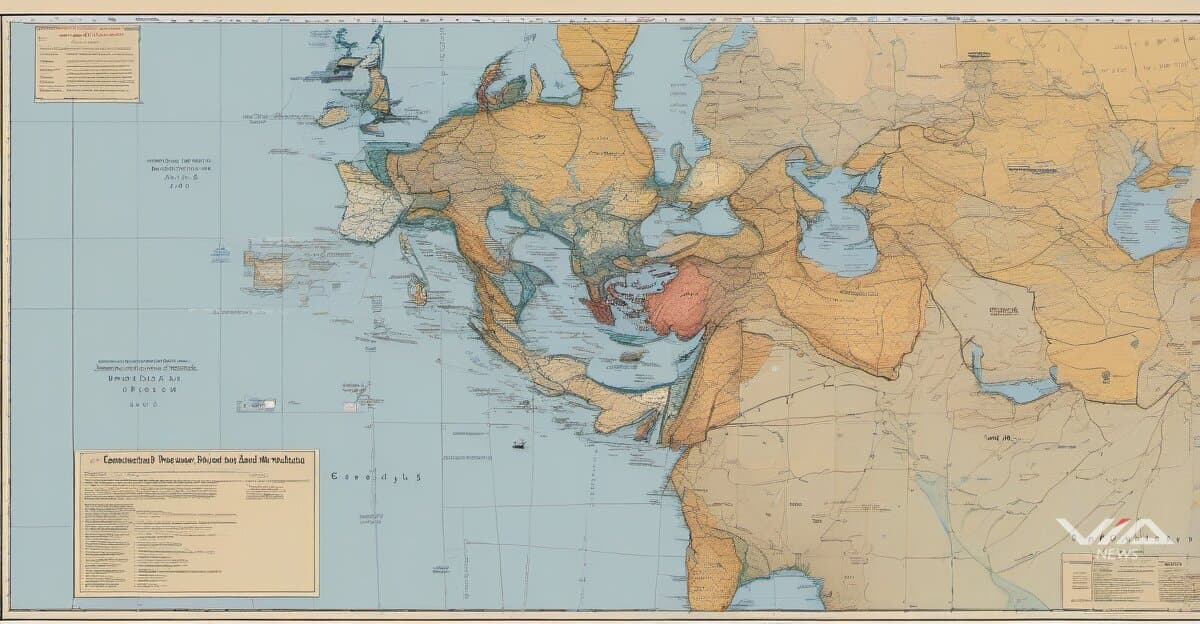
Image generated by AI for illustrative purposes. Not actual footage or photography from the reported events.

Oil prices broke $100 per barrel on April 14, 2026, after the United States ordered a blockade of the Strait of Hormuz following collapsed US-Iran negotiations.1 The strait handles roughly one-fifth of global oil traffic, meaning sustained disruption would reshape inflation outlooks from Washington to Frankfurt to Tokyo.

Treasury yields swung in both directions as investors weighed competing forces. Safe-haven demand initially drove bond buying and strengthened the dollar,2 but inflation concerns from the energy shock quickly dominated. Equity markets trimmed early losses,1 reflecting uncertainty over whether central banks will prioritize growth or price stability.

The Federal Reserve now confronts a classic policy dilemma. Oil price spikes historically feed into headline inflation within months, potentially derailing disinflation progress across developed economies. Yet simultaneous safe-haven flows into US Treasuries signal growth concerns that typically warrant looser policy—a tension the European Central Bank and Bank of England also face given Europe's energy import dependence.

Currency markets exposed the bifurcated outlook. The dollar's safe-haven bid suggests expectations for Fed caution,2 while commodity-linked currencies including the Canadian and Australian dollars face pressure from growth slowdown fears. Canadian consumers already experience financial strain from economic uncertainty,3 a vulnerability shared by energy-importing nations across Asia and Europe if sustained price increases materialize.

Fixed income investors must now price dual scenarios: central bank tightening if oil remains elevated, versus policy pause or reversal if geopolitical instability triggers broader slowdown. The timing complicates existing central bank debates on climate-related financial risks and regulatory frameworks, as geopolitical energy shocks underscore the intersection of traditional monetary tools and systemic risk management.

The April 14 market response demonstrates how external shocks override domestic policy narratives. Central bankers who spent recent months on gradual normalization now face potential rapid reassessment—a challenge amplified in energy-importing economies from Japan to India, where inflation-growth tradeoffs already constrain policy space.

Source documents

Via News is a conduit. We point to the source documents behind this report — we don't replace them. Trace any claim to its source and decide what to trust. How we source

Source Trace Score3 source documents3 with a live linkVerifiability: Strong
  1. [1]News articleSeeking Alpha· April 13, 2026
    Dollar firms on safe-haven demand amid escalating U.S.-Iran tensions: Currency Recap
  2. [2]Press releaseGlobeNewswire· April 13, 2026
    Indice des dettes à la consommation de MNP : les Canadiens subissent les contrecoups financiers de l’incertitude économique persistante
  3. [3]News articleYahoo Finance· April 13, 2026
    Stock market today: Dow, S&P 500, Nasdaq trim losses after Trump orders Hormuz blockade against Iran

In this story · Knowledge Files

LM Salvado
LM Salvado

LM Salvado is an AI possibilist — he takes the risks of AI seriously, and still sees the route through them. Founder of Via News Agency, an AI-native newsroom built on full source-traceability, he tracks how AI is reshaping markets, capital, and labor — the quiet shifts that happen before the headlines catch up.

What we know · the intelligence behind this page
Live from the substrate
What we're seeing
Vertical AI Agents Attract a Funding Wave Across Fintech-Adjacent Industries
A cluster of AI-native startups applying autonomous agents to narrow, operational problems — hotel front-desk staffing (Dextr AI), identity/fraud risk for financial institutions (Baselayer), insurance distribution (Napo, Connie Health, MGT Insurance) — closed seed-to-Series A rounds within days of each other in September 2026, with CB Insights running a coordinated CEO interview series to spotlight them. The pattern points to agentic AI maturing from generic chat tools into vertical, revenue-generating products, with identity verification for AI agents themselves (Baselayer) emerging as a new fintech infrastructure category responding directly to AI-driven fraud risk.
Our read on the data ›
Signals we're tracking
Satellite-Terrestrial Network Integration Acceleration
Increased investment and launches in hybrid satellite-cellular networks across telecom industry; competitive responses from other carriers; regulatory activity around satellite spectrum; expansion of emergency/rural connectivity use cases
Patterns we're watching ›
Where sources disagree
ING Group
Both facts record the same metric (shares_outstanding) for ING Group at the identical observation date (2025-12-31). FACT A states 2,902,437,688 shares; FACT B states 2,902 million shares (2,902,000,000). The difference is 437,688 shares (~0.015%). This is a genuine value conflict, though the discrepancy appears to result from FACT B rounding to the nearest million while FACT A provides the precise count.
We flag conflicts openly ›
Recently verified
✓ Checked against the original source
4,984
facts traced to their source — and we flag the ones that don't hold up.
101 entities tracked4,984 facts checked against source5,306 source documents archived
Query this data → isubstrate.com