
Sunday, September 27, 2026

Federal Reserve to Pause Rate Cuts by Early 2026, Reshaping Global Borrowing Costs

The US Federal Reserve will likely halt interest rate reductions by early 2026, ending a two-year easing cycle with 82% probability. The shift follows persistent inflation risks and resilient growth, affecting borrowing costs worldwide as central banks from Europe to Asia adjust policies in response to Fed decisions.

LM Salvado
LM Salvado

March 16, 2026

Federal Reserve to Pause Rate Cuts by Early 2026, Reshaping Global Borrowing Costs
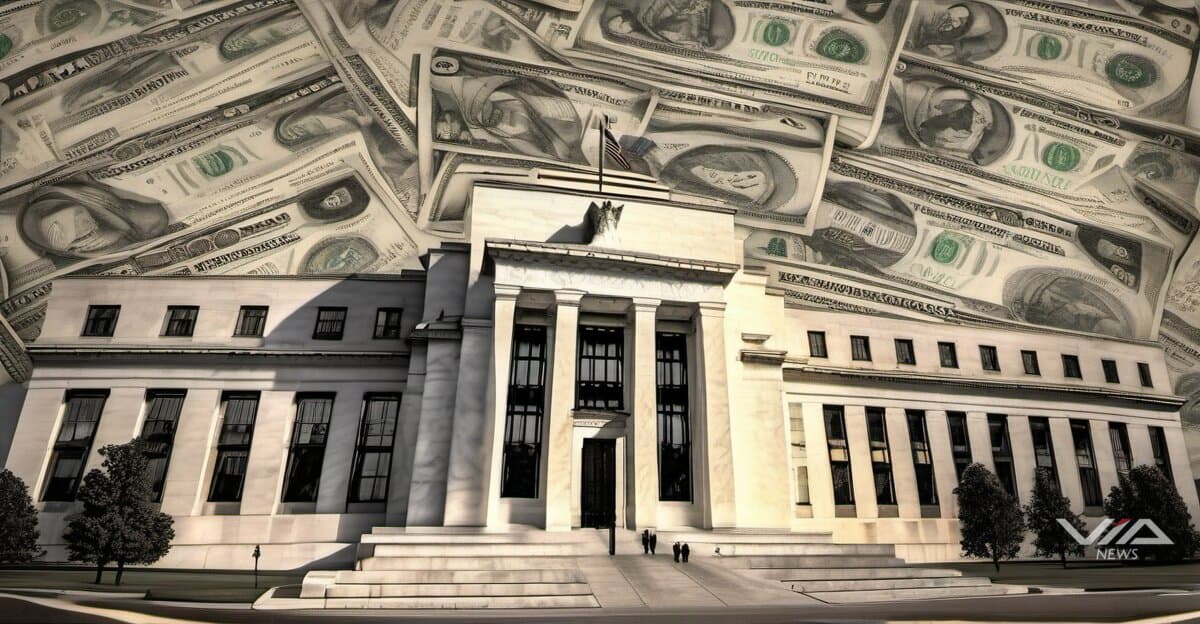
Image generated by AI for illustrative purposes. Not actual footage or photography from the reported events.

The Federal Reserve will pause rate cuts by early 2026 with 82% confidence, halting an easing cycle that began in 2024. The decision reverberates globally as the dollar's dominance makes Fed policy a de facto anchor for central banks from Frankfurt to Tokyo.

Three factors drive the pause. Inflation threatens to breach the 2% target despite earlier cooling. US economic growth outpaces forecasts, reducing stimulus needs. Financial stability concerns emerge as prolonged low rates inflate asset valuations across markets.

International implications extend beyond American borders. The European Central Bank and Bank of England face diverging pressures—cutting rates to stimulate sluggish economies while monitoring Fed moves that strengthen the dollar and import inflation. Emerging markets from Brazil to South Africa confront capital outflows as higher US rates attract investor funds.

Banking sectors worldwide must recalibrate. European lenders already squeezed by negative rates gain breathing room as margins stabilize. Asian banks serving export economies face tighter lending conditions as dollar funding costs rise. Cross-border lending markets reprice risk as currency volatility increases.

Corporate borrowers globally rush to secure financing. Multinationals that delayed bond issues anticipating cheaper rates accelerate issuance before costs firm. Mortgage markets from Canada to Australia adjust as rate expectations shift, cooling property demand in overheated cities.

Credit markets signal uncertainty through yield curve movements. US Treasury rates influence sovereign debt pricing worldwide—a pause would stabilize short-term rates while long-dated bonds reflect inflation fears. Developing nations with dollar-denominated debt face higher refinancing burdens.

This pause differs from 2019's mid-cycle adjustment. It arrives amid coordinated fiscal expansion across G7 economies, persistent supply chain disruptions, and geopolitical tensions from Ukraine to Taiwan. Central banks lack the synchronized easing that defined previous decades.

Fed Chair Jerome Powell's statements carry outsized global weight. Currency traders in London, bond desks in Hong Kong, and treasury departments in São Paulo parse FOMC minutes for timing signals. Market volatility typically spikes during US policy transitions as international capital repositions across asset classes and borders.

In this story · Knowledge Files

LM Salvado
LM Salvado

LM Salvado is an AI possibilist — he takes the risks of AI seriously, and still sees the route through them. Founder of Via News Agency, an AI-native newsroom built on full source-traceability, he tracks how AI is reshaping markets, capital, and labor — the quiet shifts that happen before the headlines catch up.

What we know · the intelligence behind this page
Live from the substrate
What we're seeing
Vertical AI Agents Attract a Funding Wave Across Fintech-Adjacent Industries
A cluster of AI-native startups applying autonomous agents to narrow, operational problems — hotel front-desk staffing (Dextr AI), identity/fraud risk for financial institutions (Baselayer), insurance distribution (Napo, Connie Health, MGT Insurance) — closed seed-to-Series A rounds within days of each other in September 2026, with CB Insights running a coordinated CEO interview series to spotlight them. The pattern points to agentic AI maturing from generic chat tools into vertical, revenue-generating products, with identity verification for AI agents themselves (Baselayer) emerging as a new fintech infrastructure category responding directly to AI-driven fraud risk.
Our read on the data ›
Signals we're tracking
Satellite-Terrestrial Network Integration Acceleration
Increased investment and launches in hybrid satellite-cellular networks across telecom industry; competitive responses from other carriers; regulatory activity around satellite spectrum; expansion of emergency/rural connectivity use cases
Patterns we're watching ›
Where sources disagree
ING Group
Both facts record the same metric (shares_outstanding) for ING Group at the identical observation date (2025-12-31). FACT A states 2,902,437,688 shares; FACT B states 2,902 million shares (2,902,000,000). The difference is 437,688 shares (~0.015%). This is a genuine value conflict, though the discrepancy appears to result from FACT B rounding to the nearest million while FACT A provides the precise count.
We flag conflicts openly ›
Recently verified
✓ Checked against the original source
4,984
facts traced to their source — and we flag the ones that don't hold up.
101 entities tracked4,984 facts checked against source5,306 source documents archived
Query this data → isubstrate.com