
Sunday, September 27, 2026

Fed, ECB, and Major Central Banks Halt Rate Cuts as Inflation Persists Above Targets

The Federal Reserve will hold interest rates at current levels for an extended period as inflation stays above 2%, joining the European Central Bank, Bank of Russia, and Brazil's central bank in pausing easing cycles this week. The coordinated stance marks a global shift from the rate-cutting trajectory anticipated earlier this year, with policymakers prioritizing inflation control over growth stimulus.

Source Trace Score4 source documents4 with a live linkVerifiability: Strong
Fed, ECB, and Major Central Banks Halt Rate Cuts as Inflation Persists Above Targets
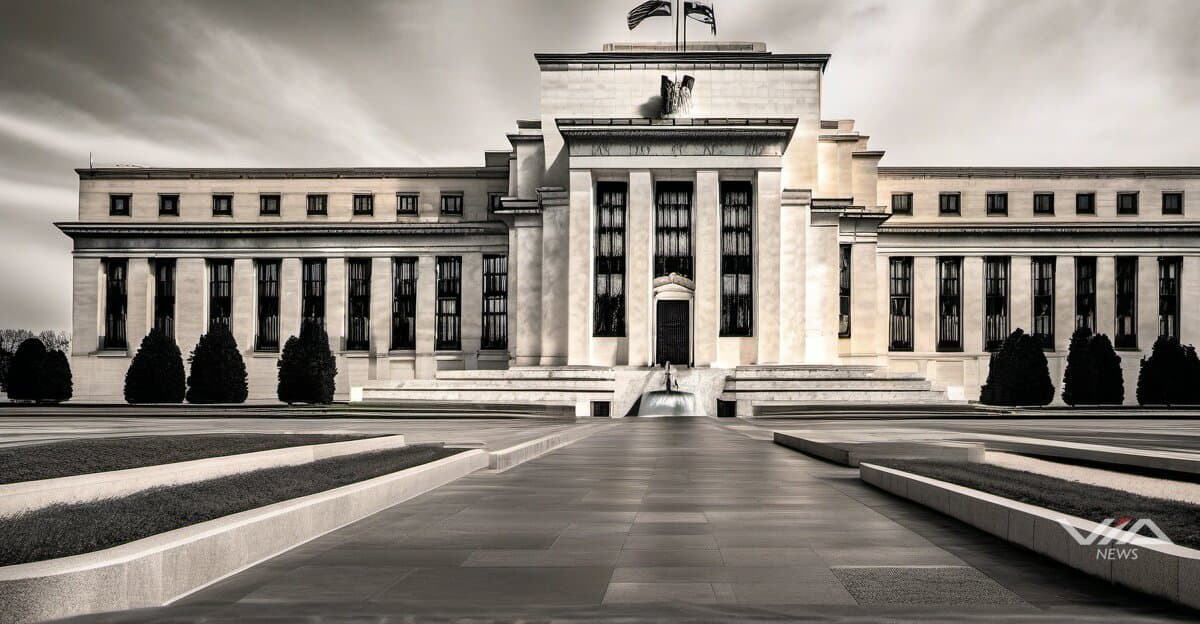
Image generated by AI for illustrative purposes. Not actual footage or photography from the reported events.

Four major central banks paused their easing cycles this week as persistent inflation forces a global rethink of monetary policy. The Federal Reserve, European Central Bank, Bank of Russia, and Brazil's central bank all held rates steady, abandoning the rate-cutting path expected at the start of the year.

Former Cleveland Fed President Loretta Mester said the Fed can maintain current rates for an extended period while inflation exceeds its 2% target. "The labor market has stabilized, and they need to keep policy a bit restrictive to help inflation move back down to 2%. It's a good time to wait," Mester stated.

The pause reflects shifting dynamics in major economies. U.S. labor market weakness stems from immigration restrictions and tariffs rather than monetary factors, according to Mester. "It's not as vibrant of a labor market as you'd like, but that's because of the policies that have been put onto this economy, not anything a Fed tool like the fed funds rate can address," she said.

Geopolitical risks complicate policy decisions worldwide. Brazil's monetary policy director Nilton David warned that the Iran conflict "adds new layer of risk to Brazil's economic outlook and could argue for reassessment of how bank calibrates monetary policy after March meeting."

Mester emphasized the Fed's patience approach: "The Fed is in a very good position to hold for a while and see how the economy actually evolves." Policymakers require clear evidence of inflation returning to 2% or significant labor market deterioration before resuming cuts.

The divergence in views among Fed officials reflects current uncertainty. "In an environment this difficult to read, I don't think it's very unusual or surprising that you'd have different views. If everyone agreed, I'd be worried they're not working at things as robustly as they should," Mester said.

Financial markets face prolonged higher borrowing costs across major economies. The coordinated pause signals that central banks view inflation risks as outweighing economic slowdown concerns, with tight labor markets and geopolitical tensions reinforcing the case for caution on rate cuts.

Source documents

Via News is a conduit. We point to the source documents behind this report — we don't replace them. Trace any claim to its source and decide what to trust. How we source

Source Trace Score4 source documents4 with a live linkVerifiability: Strong
  1. [1]News articleYahoo Finance· January 28, 2026
    The Fed might not cut interest rates for a while. Here are 5 things we’re watching.
  2. [2]News articleYahoo Finance· March 7, 2026
    US Inflation Gauges Likely Diverged Before War in Iran
  3. [3]Press releaseGlobeNewswire· February 5, 2026
    Årsregnskabsmeddelelse 2025
  4. [4]News articleNasdaq· November 21, 2025
    Stocks Rally as Chip Makers Rebound

In this story · Knowledge Files

What we know · the intelligence behind this page
Live from the substrate
What we're seeing
Vertical AI Agents Attract a Funding Wave Across Fintech-Adjacent Industries
A cluster of AI-native startups applying autonomous agents to narrow, operational problems — hotel front-desk staffing (Dextr AI), identity/fraud risk for financial institutions (Baselayer), insurance distribution (Napo, Connie Health, MGT Insurance) — closed seed-to-Series A rounds within days of each other in September 2026, with CB Insights running a coordinated CEO interview series to spotlight them. The pattern points to agentic AI maturing from generic chat tools into vertical, revenue-generating products, with identity verification for AI agents themselves (Baselayer) emerging as a new fintech infrastructure category responding directly to AI-driven fraud risk.
Our read on the data ›
Signals we're tracking
Satellite-Terrestrial Network Integration Acceleration
Increased investment and launches in hybrid satellite-cellular networks across telecom industry; competitive responses from other carriers; regulatory activity around satellite spectrum; expansion of emergency/rural connectivity use cases
Patterns we're watching ›
Where sources disagree
ING Group
Both facts record the same metric (shares_outstanding) for ING Group at the identical observation date (2025-12-31). FACT A states 2,902,437,688 shares; FACT B states 2,902 million shares (2,902,000,000). The difference is 437,688 shares (~0.015%). This is a genuine value conflict, though the discrepancy appears to result from FACT B rounding to the nearest million while FACT A provides the precise count.
We flag conflicts openly ›
Recently verified
✓ Checked against the original source
4,984
facts traced to their source — and we flag the ones that don't hold up.
101 entities tracked4,984 facts checked against source5,306 source documents archived
Query this data → isubstrate.com