
Sunday, September 27, 2026

Fed's Waller Puts Rate Hikes Back on the Table as Iran War Stokes Global Inflation

Fed Governor Christopher Waller warned on May 22 that US rate hikes are no longer off the table, citing supply-shock inflation driven by the Iran War. The signal is already reverberating through global bond markets, emerging economies, and dollar-sensitive commodity importers. A fractured FOMC and the imminent replacement of Chair Powell deepen the uncertainty for international investors.

LM Salvado
LM Salvado

May 26, 2026

Source Trace Score2 source documents2 with a live linkVerifiability: Strong
Fed's Waller Puts Rate Hikes Back on the Table as Iran War Stokes Global Inflation
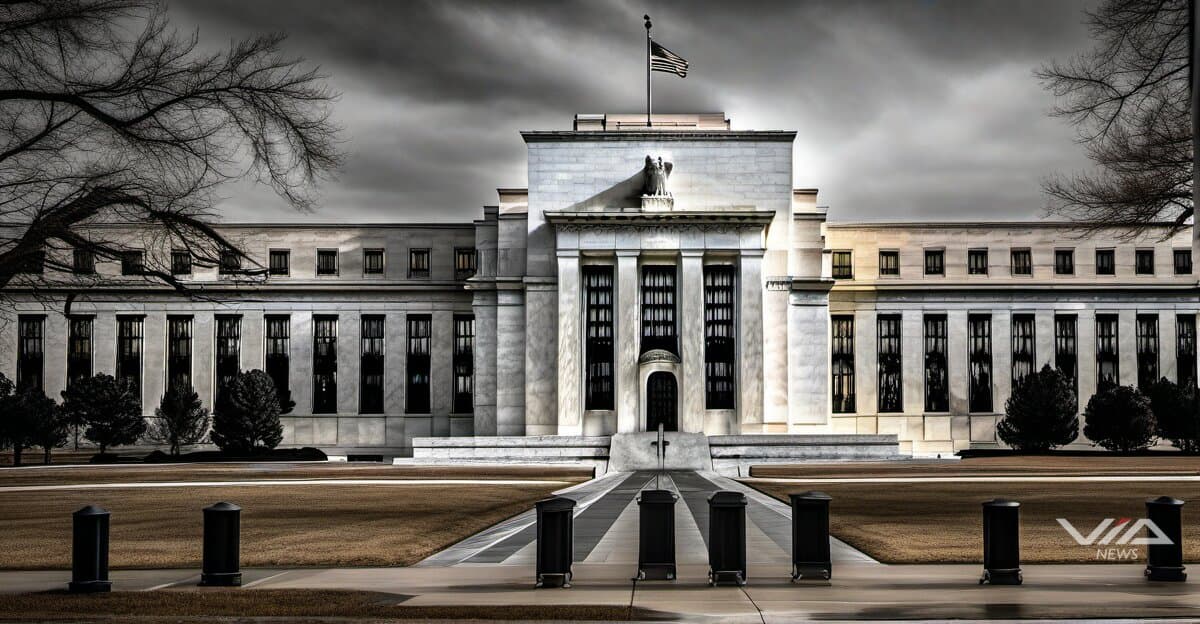
Image generated by AI for illustrative purposes. Not actual footage or photography from the reported events.

Fed Governor Christopher Waller told a Frankfurt audience on May 22 that rate hikes are back on the table.1 "I can no longer rule out rate hikes further down the road if inflation does not abate soon," he said.1 The statement lands in a world still absorbing the economic shockwaves of the Iran War, which began in February 2026.

"Inflation is not headed in the right direction," Waller added.1 Oil price rises from the conflict have broken the disinflation path the Fed had been navigating. Waller said the price pressures could be temporary if the war ends quickly. But prolonged conflict means prolonged tightening.1

For now, the Fed's position is wait-and-see.1 Markets have already moved. Rate-hike probability has been repriced upward following the Frankfurt remarks. The dollar strengthened on the news.

Pressure on emerging markets and global borrowers

A stronger dollar tightens conditions across the developing world. Countries carrying dollar-denominated debt face higher repayment costs. Commodity importers — from South Asia to sub-Saharan Africa — absorb a double hit: expensive oil and a pricier dollar. Central banks from Brazil to Indonesia will be watching Washington closely.

In advanced economies, the repricing is just as acute. Mortgage rates, auto loans, and corporate credit would rise with any hike. Fixed-income investors face renewed duration risk. Rate-sensitive sectors — real estate, utilities, infrastructure — are under pressure globally as the US discount rate moves higher.

Fractured Fed, uncertain signal

The hawkish signal arrives as the Fed's internal cohesion cracks. The FOMC's last vote split 8-4, with three formal dissents — an unusually high count.2 A Trump-Powell conflict involving the Justice Department has effectively sidelined Chair Powell. Kevin Warsh is positioned to replace him.2 Warsh inherits what one report called a "family fight" over rates, precisely when rate cuts are being taken off the table.2

Supply-shock inflation, hawkish Fed signaling, and fractured US institutional leadership form a combination that makes American rate policy both more consequential and less legible than at any point in the current cycle. For global markets, that unpredictability is itself a risk.

Source documents

Via News is a conduit. We point to the source documents behind this report — we don't replace them. Trace any claim to its source and decide what to trust. How we source

Source Trace Score2 source documents2 with a live linkVerifiability: Strong
  1. [1]News articleYahoo Finance· May 23, 2026
    Another top Fed official resets rate-cut bets
  2. [2]News articleCNBC· May 16, 2026
    Kevin Warsh comes into the Fed facing a big 'family fight' over cutting interest rates
LM Salvado
LM Salvado

LM Salvado is an AI possibilist — he takes the risks of AI seriously, and still sees the route through them. Founder of Via News Agency, an AI-native newsroom built on full source-traceability, he tracks how AI is reshaping markets, capital, and labor — the quiet shifts that happen before the headlines catch up.

What we know · the intelligence behind this page
Live from the substrate
What we're seeing
Vertical AI Agents Attract a Funding Wave Across Fintech-Adjacent Industries
A cluster of AI-native startups applying autonomous agents to narrow, operational problems — hotel front-desk staffing (Dextr AI), identity/fraud risk for financial institutions (Baselayer), insurance distribution (Napo, Connie Health, MGT Insurance) — closed seed-to-Series A rounds within days of each other in September 2026, with CB Insights running a coordinated CEO interview series to spotlight them. The pattern points to agentic AI maturing from generic chat tools into vertical, revenue-generating products, with identity verification for AI agents themselves (Baselayer) emerging as a new fintech infrastructure category responding directly to AI-driven fraud risk.
Our read on the data ›
Signals we're tracking
Satellite-Terrestrial Network Integration Acceleration
Increased investment and launches in hybrid satellite-cellular networks across telecom industry; competitive responses from other carriers; regulatory activity around satellite spectrum; expansion of emergency/rural connectivity use cases
Patterns we're watching ›
Where sources disagree
ING Group
Both facts record the same metric (shares_outstanding) for ING Group at the identical observation date (2025-12-31). FACT A states 2,902,437,688 shares; FACT B states 2,902 million shares (2,902,000,000). The difference is 437,688 shares (~0.015%). This is a genuine value conflict, though the discrepancy appears to result from FACT B rounding to the nearest million while FACT A provides the precise count.
We flag conflicts openly ›
Recently verified
✓ Checked against the original source
4,984
facts traced to their source — and we flag the ones that don't hold up.
101 entities tracked4,984 facts checked against source5,306 source documents archived
Query this data → isubstrate.com