
Sunday, September 27, 2026

Qatar's EV Expansion Hinges on Foreign Partners—Diplomatic Isolation Could Scatter Them

Qatar is aggressively expanding EV infrastructure but remains exposed to the same diplomatic rupture risk that produced the 2017–2021 GCC blockade. Foreign technology partners—essential to the program—assess political stability before signing multi-year deals. Analysts rate the risk catastrophic in severity, even as base-case likelihood stays low.

LM Salvado
LM Salvado

May 21, 2026

Qatar's EV Expansion Hinges on Foreign Partners—Diplomatic Isolation Could Scatter Them
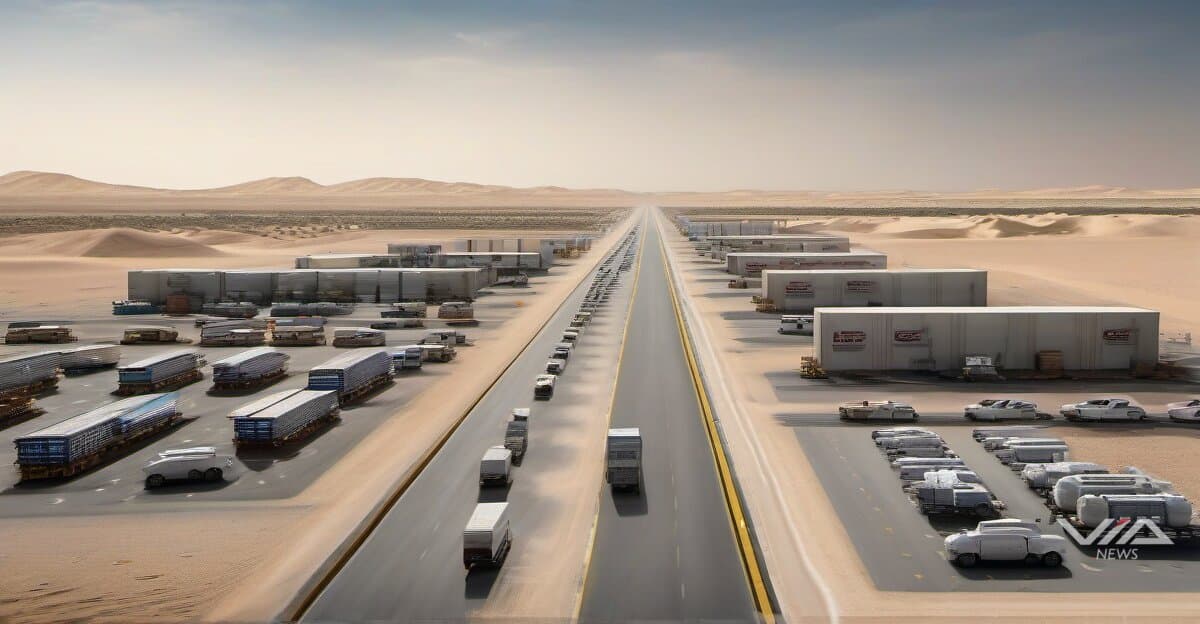
Image generated by AI for illustrative purposes. Not actual footage or photography from the reported events.

Qatar's EV infrastructure program depends on foreign technology partners. A diplomatic rupture—like the 2017–2021 GCC blockade—could drive those partners out before the program matures.1

The blockade lasted nearly four years. Saudi Arabia, the UAE, Bahrain, and Egypt severed ties, closing borders and airspace. Qatar survived. But the disruption exposed structural vulnerabilities that persist.

Most EV components enter Qatar through UAE logistics hubs.1 A blockade scenario cuts that pipeline. Alternative routes exist but are slower and more expensive. Delivery timelines for charging infrastructure, battery systems, and smart-grid hardware would slip significantly.

The contract risk exceeds the supply chain risk. Across emerging markets—from Southeast Asia to the Gulf—foreign technology firms scrutinize political stability before signing multi-year infrastructure deals. Even a credible threat of isolation triggers hesitation. Partners demand risk premiums, insert exit clauses, or withdraw entirely.

Qatar's EV program requires sustained long-term commitment. Charging networks, vehicle fleets, and grid integration cannot be built on short-term vendor relationships. If diplomatic tension resurfaces, the partner pipeline narrows precisely when Qatar needs to accelerate deployment.

The risk is rated catastrophic in severity.1 Likelihood is assessed as low. This tail-risk profile is familiar in politically sensitive infrastructure markets globally. Investors in comparable jurisdictions routinely apply scenario planning even when base-case probability is low.

Qatar has diversified its logistics since 2017. Direct shipping routes and alternative air freight partnerships have expanded. These mitigations reduce supply chain exposure but don't resolve the partner confidence problem.

That second risk vector is harder to hedge. A technology partner that exits a market rarely returns on the same terms. Recovery timelines measured in years—not months—are typical across comparable infrastructure sectors worldwide.

The GCC political environment has stabilized since the 2021 Al-Ula Declaration. That stability is not guaranteed. Qatar's independent foreign policy—including active ties with Iran and Turkey—maintains the conditions for renewed diplomatic friction.

Investors evaluating Qatar infrastructure exposure face two distinct risks: physical supply chain disruption and partner confidence erosion. The latter is slower to materialize and slower to recover.

About this analysis

This is a Via News analysis. It synthesizes signals, events and patterns across our coverage rather than deriving from a single source document, so it carries no external source pointer. Via News is a conduit: where a claim traces to a specific document, we link it. How we source

LM Salvado
LM Salvado

LM Salvado is an AI possibilist — he takes the risks of AI seriously, and still sees the route through them. Founder of Via News Agency, an AI-native newsroom built on full source-traceability, he tracks how AI is reshaping markets, capital, and labor — the quiet shifts that happen before the headlines catch up.

What we know · the intelligence behind this page
Live from the substrate
What we're seeing
Vertical AI Agents Attract a Funding Wave Across Fintech-Adjacent Industries
A cluster of AI-native startups applying autonomous agents to narrow, operational problems — hotel front-desk staffing (Dextr AI), identity/fraud risk for financial institutions (Baselayer), insurance distribution (Napo, Connie Health, MGT Insurance) — closed seed-to-Series A rounds within days of each other in September 2026, with CB Insights running a coordinated CEO interview series to spotlight them. The pattern points to agentic AI maturing from generic chat tools into vertical, revenue-generating products, with identity verification for AI agents themselves (Baselayer) emerging as a new fintech infrastructure category responding directly to AI-driven fraud risk.
Our read on the data ›
Signals we're tracking
Satellite-Terrestrial Network Integration Acceleration
Increased investment and launches in hybrid satellite-cellular networks across telecom industry; competitive responses from other carriers; regulatory activity around satellite spectrum; expansion of emergency/rural connectivity use cases
Patterns we're watching ›
Where sources disagree
ING Group
Both facts record the same metric (shares_outstanding) for ING Group at the identical observation date (2025-12-31). FACT A states 2,902,437,688 shares; FACT B states 2,902 million shares (2,902,000,000). The difference is 437,688 shares (~0.015%). This is a genuine value conflict, though the discrepancy appears to result from FACT B rounding to the nearest million while FACT A provides the precise count.
We flag conflicts openly ›
Recently verified
✓ Checked against the original source
4,984
facts traced to their source — and we flag the ones that don't hold up.
101 entities tracked4,984 facts checked against source5,306 source documents archived
Query this data → isubstrate.com