
UK: NHS Surgery Team's Attention to Detail Might Have Saved a Patient's Life
Peter Bird, a professional writer from Milton Keynes, shared his heart attack experience with Via News to raise awareness about what to expect before, during, and after cardiac emergencies with the NHS.

LM Salvado
March 19, 2018
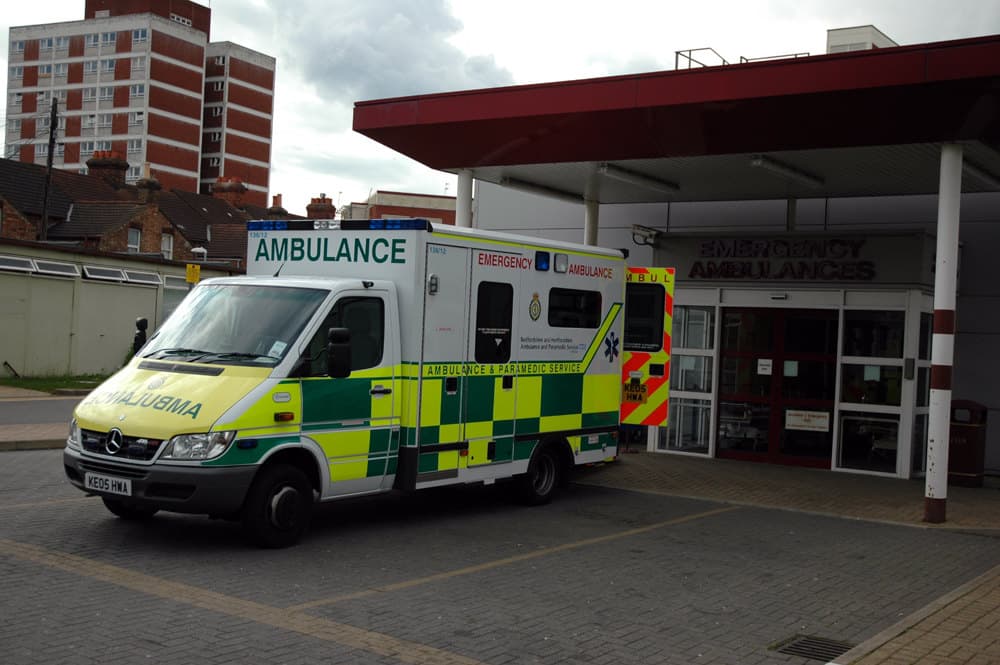
LONDON (ViaNews) - Peter Bird, a professional writer and journalist from Milton Keynes, in the UK, went through an experience he won't easily forget. He had a heart attack and was assisted by the UK's National Health Service (NHS).
Mr Bird gave ViaNews an interview to let us know and make people aware of what to expect before, during, and after a heart attack. This story is also a great opportunity to gauge the efficacy and efficiency of the NHS professionals across the UK, as well as providing future improvement suggestions to the UK's public health service.
Miguel Salvado: What caused you to need NHS Care?
Peter Bird: Two and a half weeks ago I had a heart attack. It was the first time, other than a check following a car crash which proved nothing amiss, that I had been to the hospital for myself since I had leapt over a rusty barrel at the age of eight and cut my knee open.
So how was the experience?
It is hard to be objective when you are having your life saved, but I will do my best.
There have been four elements on my journey so far – the surgery where I was diagnosed, the paramedic crew who transported me to a hospital ninety minutes away through settling snow. Then, the hospital itself, and finally the after-care service.
Many people suffer heart attacks, what was your own experience of the crisis?
To be honest, I didn’t know I’d had a heart attack. I woke up at about 3.30am with a dull pain in my jaw. It felt strange, especially when it shifted from the sides, where it had been like a niggling toothache, to the back of my throat. Something was wrong, but I got up and went downstairs to get a drink and an Anaddin, just in case. But there was little pain in the chest, certainly not the excruciating agony about which I had heard, and while my left arm ached, that pain shifted soon enough to the neck, where I assumed I had lain awkwardly and had a kind of frozen shoulder.
What happened next?
By the morning the pain had gone, and I even dozed on the sofa. But my wife insisted that I made an appointment at the surgery, and so I did. There, the practice nurse ran an ECG, and all seemed fine. I moved across to the main surgery and waited for the official results. I was called in person by the nurse whom I had first seen, rather than the normal message via the giant screen, and was hurried into a downstairs consultation room. ‘Better than the stairs,’ I was told.
The next thing I was being sprayed in the mouth with a burning chemical to remove the pain that was not there and the GP was on the phone to the local coronary unit (local, in rural Buckinghamshire, being the other end of the county). Somewhat bemused, as I felt fine, I waited for the ambulance to arrive while the GP and nurse fussed around in what seemed (but wasn’t) a needless fashion.
The NHS started well, then. Would you agree?
Yes, ten out of ten for the surgery team, who had spotted something unusual on the ECG despite my laughing protestations that I was wasting their time. Who knows where I would be had they missed the small change from normal on the closely printed graph?
The same maximum score goes to the ambulance crew, who chatted cheerfully while keeping an eye on the various lines and squiggles my misbehaving heart was giving out. Arriving at the hospital, I was highly amused to be transferred to a wheelchair, and only slightly concerned when taken straight to the rescue unit.
Was the experience as good at the hospital?
A difficult one to answer, as can be seen. After the rescue came a definite change in atmosphere. I was injected, had blood taken and a cannula fitted, all very professionally, but once on the cardiac ward, the discomfort of the surroundings was immediate. The ward was unbearably hot; the bed with its plastic cover sticky and sweat-inducing. The food was pretty awful, with a preponderance of sugary desserts accompanying every meal (although, as it turned out I only ever ate the evening sustenance, for reasons that will become apparent). Toileting was extremely difficult, and lacking in privacy, just a flappy polythene curtain separating me visually, if not aurally, from the rest of the ward. I never really got to grips with the ‘bottle’, which would often lie unemptied next to me for the best part of a day. As for the commode…well never having experienced boarding school or the services, let us say that success was elusive.
Treatment wise it was all excellent, especially the following night when the delayed chest pains hit with a vengeance. To ring the emergency buzzer or suffer from British grit and set jaw? I compromised and told the nurse, a properly concerned chap who promised to get the doctor. The necessary treatment – an angiogram and probably stents - had been proposed for earlier that day, but a series of emergencies had put me back on the treatment schedule to the following day (where once again I would be starved, before finally having the treatment cancelled for the second time). It seemed sadly ironic that I should feel no pain at home but suffer agony at the hospital. However, the doctor was superb; he explained what was happening, proved to me that the stabbing jolts were no more than the bruising of the heart and ordered the wonder of morphine which offered almost instant relief. But meanwhile, the various machines to which I was attached through a series of tangled wires and sticky pads were beeping with alarming frequency; my heart rate was going up to 180 and down to 70 with alarming speed, and it was all quite scary. The doctors looked concerned, but all professed not to be worried by the errant organ.
Categories

LM Salvado
LM Salvado is an AI possibilist — he takes the risks of AI seriously, and still sees the route through them. Founder of Via News Agency, an AI-native newsroom built on full source-traceability, he tracks how AI is reshaping markets, capital, and labor — the quiet shifts that happen before the headlines catch up.