
Sunday, September 27, 2026

Portugal Issues new Legislation to Regulate Airbnb and Booking.com Advertized Properties

Portugal approved stricter regulations for short-term rentals effective July 1, 2017. Properties listed on Airbnb, Booking, and similar platforms must register with the national tourism authority or face sanctions.

LM Salvado
LM Salvado

May 10, 2017

Portuguese new legislation for short term property rentals.
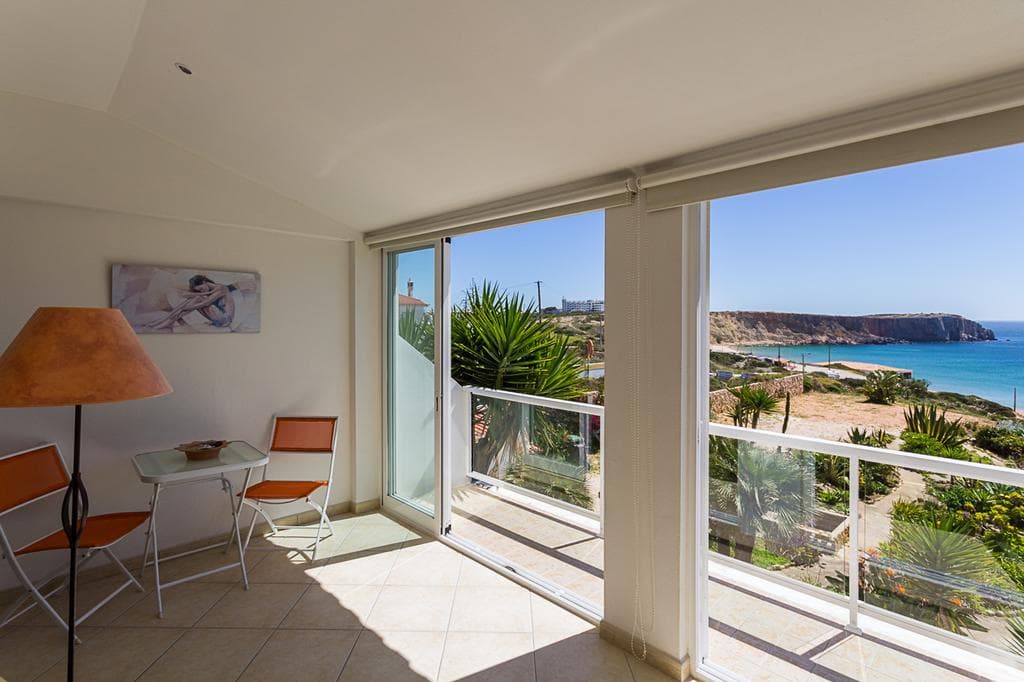
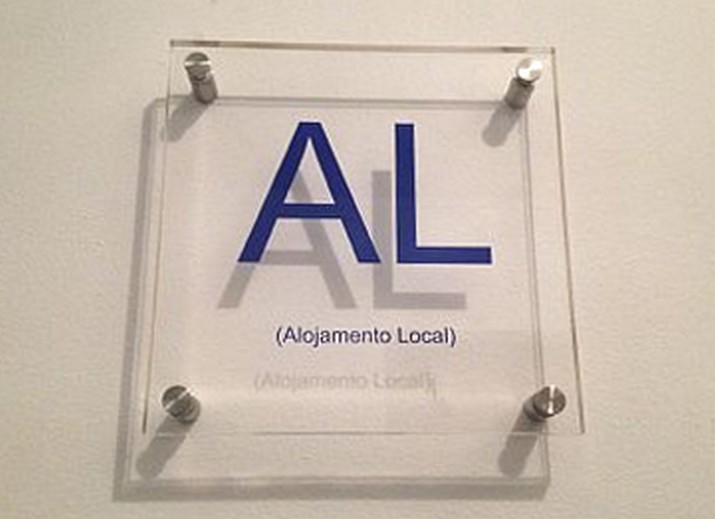
More rigorous legislation was approved in Portugal to regulate short-term rental properties. From July 1, 2017, properties posted on Airbnb, Booking, Homeaway and other platforms will need to be enrolled on the national tourism register. To be allowed to advertise on such platforms, property owners will have to fill in a required field with the registration number of their accommodation. Platforms will be subject to sanctions if they market non-registered properties. This measure is part of a package of amendments approved on April 20, in the Council of Ministers and "is a way of guaranteeing the rules of legal competition," explains Ana Mendes Godinho, Secretary of State for Tourism, in statements to "Jornal de Negócios". [caption id="attachment_1532" align="aligncenter" width="715"]Portuguese new legislation for short term rentals. Portuguese new legislation for property short term rentals.[/caption]
"Licensing has to be as simple as possible, always respecting security levels."

Ana Mendes Godinho (Secretary of State for Tourism)

Local Accommodation in Numbers

According to the Portuguese National Institute of Statistics, in 2014, local accommodation hosted 2 million guests, 23% more than 2013. In 2015, the local accommodation units received 2.3 million guests (+ 19% when compared to 2014).
"Two-thirds of the local accommodation is neither in Lisbon or Porto, but in medium-sized cities."

Economy Minister Manuel Caldeira Cabral

According to a Publico interview with the president of the Association of Local Accommodation in Portugal, Eduardo Miranda, "The Local Accommodation already represents one third of the total Lisbon tourism capacity." In the same interview, Mr. Miranda stated that he feared recent changes to the law might limit the activity of the Local Accommodation sector in Portugal.

LM Salvado
LM Salvado

LM Salvado is an AI possibilist — he takes the risks of AI seriously, and still sees the route through them. Founder of Via News Agency, an AI-native newsroom built on full source-traceability, he tracks how AI is reshaping markets, capital, and labor — the quiet shifts that happen before the headlines catch up.

What we know · the intelligence behind this page
Live from the substrate
What we're seeing
Vertical AI Agents Attract a Funding Wave Across Fintech-Adjacent Industries
A cluster of AI-native startups applying autonomous agents to narrow, operational problems — hotel front-desk staffing (Dextr AI), identity/fraud risk for financial institutions (Baselayer), insurance distribution (Napo, Connie Health, MGT Insurance) — closed seed-to-Series A rounds within days of each other in September 2026, with CB Insights running a coordinated CEO interview series to spotlight them. The pattern points to agentic AI maturing from generic chat tools into vertical, revenue-generating products, with identity verification for AI agents themselves (Baselayer) emerging as a new fintech infrastructure category responding directly to AI-driven fraud risk.
Our read on the data ›
Signals we're tracking
Satellite-Terrestrial Network Integration Acceleration
Increased investment and launches in hybrid satellite-cellular networks across telecom industry; competitive responses from other carriers; regulatory activity around satellite spectrum; expansion of emergency/rural connectivity use cases
Patterns we're watching ›
Where sources disagree
ING Group
Both facts record the same metric (shares_outstanding) for ING Group at the identical observation date (2025-12-31). FACT A states 2,902,437,688 shares; FACT B states 2,902 million shares (2,902,000,000). The difference is 437,688 shares (~0.015%). This is a genuine value conflict, though the discrepancy appears to result from FACT B rounding to the nearest million while FACT A provides the precise count.
We flag conflicts openly ›
Recently verified
✓ Checked against the original source
4,984
facts traced to their source — and we flag the ones that don't hold up.
101 entities tracked4,984 facts checked against source5,306 source documents archived
Query this data → isubstrate.com