
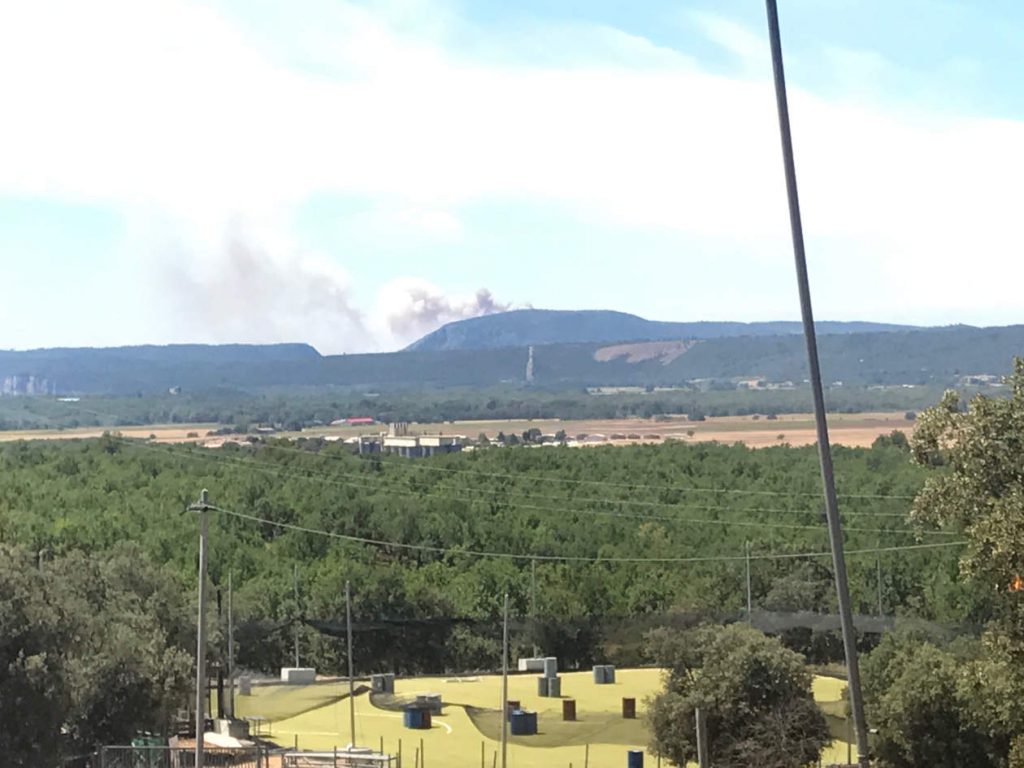
 Smoke plume from the fire near Aix en Provence. Taken by Max Kaczor in Vinon sur Verdon.[/caption]
The Provence-Alpes Côte d’Azur region is a popular destination for those looking to camp outside and hike for a few days. In France and many other countries around the world, people smoke cigarettes very regularly throughout their day and more often than not they will dispose of their cigarette butts on the ground. These butts are usually not completely extinguished and still have some embers burning inside of them, when you combine that with an arid shrub land that is experiencing the annual summer drought you get a wildfire.
The Telegraph reported the fire that burned outside of Aix en Provence was traced back to a single cigarette butt that was discarded by a passerby, which ruled out natural causes. Now the discarding of a cigarette butt on the ground in France either voluntarily or involuntarily carries a fine of €68 (approximately $79.66 USD), but if that cigarette butt starts a wildfire and is able to be traced back to the smoker then they will find themselves with a fine of €45,000 (approximately $52,713.90 USD) and a maximum of three years in jail.
This also isn’t the only unnatural cause of fires in the region. The Guardian reported that during the last week of July two teenage boys found themselves in court under suspicion that they started the fires which burned over 150 hectares (370 acres) outside of Nice, France. If the ruling comes out guilty for the two teenagers they can both face a potential 15-year prison sentence. Many locals in the area are calling on the government to do more in terms of prosecution and monitoring of areas where fires are prone to happen. They want more sentencing so that intentional fire starting will become less likely to happen in the future, and they also want more sentencing for even unintentional fires. They would like people who visit and live in the area to be more aware of their actions and possible destruction if they act unfavorably in a fire prone area.
According to Euronews, as of August 2017, there have been 677 blazes set in the southeast of France. The holiday season still has a couple months left and that number will probably increase before the end. This may be from naturally started fires and unnaturally as well. More people will have to be evacuated from their homes and more land will be laid to waste by the fires.
Smoke plume from the fire near Aix en Provence. Taken by Max Kaczor in Vinon sur Verdon.[/caption]
The Provence-Alpes Côte d’Azur region is a popular destination for those looking to camp outside and hike for a few days. In France and many other countries around the world, people smoke cigarettes very regularly throughout their day and more often than not they will dispose of their cigarette butts on the ground. These butts are usually not completely extinguished and still have some embers burning inside of them, when you combine that with an arid shrub land that is experiencing the annual summer drought you get a wildfire.
The Telegraph reported the fire that burned outside of Aix en Provence was traced back to a single cigarette butt that was discarded by a passerby, which ruled out natural causes. Now the discarding of a cigarette butt on the ground in France either voluntarily or involuntarily carries a fine of €68 (approximately $79.66 USD), but if that cigarette butt starts a wildfire and is able to be traced back to the smoker then they will find themselves with a fine of €45,000 (approximately $52,713.90 USD) and a maximum of three years in jail.
This also isn’t the only unnatural cause of fires in the region. The Guardian reported that during the last week of July two teenage boys found themselves in court under suspicion that they started the fires which burned over 150 hectares (370 acres) outside of Nice, France. If the ruling comes out guilty for the two teenagers they can both face a potential 15-year prison sentence. Many locals in the area are calling on the government to do more in terms of prosecution and monitoring of areas where fires are prone to happen. They want more sentencing so that intentional fire starting will become less likely to happen in the future, and they also want more sentencing for even unintentional fires. They would like people who visit and live in the area to be more aware of their actions and possible destruction if they act unfavorably in a fire prone area.
According to Euronews, as of August 2017, there have been 677 blazes set in the southeast of France. The holiday season still has a couple months left and that number will probably increase before the end. This may be from naturally started fires and unnaturally as well. More people will have to be evacuated from their homes and more land will be laid to waste by the fires. Natural or Intentional: What's Causing French Wildfires?
Max Kaczor
August 11, 2017
The South of France is known for its beautiful summer weather, beaches along the Mediterranean Sea and a playground for those who have holiday time.
Along the beaches in the Provence-Alpes Côte d’Azur Region and a few hours north, you have an arid and dry climate that is a tinderbox during the warm summer months. Over the warmer months of May – September there are restrictions put on irrigation, water usage, and outdoor fires. In this region, if you get caught having an unsupervised outdoor fire you will find yourself with hefty fines and potential jail time. At the end of July one fire in France Joanna Ruck1, a contributor to The Guardian reported that approximately 12,000 residents and holiday makers have had to be evacuated from Nice, Antibes, Aix en Provence, Carros and dozens of other villages, cities, and towns in the region.
In mid-July-2017 a blaze began near the major city of Aix en Provence where the fire burned for more than a week. The firemen in the area are very equipped to deal with these issues and utilize a variety of methods to control the blaze including airplanes that have massive tanks on them to carry water directly over the fire. At the end of the burn, around 10,000 people were evacuated and over 865 hectares (2,137 acres) were turned into a charred wasteland.
Now the region always has had issues with wildfires as they are a naturally occurring process and allow the soil to revitalize itself with the nutrients from the ashes. Throughout history slash and burn agriculture has been used all over the globe, but these are all monitored and can generally be kept in a small radius which does not allow for any unnecessary damages. The key point being that the fires which can be maintained and controlled due to human intervention and action.
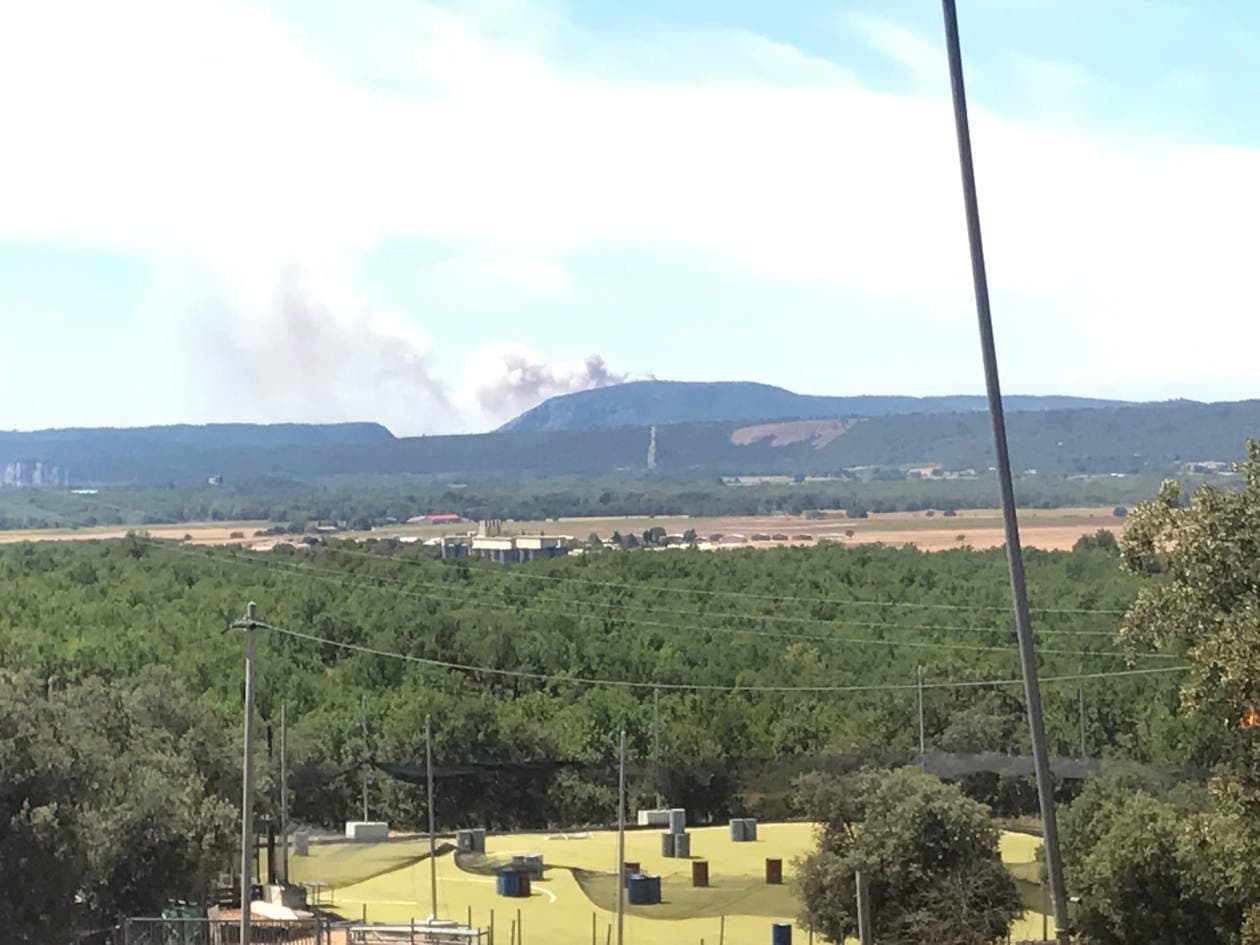
[caption id="attachment_1841" align="aligncenter" width="640"] Smoke plume from the fire near Aix en Provence. Taken by Max Kaczor in Vinon sur Verdon.[/caption]
The Provence-Alpes Côte d’Azur region is a popular destination for those looking to camp outside and hike for a few days. In France and many other countries around the world, people smoke cigarettes very regularly throughout their day and more often than not they will dispose of their cigarette butts on the ground. These butts are usually not completely extinguished and still have some embers burning inside of them, when you combine that with an arid shrub land that is experiencing the annual summer drought you get a wildfire.
The Telegraph reported the fire that burned outside of Aix en Provence was traced back to a single cigarette butt that was discarded by a passerby, which ruled out natural causes. Now the discarding of a cigarette butt on the ground in France either voluntarily or involuntarily carries a fine of €68 (approximately $79.66 USD), but if that cigarette butt starts a wildfire and is able to be traced back to the smoker then they will find themselves with a fine of €45,000 (approximately $52,713.90 USD) and a maximum of three years in jail.
This also isn’t the only unnatural cause of fires in the region. The Guardian reported that during the last week of July two teenage boys found themselves in court under suspicion that they started the fires which burned over 150 hectares (370 acres) outside of Nice, France. If the ruling comes out guilty for the two teenagers they can both face a potential 15-year prison sentence. Many locals in the area are calling on the government to do more in terms of prosecution and monitoring of areas where fires are prone to happen. They want more sentencing so that intentional fire starting will become less likely to happen in the future, and they also want more sentencing for even unintentional fires. They would like people who visit and live in the area to be more aware of their actions and possible destruction if they act unfavorably in a fire prone area.
According to Euronews, as of August 2017, there have been 677 blazes set in the southeast of France. The holiday season still has a couple months left and that number will probably increase before the end. This may be from naturally started fires and unnaturally as well. More people will have to be evacuated from their homes and more land will be laid to waste by the fires.
Smoke plume from the fire near Aix en Provence. Taken by Max Kaczor in Vinon sur Verdon.[/caption]
The Provence-Alpes Côte d’Azur region is a popular destination for those looking to camp outside and hike for a few days. In France and many other countries around the world, people smoke cigarettes very regularly throughout their day and more often than not they will dispose of their cigarette butts on the ground. These butts are usually not completely extinguished and still have some embers burning inside of them, when you combine that with an arid shrub land that is experiencing the annual summer drought you get a wildfire.
The Telegraph reported the fire that burned outside of Aix en Provence was traced back to a single cigarette butt that was discarded by a passerby, which ruled out natural causes. Now the discarding of a cigarette butt on the ground in France either voluntarily or involuntarily carries a fine of €68 (approximately $79.66 USD), but if that cigarette butt starts a wildfire and is able to be traced back to the smoker then they will find themselves with a fine of €45,000 (approximately $52,713.90 USD) and a maximum of three years in jail.
This also isn’t the only unnatural cause of fires in the region. The Guardian reported that during the last week of July two teenage boys found themselves in court under suspicion that they started the fires which burned over 150 hectares (370 acres) outside of Nice, France. If the ruling comes out guilty for the two teenagers they can both face a potential 15-year prison sentence. Many locals in the area are calling on the government to do more in terms of prosecution and monitoring of areas where fires are prone to happen. They want more sentencing so that intentional fire starting will become less likely to happen in the future, and they also want more sentencing for even unintentional fires. They would like people who visit and live in the area to be more aware of their actions and possible destruction if they act unfavorably in a fire prone area.
According to Euronews, as of August 2017, there have been 677 blazes set in the southeast of France. The holiday season still has a couple months left and that number will probably increase before the end. This may be from naturally started fires and unnaturally as well. More people will have to be evacuated from their homes and more land will be laid to waste by the fires.
Smoke plume from the fire near Aix en Provence. Taken by Max Kaczor in Vinon sur Verdon.[/caption]
The Provence-Alpes Côte d’Azur region is a popular destination for those looking to camp outside and hike for a few days. In France and many other countries around the world, people smoke cigarettes very regularly throughout their day and more often than not they will dispose of their cigarette butts on the ground. These butts are usually not completely extinguished and still have some embers burning inside of them, when you combine that with an arid shrub land that is experiencing the annual summer drought you get a wildfire.
The Telegraph reported the fire that burned outside of Aix en Provence was traced back to a single cigarette butt that was discarded by a passerby, which ruled out natural causes. Now the discarding of a cigarette butt on the ground in France either voluntarily or involuntarily carries a fine of €68 (approximately $79.66 USD), but if that cigarette butt starts a wildfire and is able to be traced back to the smoker then they will find themselves with a fine of €45,000 (approximately $52,713.90 USD) and a maximum of three years in jail.
This also isn’t the only unnatural cause of fires in the region. The Guardian reported that during the last week of July two teenage boys found themselves in court under suspicion that they started the fires which burned over 150 hectares (370 acres) outside of Nice, France. If the ruling comes out guilty for the two teenagers they can both face a potential 15-year prison sentence. Many locals in the area are calling on the government to do more in terms of prosecution and monitoring of areas where fires are prone to happen. They want more sentencing so that intentional fire starting will become less likely to happen in the future, and they also want more sentencing for even unintentional fires. They would like people who visit and live in the area to be more aware of their actions and possible destruction if they act unfavorably in a fire prone area.
According to Euronews, as of August 2017, there have been 677 blazes set in the southeast of France. The holiday season still has a couple months left and that number will probably increase before the end. This may be from naturally started fires and unnaturally as well. More people will have to be evacuated from their homes and more land will be laid to waste by the fires.