

Germany is considered a success by European startups when it comes to crisis management and resilience in the ongoing COVID-19 pandemic, according to the initial results of a survey by Startups & Places.
The annual survey, which was launched in June 2020 and is still open, aims to map and share the most significant trends for the European startup ecosystem.
Nearly half of over 300 respondents from Europe voted Germany the best performer in addressing the challenges triggered by the coronavirus pandemic, which has profoundly impacted people and businesses across the continent.
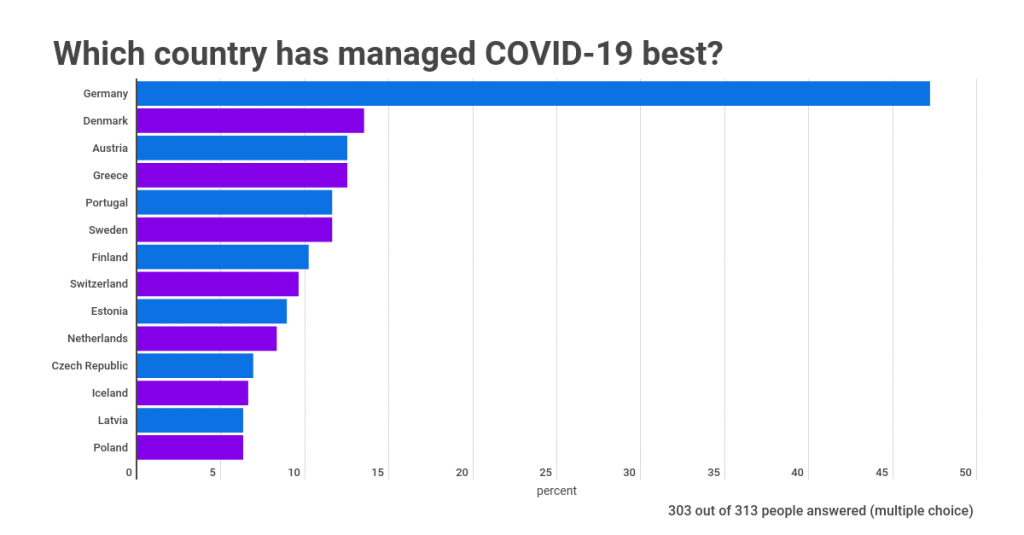
"Of course, this statistic is based on opinion and has to be considered in context with other indicators such as excess mortality," Startups & Places said in a report.
According to the preliminary findings of the survey, here are three other lessons from European startups on COVID-19:
Better don't plan major offline conferences before 2021
As a result of the unprecedented outbreak, many international tech conferences have been canceled, rescheduled, or moved to all-online formats.
When asked when they would feel comfortable to attend one, about half of all respondents (47,7%) said they would rather not take part in a major offline tech event in person before 2021.
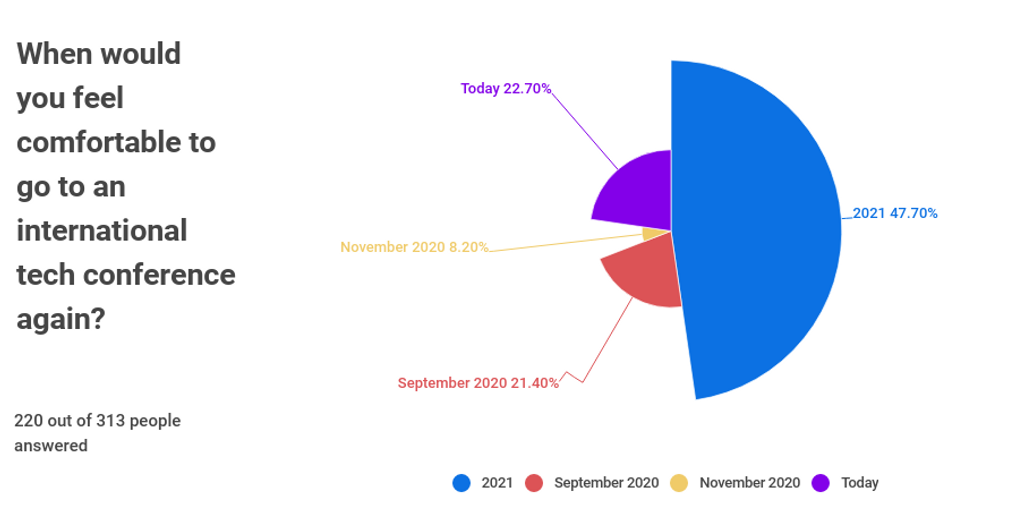
Also, their decision on whether to attend a major conference depends on several important factors.
"Leading factors are the infection rate in the country where the event would take place (53,8%) and whether the trip would be really necessary for the attendant's business (52,9%)," the survey showed.
Read more: COVID-19: Is a Second Wave Coming to Europe?
Offline is not dead
In-person conferences and events are struggling at the moment but the survey found that startups are not forgetting the importance of meaningful and personal networks.
"Generally, 3 out of 4 startups rely on strong international networks. COVID-19 is threatening these networks: Although a considerable share of more than 30% feels unaffected, almost 40% of startups agree that it is harder for them to connect to international investors and clients due to the pandemic," the report reads.
It adds that startups are well aware of the limitations of virtual event and interaction formats, particularly when doing business internationally.
"Only 30% of startups are convinced that virtual meetings are equally valuable as in-person meetings."
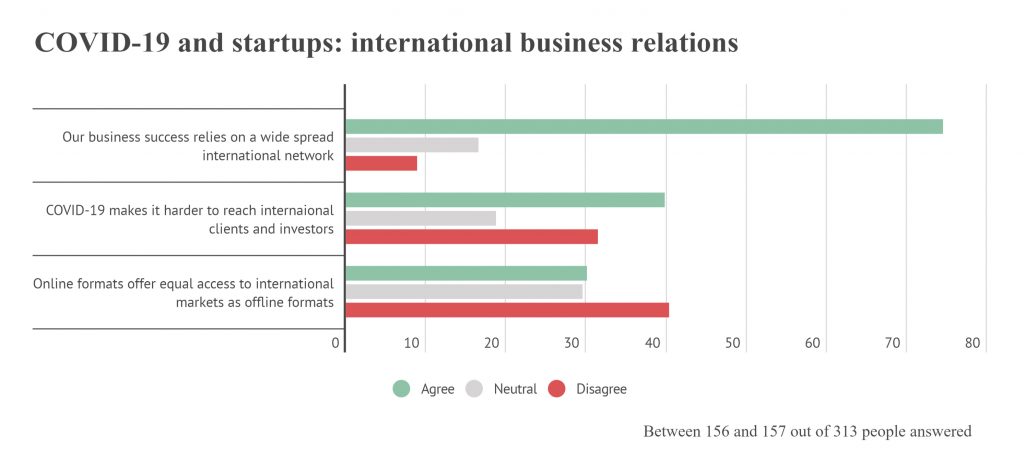
The results of the survey show that virtual conferences or platforms or similar innovative offerings—many of them piloted as a quick response to the lockdown—are not yet very popular with startups.
"More than half of respondents prefer traditional ways of making contacts, like their personal networks and LinkedIn," Startups & Places says.
Read more: 78% of Startups Globally Plan to Hire by Year-End
Some startups are thriving internationally
COVID-19 has negatively affected many sectors of society and economy but some industries such as e-commerce, health tech, and video conferencing have accelerated as a consequence of the lockdown.
"Despite such industry-specific opportunities, startups are affected by the difficulty to interact across borders and expand to international markets due to the lockdown and travel restrictions," the report noted.
The data derived from the survey shows that nearly half of startups had to slow down their internationalization due to the health crisis while almost one in five startups managed to expand internationally even faster.
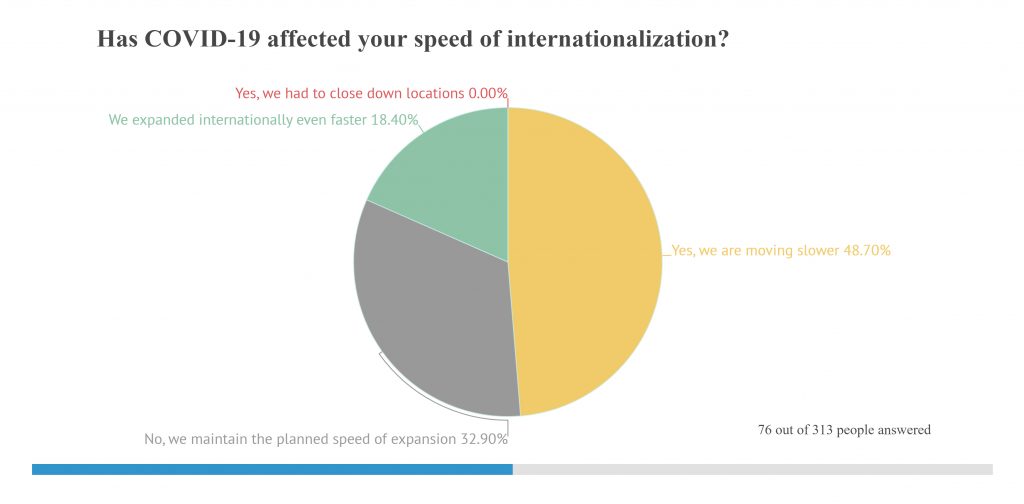
"These discrepancies between struggling and thriving are also mirrored by the fact that while 36 percent of startups have experienced negative effects in making cross-border connections, nearly two-thirds of startups are not affected or have even benefited due to COVID-19," Startups & Places wrote.
The report says not even a single survey taker had to close down international locations due to the coronavirus, which indicates there is still hope that the overall situation improves in the near future.