
German NGO Struggle for Clean Water in South Sudan
Terry Swartzberg
June 19, 2018
MUNICH, Germany (ViaNews) - VENRO, a group of 120 Germany-based NGOs providing humanitarian and development assistance around the world, produced a report entitled “Uncomfortable partners – from confrontation to cooperation: NGO’S strategies for dealing with companies”.
This is an important report because it covers – in-depth – a key subject: how NGOs – the brave Davids of this world – fare when they confront multinationals – today’s Goliaths.
The report presents seven case studies, among them: “South Sudan / Sign of Hope / Water Contamination by Petronas – Daimler’s ‘bend but don’t break ’ strategy”.
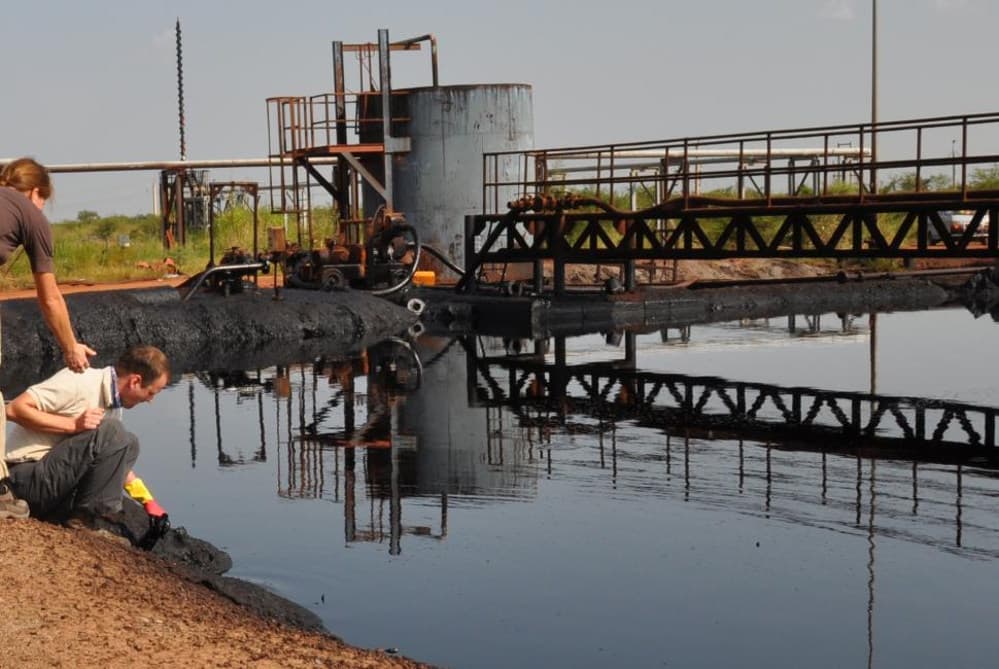
The three pages detail of the Petronas case study shows how the German Humanitarian NGO, Sign of Hope, went through a decade-long struggle to put an end to the contamination of South Sudan’s water by allegedly relentlessly greedy international oil companies. Prime among them: Petronas, which is the Malaysian-owned oil giant.
Petronas, in turn, entered into a partnership with Germany’s Daimler AG, a German multinational automotive corporation, in Formula 1 racing and other areas.
To achieve its objectives of stopping Petronas’ pollution of water, and of getting medical care and compensation for the loss of life, health, and livelihood suffered by more than 600,000 victims in South Sudan. Sign of Hope initiated what it hoped would be a constructive dialogue with Daimler, which has, after all, committed itself to adhere to the highest of ethical and environmental practices when conducting business.
Oil-mudslides flooding South Sudan
As the in-depth article revealed, this strategy yielded a series of meetings with representatives of Daimler, of Petronas, and of South Sudanese government. All these, in turn, produced nothing more than lofty and empty promises, convoluted explanations – and – in one very worrying case – a threat from the government.
Undeterred by the lack of progress, Sign of Hope has pursued, even stepped up its fight for clean water in South Sudan. This stepping up has taken the form of furthering the enlistment of local stakeholders and the facilitation of their self-organization in an NGO.
Leading Rights Groups Reveal How a South Sudan Oil Company Plays a Key Role in Prolonging Conflict
“There are sound reasons for our move. The carrying on of the fight by a local NGO sends a powerful message to the people of the country and to the world as a whole. Sign of Hope is happy to play the role of an enabler and supporter,” states Klaus Stieglitz, human rights expert and Vice Chairperson of Sign of Hope.