

Sunday, September 27, 2026

COVID-19 Raises Need for More Distributed Coworking Spaces: Landing.Jobs Co-Founder

Elham P.Mohammadi

May 27, 2020

Pedro Oliveira, co-founder of Landing.Jobs says coworking spaces need to operate from more distributed locations. (Photo by Austin Distel on Unsplash)

Telework and working in distributed teams are becoming a standard for many companies due to COVID-19 and may become even more commonplace after the pandemic passes.

The new reality of the world has upended the status quo for lots of players in the remote work industry, including coworking spaces, and they have to reinvent themselves if they want to stay in the game.

In the opinion of Pedro Oliveira, co-founder of Landing.Jobs—a candidate-driven tech talent marketplace—coworking spaces need to adapt to the emerging needs of modern-era workers by "distributing" themselves.

"Instead of concentrating all their resources in big coworking spaces in downtown Lisbon or downtown places in cities like London and Berlin, they should operate from more distributed locations," Pedro, an entrepreneur based in the Portuguese capital, told Via news.
Landing.Jobs is a candidate-driven tech talent marketplace. (Photo credit: Landing.Jobs)

He says this change is necessary because mainly high-skilled workers used to work from coworking spaces before the coronavirus outbreak but now workers of all skill levels desire to change their work routines.

"Many people have realized that they can work from home or move out of big cities. So coworking spaces need to adapt as companies will be less seen less as a rough space and more as a hot-desking space."

The changing landscape provides great opportunities for coworking spaces, Pedro said, adding that they can make the best of this situation if they tweak their business models.

Distributed Teams Conference

Believing in the power of distributed teams, Future.Works—a sister project of Landing.Jobs—will be holding a free online conference from June 15 to 17.

The event, which features top industry experts, will focus on three topics, namely distributed teams and people management, culture and communication, and workspaces, infrastructure, and security.
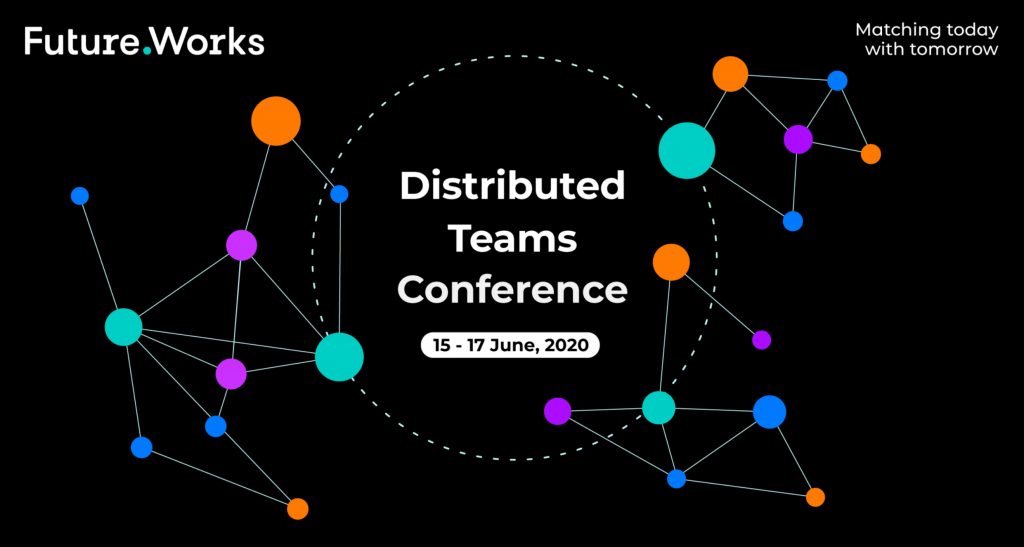
Future.Works will be holding a free online conference about distributed teams from June 15 to 17. (Photo credit: Future.Works)

Message to Founders

Asked about his message to entrepreneurs and the community of startups, Pedro said companies should do their best to "hold on" and "survive".

"Just surviving is great," he said, adding that many startups are going to die and their death under market pressure should be considered "normal".

Pedro also argues that it is "probably not the best time" to establish a new startup.  

"It'd be better to wait a couple more months and launch when the economy starts to get back on track."
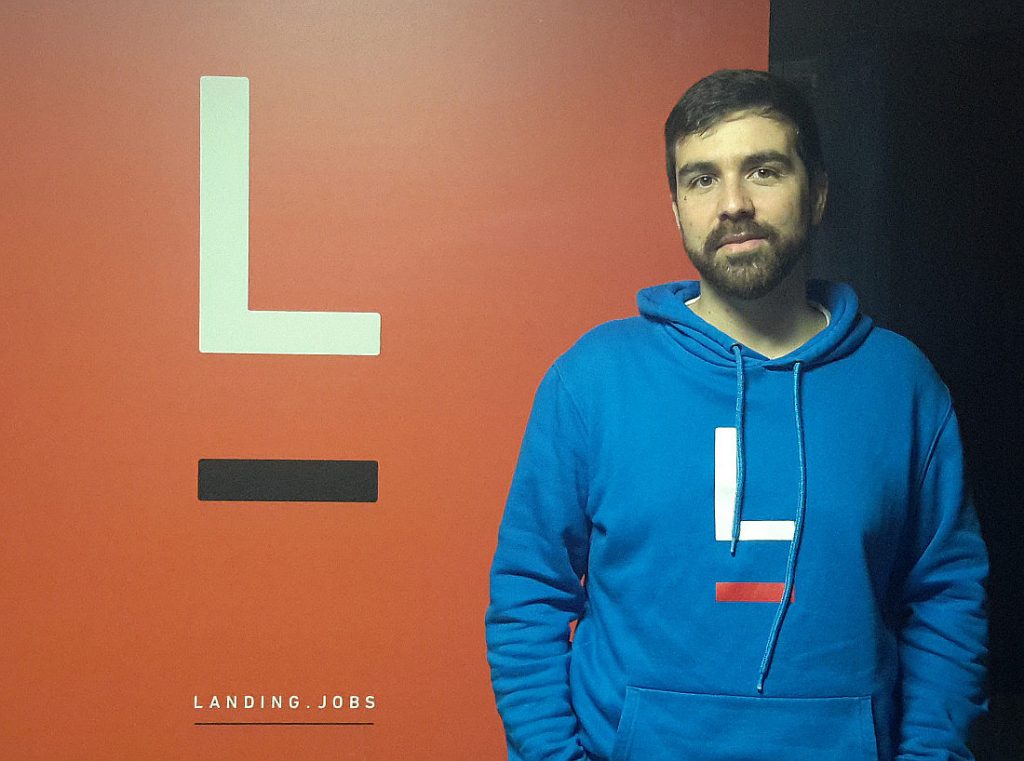
Pedro Oliveira, co-founder of Landing.jobs (Photo by Via News)
Pedro Oliveira, co-founder of Landing.Jobs (Photo credit: Via News)

Pedro says he chooses to remain optimistic despite the dark period many businesses across the world are going through.

"I believe good times will come again. And hopefully we will not go back to where we were and will be more aware of the importance of work-life balance and the economic dynamics that need to change."

A lot of good can come out of the coronavirus experience if people change their mindset and look at things through a different lens, the co-founder of Landing.Jobs commented.

What we know · the intelligence behind this page
Live from the substrate
What we're seeing
Vertical AI Agents Attract a Funding Wave Across Fintech-Adjacent Industries
A cluster of AI-native startups applying autonomous agents to narrow, operational problems — hotel front-desk staffing (Dextr AI), identity/fraud risk for financial institutions (Baselayer), insurance distribution (Napo, Connie Health, MGT Insurance) — closed seed-to-Series A rounds within days of each other in September 2026, with CB Insights running a coordinated CEO interview series to spotlight them. The pattern points to agentic AI maturing from generic chat tools into vertical, revenue-generating products, with identity verification for AI agents themselves (Baselayer) emerging as a new fintech infrastructure category responding directly to AI-driven fraud risk.
Our read on the data ›
Signals we're tracking
Satellite-Terrestrial Network Integration Acceleration
Increased investment and launches in hybrid satellite-cellular networks across telecom industry; competitive responses from other carriers; regulatory activity around satellite spectrum; expansion of emergency/rural connectivity use cases
Patterns we're watching ›
Where sources disagree
ING Group
Both facts record the same metric (shares_outstanding) for ING Group at the identical observation date (2025-12-31). FACT A states 2,902,437,688 shares; FACT B states 2,902 million shares (2,902,000,000). The difference is 437,688 shares (~0.015%). This is a genuine value conflict, though the discrepancy appears to result from FACT B rounding to the nearest million while FACT A provides the precise count.
We flag conflicts openly ›
Recently verified
✓ Checked against the original source
4,984
facts traced to their source — and we flag the ones that don't hold up.
101 entities tracked4,984 facts checked against source5,306 source documents archived
Query this data → isubstrate.com