
Sunday, September 27, 2026

Stella-FPUSA 2 GWh Storage Deal Carries 'Major' Financial Risk, Assessment Finds

Stella Energy Solutions is giving FPUSA access to a 2 GWh utility-scale battery storage pipeline, but an internal risk assessment rates the exposure as major severity with medium likelihood. Financing, tax credit eligibility, and offtake agreements could all fail to close as planned.

LM Salvado
LM Salvado

July 5, 2026

Stella-FPUSA 2 GWh Storage Deal Carries 'Major' Financial Risk, Assessment Finds
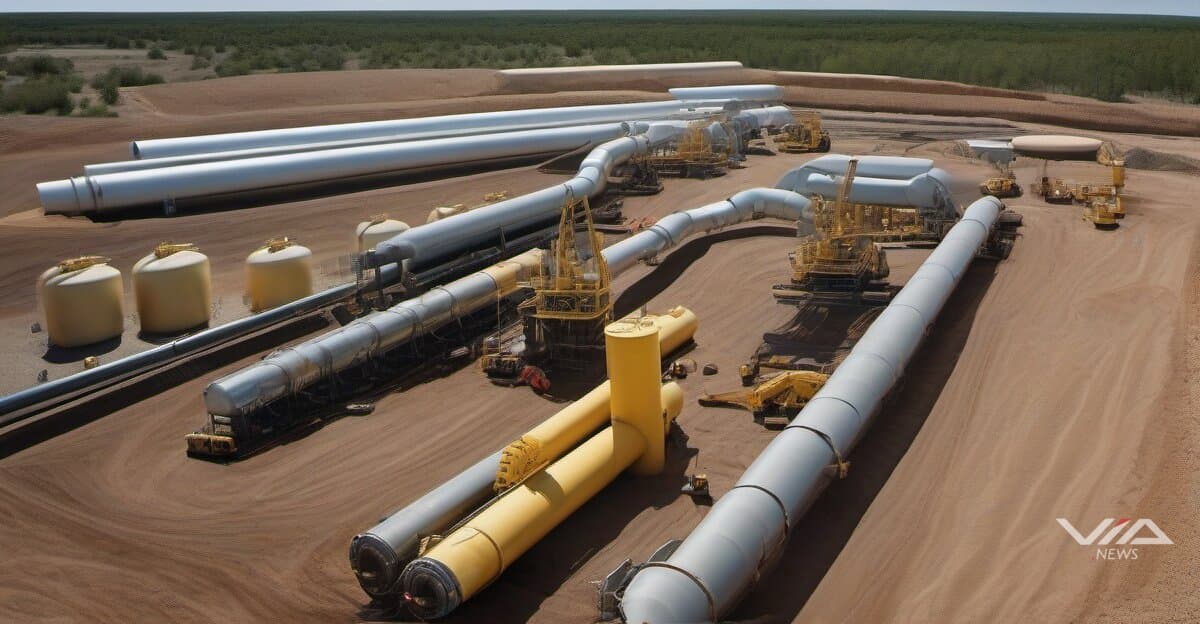
Image generated by AI for illustrative purposes. Not actual footage or photography from the reported events.

A 2 GWh battery storage pipeline deal between Stella Energy Solutions and FPUSA carries "major" severity financial risk, according to an internal assessment rating the likelihood as medium at 0.7 confidence.1 The deal reflects a pattern playing out across grid-storage markets worldwide, from the United States to Europe and Australia, where gigawatt-hour-scale projects routinely strain financing before generating revenue.1

The core problem is capital intensity, a challenge storage developers face globally. Utility-scale projects at this size need heavy upfront funding long before any electricity or capacity payments arrive.1 Three financing pieces could still fail: project financing itself, tax credit eligibility, and offtake agreements.1

Tax credit eligibility is not guaranteed, a risk unique to the US market's reliance on federal incentives to make storage bankable.1 By contrast, markets like the UK and Australia lean more on capacity auctions and merchant revenue. If Stella's projects fail to qualify, or credit terms shift, returns could fall short of financing thresholds.1

Offtake agreements present similar exposure. Without signed power purchase or capacity contracts, lenders may hesitate to fund construction, a dynamic familiar to storage developers internationally.1 Delays in securing offtake terms would stall the pipeline FPUSA is counting on.1

The assessment also flags partner-level financial distress. Stella supplies FPUSA both project access and execution capability.1 Balance-sheet strain at Stella could impair delivery of the full 2 GWh pipeline, independent of individual project economics.1 That counterparty dependency risk is distinct from project-level risk itself.

For FPUSA, the arrangement concentrates execution risk in one partner. A 2 GWh pipeline is a substantial capital commitment spanning multiple projects, comparable in scale to major grid-storage tenders in Germany or South Korea.1 A shortfall in financing, credit eligibility, or offtake on even part of that pipeline could compound given the scale involved.

The assessment sets no timeline for testing financing terms or credit eligibility, and does not disclose Stella's current financial condition. Investors and counterparties will watch for updates on individual project financial closes and any disclosures on Stella's balance sheet.

About this analysis

This is a Via News analysis. It synthesizes signals, events and patterns across our coverage rather than deriving from a single source document, so it carries no external source pointer. Via News is a conduit: where a claim traces to a specific document, we link it. How we source

LM Salvado
LM Salvado

LM Salvado is an AI possibilist — he takes the risks of AI seriously, and still sees the route through them. Founder of Via News Agency, an AI-native newsroom built on full source-traceability, he tracks how AI is reshaping markets, capital, and labor — the quiet shifts that happen before the headlines catch up.

What we know · the intelligence behind this page
Live from the substrate
What we're seeing
Enterprise AI Agents Scale Up Through Partnerships and Funding, But Data Readiness Lags Ambition
A wave of vertical AI-agent startups (Swarm, Veridox, Avallon AI, DA2, F2, Earthian, Meanwhile, Covecta, Penguin AI, Maisa AI) is being funded and profiled just as major infrastructure players — Microsoft/Mistral, Siemens/NVIDIA, and Manulife/Microsoft — cement enterprise AI governance and compute partnerships. Yet a Google Cloud report shows AI agents still lack access to the majority of company data (only 45% on average), and insider selling at incumbent C3.ai signals investor caution even as adoption intent (100% planned agentic AI use within two years) races ahead of actual data infrastructure.
Our read on the data ›
Signals we're tracking
Satellite-Terrestrial Network Integration Acceleration
Increased investment and launches in hybrid satellite-cellular networks across telecom industry; competitive responses from other carriers; regulatory activity around satellite spectrum; expansion of emergency/rural connectivity use cases
Patterns we're watching ›
Where sources disagree
Berkshire Hathaway
Both facts report Berkshire Hathaway's cash position on 2026-01-01 with identical observation timestamps, but claim vastly different values: 380 billion USD vs 400 USD. These cannot both be true for the same entity at the same point in time. The magnitude of the discrepancy (a factor of ~10^9) rules out rounding, unit conversion, or methodological differences.
We flag conflicts openly ›
Recently verified
✓ Checked against the original source
4,984
facts traced to their source — and we flag the ones that don't hold up.
101 entities tracked4,984 facts checked against source5,306 source documents archived
Query this data → isubstrate.com