
Sunday, September 27, 2026

Bloom Energy Strikes $1.7B AI Power Deal With Nebius, Expands to South Korea

Bloom Energy signed three fuel-cell partnerships in quick succession, led by a $1.7 billion deal with Nebius AI, plus deals with US utility AEP and South Korea's SK Ecoplant and SK Eternix. Analysts say the geographic spread signals a global scramble for AI data center power beyond traditional grid capacity.

LM Salvado
LM Salvado

August 8, 2026

Bloom Energy Strikes $1.7B AI Power Deal With Nebius, Expands to South Korea
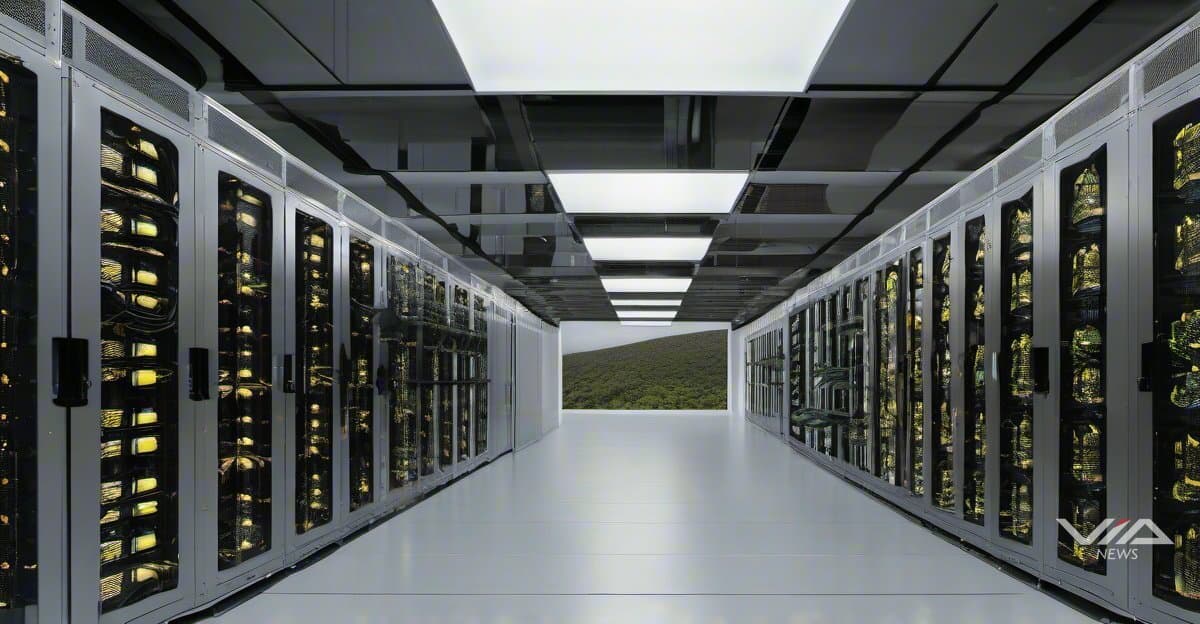
Image generated by AI for illustrative purposes. Not actual footage or photography from the reported events.

Bloom Energy signed three fuel-cell partnerships in one window, all tied to AI data center power demand.1 The largest, worth billions, is with Nebius AI.1

The other two deals span a US utility and South Korea.1 Bloom partnered with American Electric Power on power infrastructure.1 It also signed with SK Ecoplant and SK Eternix in South Korea.1

The geographic spread matters. One US company locked in deals spanning North American utilities and Korean industrial partners, all for the same purpose: AI compute power.1

Data center operators worldwide face the same bottleneck. Grid capacity cannot expand fast enough to match AI buildout, from US hyperscalers to Asian cloud providers.1 Fuel cells offer a faster, on-site alternative.

Analysts expect capital deployment into this sector to accelerate globally.1 The underlying trend: rising investment in power generation and grid infrastructure built specifically for AI data centers.1 That demand extends well beyond Bloom Energy.

Power and utility companies worldwide, plus energy-tech firms, are likely to see similar partnership activity.1 AI compute buildouts need power capacity faster than traditional grids can deliver it, whether in Texas, Seoul, or Frankfurt.

For international investors, the signal extends past one company. Three deals in quick succession, spanning two continents, show AI infrastructure spending is spreading into the global energy supply chain.

Watch for follow-on announcements from utilities and independent power producers worldwide, as AI operators lock in generation capacity ahead of grid upgrades.

About this analysis

This is a Via News analysis. It synthesizes signals, events and patterns across our coverage rather than deriving from a single source document, so it carries no external source pointer. Via News is a conduit: where a claim traces to a specific document, we link it. How we source

LM Salvado
LM Salvado

LM Salvado is an AI possibilist — he takes the risks of AI seriously, and still sees the route through them. Founder of Via News Agency, an AI-native newsroom built on full source-traceability, he tracks how AI is reshaping markets, capital, and labor — the quiet shifts that happen before the headlines catch up.

What we know · the intelligence behind this page
Live from the substrate
What we're seeing
Enterprise AI Agents Scale Up Through Partnerships and Funding, But Data Readiness Lags Ambition
A wave of vertical AI-agent startups (Swarm, Veridox, Avallon AI, DA2, F2, Earthian, Meanwhile, Covecta, Penguin AI, Maisa AI) is being funded and profiled just as major infrastructure players — Microsoft/Mistral, Siemens/NVIDIA, and Manulife/Microsoft — cement enterprise AI governance and compute partnerships. Yet a Google Cloud report shows AI agents still lack access to the majority of company data (only 45% on average), and insider selling at incumbent C3.ai signals investor caution even as adoption intent (100% planned agentic AI use within two years) races ahead of actual data infrastructure.
Our read on the data ›
Signals we're tracking
Satellite-Terrestrial Network Integration Acceleration
Increased investment and launches in hybrid satellite-cellular networks across telecom industry; competitive responses from other carriers; regulatory activity around satellite spectrum; expansion of emergency/rural connectivity use cases
Patterns we're watching ›
Where sources disagree
Berkshire Hathaway
Both facts report Berkshire Hathaway's cash position on 2026-01-01 with identical observation timestamps, but claim vastly different values: 380 billion USD vs 400 USD. These cannot both be true for the same entity at the same point in time. The magnitude of the discrepancy (a factor of ~10^9) rules out rounding, unit conversion, or methodological differences.
We flag conflicts openly ›
Recently verified
✓ Checked against the original source
4,984
facts traced to their source — and we flag the ones that don't hold up.
101 entities tracked4,984 facts checked against source5,306 source documents archived
Query this data → isubstrate.com