
Sunday, September 27, 2026

U.S. Solar Chief Faces Collapse Risk as Chinese Competition Exposes Policy Dependency

Suniva CEO Tony Etnyre faces a catastrophic-severity risk: U.S. domestic solar cell manufacturing is economically unviable without Section 201/301 tariffs and IRA tax credits. China's cost dominance in global solar production means American factories have no competitive fallback if either policy pillar is removed. For international investors with exposure to U.S. solar assets, the risk profile is binary — viability or collapse.

LM Salvado
LM Salvado

June 15, 2026

U.S. Solar Chief Faces Collapse Risk as Chinese Competition Exposes Policy Dependency
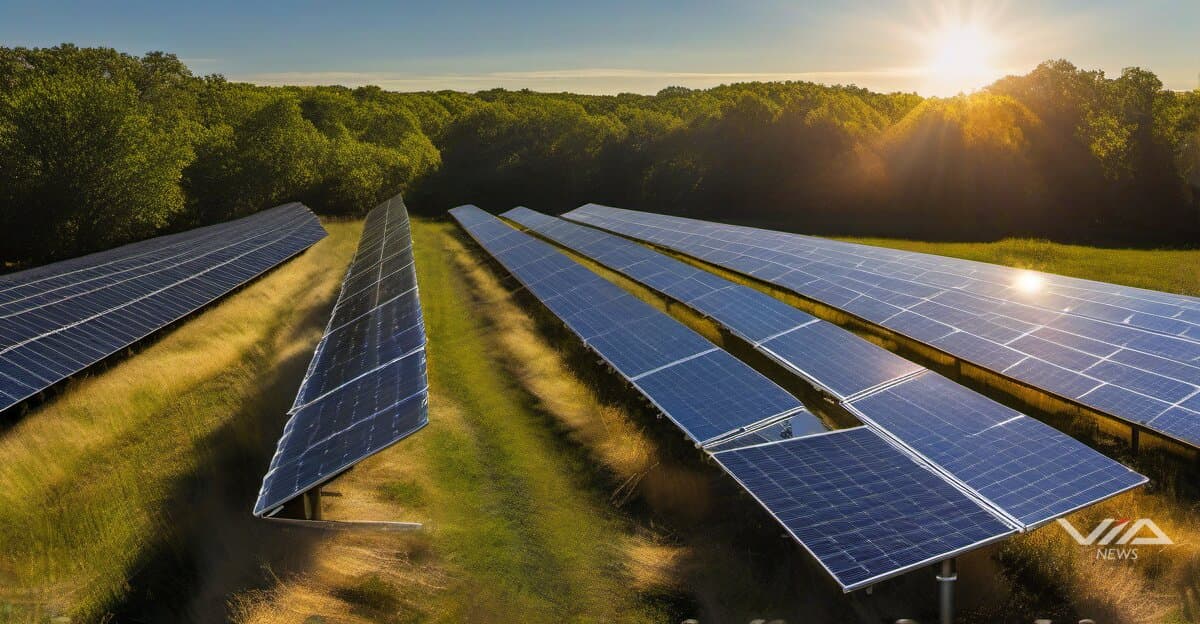
Image generated by AI for illustrative purposes. Not actual footage or photography from the reported events.

China produces roughly 80% of global solar panels at costs U.S. manufacturers cannot match without government support.1 A June 2026 risk assessment of Tony Etnyre, CEO of U.S. solar cell maker Suniva, identifies this gap as a catastrophic vulnerability: domestic production survives only because Section 201/301 tariffs block cheaper imports and IRA manufacturing tax credits offset the cost difference.1

Remove either pillar, and U.S.-made solar cells cannot compete.1 The assessment rates this risk medium likelihood but catastrophic severity — not a margin squeeze but a structural collapse of the business case for domestic production.

The dynamic mirrors challenges facing solar manufacturers in Europe and India, where domestic-content incentives and import duties have similarly propped up local industries against Chinese competition. But U.S. exposure is acute: Suniva operates in a market where policy continuity is not a growth factor but a precondition for survival.1

IRA manufacturing production credits have functioned as a direct lifeline, compensating for the cost gap that would otherwise make American solar cells uneconomical.1 Section 201 and 301 tariffs simultaneously shield factories from lower-cost foreign supply. Together, they are a survival mechanism, not a competitive advantage.

For global investors and lenders with exposure to U.S. solar manufacturing assets, this creates a distinctive risk category. A new administration reconsidering trade policy, or Congress cutting IRA subsidies in budget negotiations, would not gradually erode margins — it would eliminate the economic rationale for the sector.1

Capital allocation, capacity planning, and long-term contracts at Suniva all carry embedded policy-expiration risk.1 Standard credit and equity models frequently underweight this type of legislative dependency. When a company's cost competitiveness is a policy artifact rather than an operational achievement, the risk belongs in a separate analytical category entirely.

About this analysis

This is a Via News analysis. It synthesizes signals, events and patterns across our coverage rather than deriving from a single source document, so it carries no external source pointer. Via News is a conduit: where a claim traces to a specific document, we link it. How we source

LM Salvado
LM Salvado

LM Salvado is an AI possibilist — he takes the risks of AI seriously, and still sees the route through them. Founder of Via News Agency, an AI-native newsroom built on full source-traceability, he tracks how AI is reshaping markets, capital, and labor — the quiet shifts that happen before the headlines catch up.

What we know · the intelligence behind this page
Live from the substrate
What we're seeing
Vertical AI Agents Attract a Funding Wave Across Fintech-Adjacent Industries
A cluster of AI-native startups applying autonomous agents to narrow, operational problems — hotel front-desk staffing (Dextr AI), identity/fraud risk for financial institutions (Baselayer), insurance distribution (Napo, Connie Health, MGT Insurance) — closed seed-to-Series A rounds within days of each other in September 2026, with CB Insights running a coordinated CEO interview series to spotlight them. The pattern points to agentic AI maturing from generic chat tools into vertical, revenue-generating products, with identity verification for AI agents themselves (Baselayer) emerging as a new fintech infrastructure category responding directly to AI-driven fraud risk.
Our read on the data ›
Signals we're tracking
Satellite-Terrestrial Network Integration Acceleration
Increased investment and launches in hybrid satellite-cellular networks across telecom industry; competitive responses from other carriers; regulatory activity around satellite spectrum; expansion of emergency/rural connectivity use cases
Patterns we're watching ›
Where sources disagree
ING Group
Both facts record the same metric (shares_outstanding) for ING Group at the identical observation date (2025-12-31). FACT A states 2,902,437,688 shares; FACT B states 2,902 million shares (2,902,000,000). The difference is 437,688 shares (~0.015%). This is a genuine value conflict, though the discrepancy appears to result from FACT B rounding to the nearest million while FACT A provides the precise count.
We flag conflicts openly ›
Recently verified
✓ Checked against the original source
4,984
facts traced to their source — and we flag the ones that don't hold up.
101 entities tracked4,984 facts checked against source5,306 source documents archived
Query this data → isubstrate.com