
Sunday, September 27, 2026

Metallurgical Coal Faces 40% Demand Drop by 2040 as Hydrogen Steelmaking Spreads Globally

Alpha Metallurgical Resources confronts 70% confidence climate transition risk as steel producers in Germany, Sweden, and China shift to hydrogen-based production that eliminates metallurgical coal use. Met coal prices fell 50% from $615 per ton in Q1 2022 to $310 in Q4 2025. EU carbon border mechanisms create €50-75 per ton cost advantage for hydrogen steel over traditional blast furnace methods.

Metallurgical Coal Faces 40% Demand Drop by 2040 as Hydrogen Steelmaking Spreads Globally
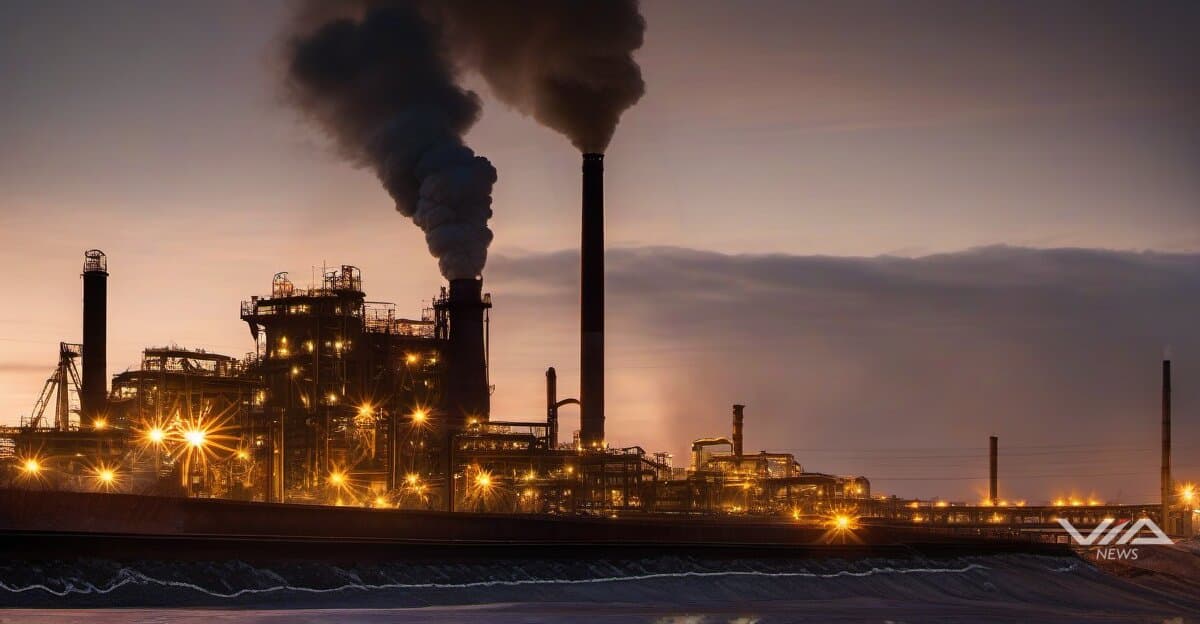
Image generated by AI for illustrative purposes. Not actual footage or photography from the reported events.

Metallurgical coal demand could decline 40% by 2040 as global steel producers adopt hydrogen-based direct reduction technology, threatening Appalachian supplier Alpha Metallurgical Resources with 70% confidence climate transition risk. Traditional blast furnaces consume 770 kg of met coal per ton of steel. Hydrogen-based systems eliminate this input entirely.

ArcelorMittal's Hamburg plant and SSAB's Oxelösund facility in Sweden already operate commercial hydrogen steelmaking units. ThyssenKrupp committed €3 billion to convert two German blast furnaces by 2026. China Baowu Steel, the world's largest producer at 120 million tons annually, runs hydrogen trials across multiple sites targeting carbon neutrality by 2050.

Met coal prices dropped 50% from $615 per ton in Q1 2022 to $310 in Q4 2025 as technology transition accelerates. Alpha Metallurgical Resources shipped 14.2 million tons in 2025 while maintaining cash operating costs below $80 per ton at Appalachian operations.

European Union carbon border adjustment mechanisms levy €50-75 per ton on steel imports based on production emissions. Hydrogen-based steel avoids these charges, creating immediate cost advantage over blast furnace methods before accounting for coal input savings. Steel made with met coal incurs the full carbon cost at current EU allowance prices.

Traditional blast furnaces represented 71% of global steel production in 2025. New blast furnace construction approvals dropped 83% from 2020 to 2025. Electric arc furnaces using scrap steel and direct reduced iron capture growing market share as hydrogen production scales.

Alpha Metallurgical Resources generated $287 million free cash flow in the first nine months of 2025, returning capital through dividends and buybacks. The company has not announced diversification plans beyond metallurgical coal mining operations as the global steel industry restructures around zero-carbon production methods.


Sources:
1 Yahoo Finance, "Alpha Metallurgical Resources, Inc. (AMR) Focused on Shareholder Value Despite Widening Net Loss" (March 06, 2026)
2 Nasdaq, "New Strong Sell Stocks for March 2nd" (March 02, 2026)
3 Yahoo Finance, "Alpha Metallurgical: Q4 Earnings Snapshot" (February 27, 2026)
4 Yahoo Finance, "Growth Companies With Insider Ownership Up To 27%" (February 05, 2026)

What we know · the intelligence behind this page
Live from the substrate
What we're seeing
Vertical AI Agents Attract a Funding Wave Across Fintech-Adjacent Industries
A cluster of AI-native startups applying autonomous agents to narrow, operational problems — hotel front-desk staffing (Dextr AI), identity/fraud risk for financial institutions (Baselayer), insurance distribution (Napo, Connie Health, MGT Insurance) — closed seed-to-Series A rounds within days of each other in September 2026, with CB Insights running a coordinated CEO interview series to spotlight them. The pattern points to agentic AI maturing from generic chat tools into vertical, revenue-generating products, with identity verification for AI agents themselves (Baselayer) emerging as a new fintech infrastructure category responding directly to AI-driven fraud risk.
Our read on the data ›
Signals we're tracking
Satellite-Terrestrial Network Integration Acceleration
Increased investment and launches in hybrid satellite-cellular networks across telecom industry; competitive responses from other carriers; regulatory activity around satellite spectrum; expansion of emergency/rural connectivity use cases
Patterns we're watching ›
Where sources disagree
ING Group
Both facts record the same metric (shares_outstanding) for ING Group at the identical observation date (2025-12-31). FACT A states 2,902,437,688 shares; FACT B states 2,902 million shares (2,902,000,000). The difference is 437,688 shares (~0.015%). This is a genuine value conflict, though the discrepancy appears to result from FACT B rounding to the nearest million while FACT A provides the precise count.
We flag conflicts openly ›
Recently verified
✓ Checked against the original source
4,984
facts traced to their source — and we flag the ones that don't hold up.
101 entities tracked4,984 facts checked against source5,306 source documents archived
Query this data → isubstrate.com