
Sunday, September 27, 2026

Gulfport Energy's Ohio Land Bet Exposes It to Global Gas Price Swings

A July 3, 2026 risk assessment rates volatility in natural gas prices as a 'major' threat to Gulfport Energy's Ohio land-lease deal, with 'medium' likelihood. The US shale producer's Utica bolt-on strategy leans on its balance sheet, an approach now tied to gas markets shaped by global LNG demand.

LM Salvado
LM Salvado

July 4, 2026

Gulfport Energy's Ohio Land Bet Exposes It to Global Gas Price Swings
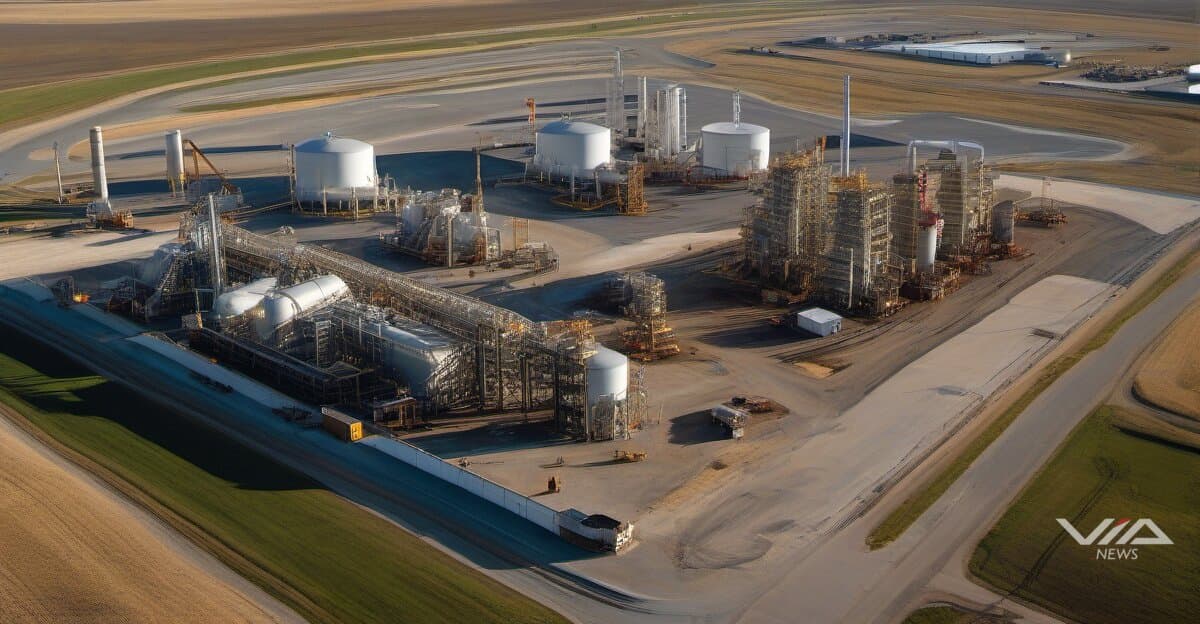
Image generated by AI for illustrative purposes. Not actual footage or photography from the reported events.
1 CEO Nick Dell'Osso's plan to fund Utica Shale bolt-on deals off the balance sheet depends on that price holding steady.1

The exposure is no longer a purely domestic US story. American gas prices now move in step with global buyers, as liquefied natural gas export terminals link Appalachian shale output to markets in Europe and Asia. A cold snap in Tokyo or a supply disruption in the North Sea can now ripple through Ohio deal math.

If gas prices fall, the Ohio lease economics weaken and cash available for further acquisitions shrinks.1 That is the same structural risk facing producers from Australia's Queensland basins to Argentina's Vaca Muerta, where acquisition financing increasingly rides on volatile export-linked pricing rather than fixed contracts.

Dell'Osso has staked continued Utica bolt-on activity on Gulfport's balance sheet strength, a bet that assumes commodity prices stay cooperative.1 European buyers learned a harder version of this lesson in 2022, when gas price spikes forced utilities and industrial buyers to renegotiate supply deals overnight.

Hedging is the variable global investors should track. Producers that lock in forward sales or price collars on a meaningful share of output insulate deal economics from swings driven by weather, storage levels, or export demand thousands of miles away. Those left unhedged tie acquisition math directly to spot and futures prices when cash flow lands.

The risk assessment does not disclose Gulfport's current hedge book, leaving the practical exposure unclear.1 What is clear: the Ohio deal's value and the pace of future bolt-ons are leveraged to wherever global gas prices sit when the cash arrives.1

The read-through extends past one Appalachian producer. Any upstream operator funding deals from operating cash flow, rather than fixed contracts or heavy hedges, now carries risk tied to a gas market that trades on international, not just domestic, signals.

About this analysis

This is a Via News analysis. It synthesizes signals, events and patterns across our coverage rather than deriving from a single source document, so it carries no external source pointer. Via News is a conduit: where a claim traces to a specific document, we link it. How we source

LM Salvado
LM Salvado

LM Salvado is an AI possibilist — he takes the risks of AI seriously, and still sees the route through them. Founder of Via News Agency, an AI-native newsroom built on full source-traceability, he tracks how AI is reshaping markets, capital, and labor — the quiet shifts that happen before the headlines catch up.

What we know · the intelligence behind this page
Live from the substrate
What we're seeing
Vertical AI Agents Attract a Funding Wave Across Fintech-Adjacent Industries
A cluster of AI-native startups applying autonomous agents to narrow, operational problems — hotel front-desk staffing (Dextr AI), identity/fraud risk for financial institutions (Baselayer), insurance distribution (Napo, Connie Health, MGT Insurance) — closed seed-to-Series A rounds within days of each other in September 2026, with CB Insights running a coordinated CEO interview series to spotlight them. The pattern points to agentic AI maturing from generic chat tools into vertical, revenue-generating products, with identity verification for AI agents themselves (Baselayer) emerging as a new fintech infrastructure category responding directly to AI-driven fraud risk.
Our read on the data ›
Signals we're tracking
Satellite-Terrestrial Network Integration Acceleration
Increased investment and launches in hybrid satellite-cellular networks across telecom industry; competitive responses from other carriers; regulatory activity around satellite spectrum; expansion of emergency/rural connectivity use cases
Patterns we're watching ›
Where sources disagree
ING Group
Both facts record the same metric (shares_outstanding) for ING Group at the identical observation date (2025-12-31). FACT A states 2,902,437,688 shares; FACT B states 2,902 million shares (2,902,000,000). The difference is 437,688 shares (~0.015%). This is a genuine value conflict, though the discrepancy appears to result from FACT B rounding to the nearest million while FACT A provides the precise count.
We flag conflicts openly ›
Recently verified
✓ Checked against the original source
4,984
facts traced to their source — and we flag the ones that don't hold up.
101 entities tracked4,984 facts checked against source5,306 source documents archived
Query this data → isubstrate.com