
Sunday, September 27, 2026

Fiscal Constraints Limit Global Response as Geopolitical Shocks Threaten Inflation Revival

UK Chancellor Rachel Reeves delivers a minimal spring statement this week, preserving fiscal capacity as government debt limits policy options across developed economies. The Iran conflict has pushed energy prices higher while debt trajectories force difficult trade-offs between economic support and fiscal credibility from Washington to London.

Source Trace Score8 source documents8 with a live linkVerifiability: Strong
Fiscal Constraints Limit Global Response as Geopolitical Shocks Threaten Inflation Revival
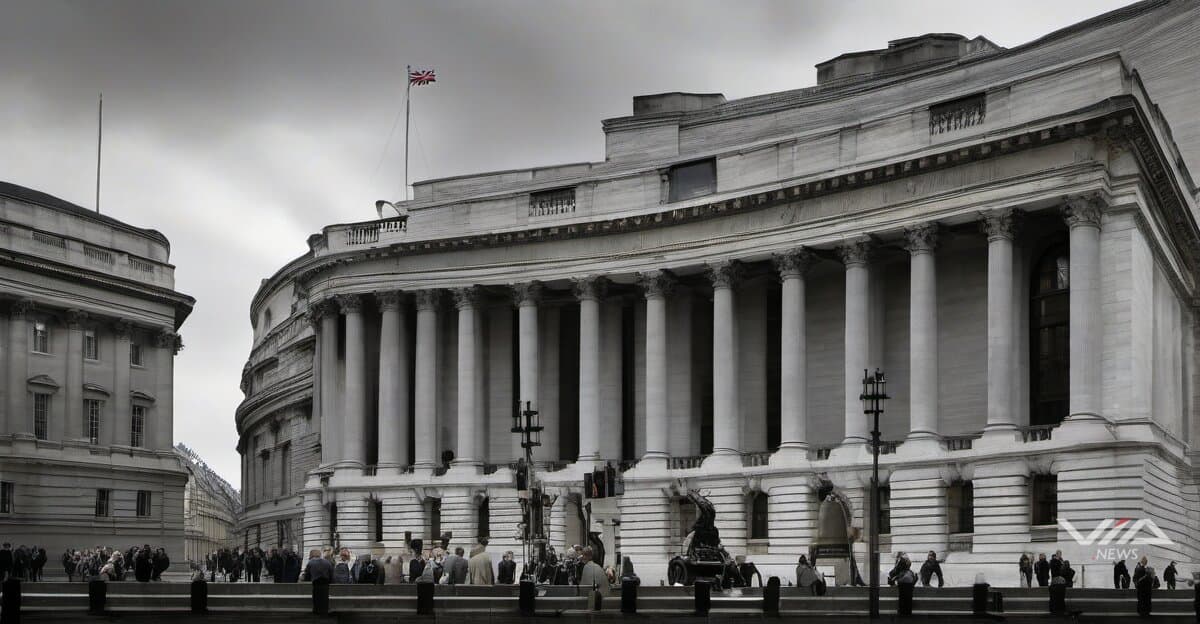
Image generated by AI for illustrative purposes. Not actual footage or photography from the reported events.

UK Chancellor Rachel Reeves presents a low-intervention spring statement this week as elevated government debt restricts policy responses to mounting economic pressures. Oil and gas prices have climbed following the Iran conflict, threatening renewed inflation just as fiscal space narrows across major economies.

"Inflation has fallen and government borrowing costs have eased, but unemployment has risen and the growth outlook has weakened," said David Aikman. The dual pressure forces governments to balance immediate relief against long-term sustainability as shipping disruptions and commodity shocks raise household costs.

The pattern spans developed markets. US Social Security trustees project benefit cuts of up to 23% by 2033 without policy intervention, highlighting how debt trajectories threaten entitlement programs. Japan's debt-to-GDP ratio exceeds 250%, while eurozone members navigate fiscal rules designed to prevent sovereign crises.

"With debt still unsustainably high, the priority should be to build a credible medium-term plan to put the public finances on a more resilient path, with debt falling as a share of the economy," Aikman argued. Countries with stronger fiscal positions entering this period have flexibility to respond to shocks. Those with elevated debt face harder choices.

Rising commodity prices from geopolitical conflicts create pressure for relief measures, but limited fiscal space restricts intervention scale. Central banks' ability to cut rates remains constrained by persistent inflation risks from supply disruptions. Financial markets watch debt trajectories closely, with bondholders demanding credibility from governments.

Reeves pledged to restrict major policy shifts to annual budgets, signaling discipline amid competing demands. If energy costs continue climbing and growth weakens further, pressure will mount for more aggressive fiscal response. The next six months will test whether governments can maintain fiscal discipline while managing economic support needs across developed economies.

Source documents

Via News is a conduit. We point to the source documents behind this report — we don't replace them. Trace any claim to its source and decide what to trust. How we source

Source Trace Score8 source documents8 with a live linkVerifiability: Strong
  1. [1]News articleYahoo Finance· November 26, 2025
    Autumn Budget 2025: What does it mean for the UK’s tech startup ecosystem?
  2. [2]News articleNasdaq· December 6, 2025
    Is It Better to Collect Social Security at 62, 67, or 70? A Broad-Based Statistical Analysis Provides a Decisive Answer.
  3. [3]News articleUk· March 3, 2026
    LIVE: Reeves to deliver spring statement as traders scale back Bank of England rate cut bets
  4. [4]News articleNasdaq· November 23, 2025
    President Donald Trump's $2,000 Tariff Stimulus Check Proposal Comes With 3 Potentially Fatal Flaws
  5. [5]News articleYahoo Finance· March 5, 2026
    California’s 5% wealth tax gamble triggers capital flight, including Mark Zuckerberg. What it means for investors
  6. [6]News articleNasdaq· February 26, 2026
    Stocks Mostly Lower as Nvidia Earnings Fail to Impress
  7. [7]News articleNasdaq· February 26, 2026
    Stocks Pressured as Chipmakers Tumble
  8. [8]News articleYahoo Finance· March 3, 2026
    UK Chancellor Spring Statement – financial services sector reaction

In this story · Knowledge Files

What we know · the intelligence behind this page
Live from the substrate
What we're seeing
Vertical AI Agents Attract a Funding Wave Across Fintech-Adjacent Industries
A cluster of AI-native startups applying autonomous agents to narrow, operational problems — hotel front-desk staffing (Dextr AI), identity/fraud risk for financial institutions (Baselayer), insurance distribution (Napo, Connie Health, MGT Insurance) — closed seed-to-Series A rounds within days of each other in September 2026, with CB Insights running a coordinated CEO interview series to spotlight them. The pattern points to agentic AI maturing from generic chat tools into vertical, revenue-generating products, with identity verification for AI agents themselves (Baselayer) emerging as a new fintech infrastructure category responding directly to AI-driven fraud risk.
Our read on the data ›
Signals we're tracking
Satellite-Terrestrial Network Integration Acceleration
Increased investment and launches in hybrid satellite-cellular networks across telecom industry; competitive responses from other carriers; regulatory activity around satellite spectrum; expansion of emergency/rural connectivity use cases
Patterns we're watching ›
Where sources disagree
ING Group
Both facts record the same metric (shares_outstanding) for ING Group at the identical observation date (2025-12-31). FACT A states 2,902,437,688 shares; FACT B states 2,902 million shares (2,902,000,000). The difference is 437,688 shares (~0.015%). This is a genuine value conflict, though the discrepancy appears to result from FACT B rounding to the nearest million while FACT A provides the precise count.
We flag conflicts openly ›
Recently verified
✓ Checked against the original source
4,984
facts traced to their source — and we flag the ones that don't hold up.
101 entities tracked4,984 facts checked against source5,306 source documents archived
Query this data → isubstrate.com