
Sunday, September 27, 2026

Three US Military Units Simultaneously Pursue Autonomous Cargo Loader as Global Defense Robotics Race Enters Procurement Phase

Three separate US military units have requested follow-on procurement for Stratom's XCL autonomous cargo loader within a single reporting window — compressing a traditionally multi-year acquisition cycle. The move mirrors parallel programs underway among NATO allies and China's PLA. Defense AI startups in logistics automation face an accelerated SBIR and OTA funding window of 6 to 18 months.

LM Salvado
LM Salvado

May 12, 2026

Three US Military Units Simultaneously Pursue Autonomous Cargo Loader as Global Defense Robotics Race Enters Procurement Phase
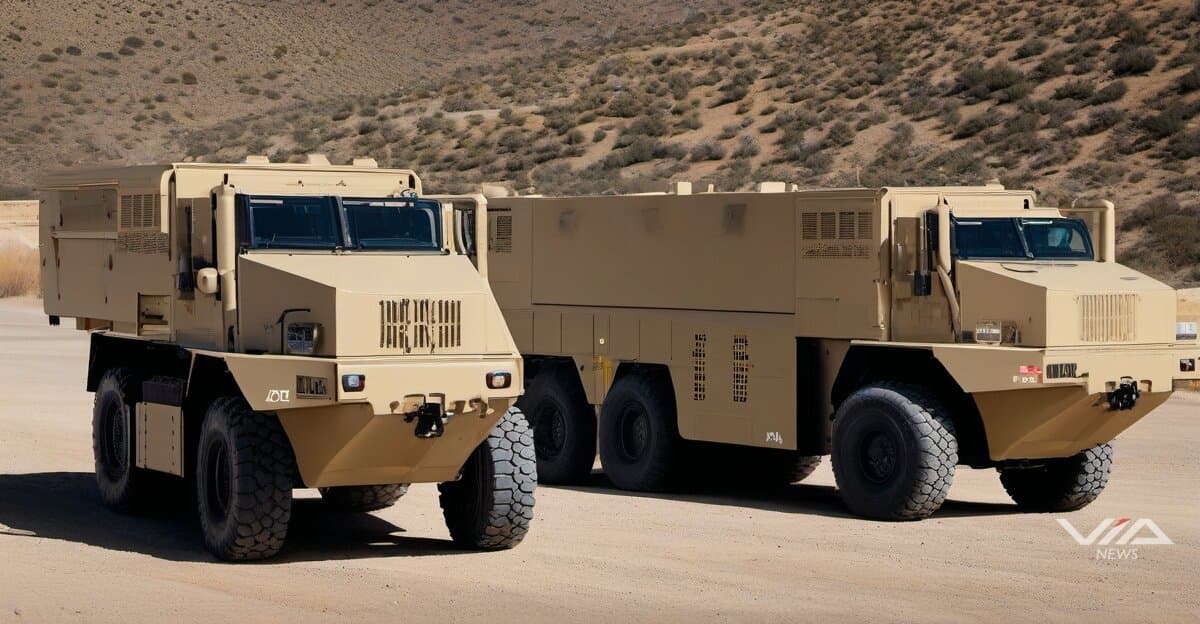
Image generated by AI for illustrative purposes. Not actual footage or photography from the reported events.

Three separate US military units have simultaneously requested procurement follow-on for Stratom's XCL autonomous cargo loader — a compression of the standard three-to-five-year acquisition cycle that defense planners in allied capitals are watching closely.1

The XCL is a ground-based autonomous system designed for cargo handling and forward logistics support. It joins a widening global field. China's PLA has invested heavily in autonomous ground logistics since 2020. NATO members, under post-Ukraine pressure to expand defense spending, have launched parallel procurement programs for autonomous resupply platforms. The US pace is now setting a competitive benchmark.

Demand from operational commanders — not acquisition offices — is driving the acceleration.1 That pattern is consistent across allied programs. When field units request systems, procurement timelines compress faster than any formal roadmap allows.

US defense AI startups focused on logistics automation face a 6-to-18-month window of accelerated SBIR and Other Transaction Authority (OTA) funding.1 OTA agreements allow the Pentagon to bypass standard Federal Acquisition Regulation requirements, cutting contract timelines from years to months. Several NATO allies are now replicating that contracting model domestically.

Larger public contractors with robotics exposure — Leidos, SAIC, and Textron — are positioned to benefit as procurement activity scales beyond initial awards.1

The operational logic is consistent across theaters. Autonomous ground vehicles reduce personnel exposure during resupply missions and forward base operations — whether for US forces in the Indo-Pacific, NATO units along NATO's eastern flank, or coalition deployments in active conflict zones.

Traditional defense procurement cycles run three to five years from technology demonstration to contract award. Simultaneous interest from three separate military units in one reporting window indicates that operational commanders, not only acquisition planners, are actively driving demand. That is a faster signal than any acquisition roadmap.

Stratom's XCL arc — from demonstration unit to multi-unit procurement interest — is one confirmed data point in a broader global shift toward autonomous ground logistics.1 Near-term contract awards appear increasingly likely as operational demand outpaces formal acquisition planning, in Washington and in allied capitals alike.

About this analysis

This is a Via News analysis. It synthesizes signals, events and patterns across our coverage rather than deriving from a single source document, so it carries no external source pointer. Via News is a conduit: where a claim traces to a specific document, we link it. How we source

LM Salvado
LM Salvado

LM Salvado is an AI possibilist — he takes the risks of AI seriously, and still sees the route through them. Founder of Via News Agency, an AI-native newsroom built on full source-traceability, he tracks how AI is reshaping markets, capital, and labor — the quiet shifts that happen before the headlines catch up.

What we know · the intelligence behind this page
Live from the substrate
What we're seeing
Enterprise AI Agents Scale Up Through Partnerships and Funding, But Data Readiness Lags Ambition
A wave of vertical AI-agent startups (Swarm, Veridox, Avallon AI, DA2, F2, Earthian, Meanwhile, Covecta, Penguin AI, Maisa AI) is being funded and profiled just as major infrastructure players — Microsoft/Mistral, Siemens/NVIDIA, and Manulife/Microsoft — cement enterprise AI governance and compute partnerships. Yet a Google Cloud report shows AI agents still lack access to the majority of company data (only 45% on average), and insider selling at incumbent C3.ai signals investor caution even as adoption intent (100% planned agentic AI use within two years) races ahead of actual data infrastructure.
Our read on the data ›
Signals we're tracking
Satellite-Terrestrial Network Integration Acceleration
Increased investment and launches in hybrid satellite-cellular networks across telecom industry; competitive responses from other carriers; regulatory activity around satellite spectrum; expansion of emergency/rural connectivity use cases
Patterns we're watching ›
Where sources disagree
Berkshire Hathaway
Both facts report Berkshire Hathaway's cash position on 2026-01-01 with identical observation timestamps, but claim vastly different values: 380 billion USD vs 400 USD. These cannot both be true for the same entity at the same point in time. The magnitude of the discrepancy (a factor of ~10^9) rules out rounding, unit conversion, or methodological differences.
We flag conflicts openly ›
Recently verified
✓ Checked against the original source
4,984
facts traced to their source — and we flag the ones that don't hold up.
101 entities tracked4,984 facts checked against source5,306 source documents archived
Query this data → isubstrate.com