
Sunday, September 27, 2026

U.S. Frozen Food Maker Armanino Faces 50% Revenue Risk from Customer Concentration

Armanino Foods of Distinction has 50% of its revenue tied to a handful of major customers, creating catastrophic risk common among mid-sized food manufacturers globally. The concentration exceeds the 40% threshold that corporate risk managers worldwide classify as severe, forcing the pesto and frozen pasta maker into a position where losing one major account could eliminate half its revenue.

ViaNews Editorial Team

February 21, 2026

U.S. Frozen Food Maker Armanino Faces 50% Revenue Risk from Customer Concentration
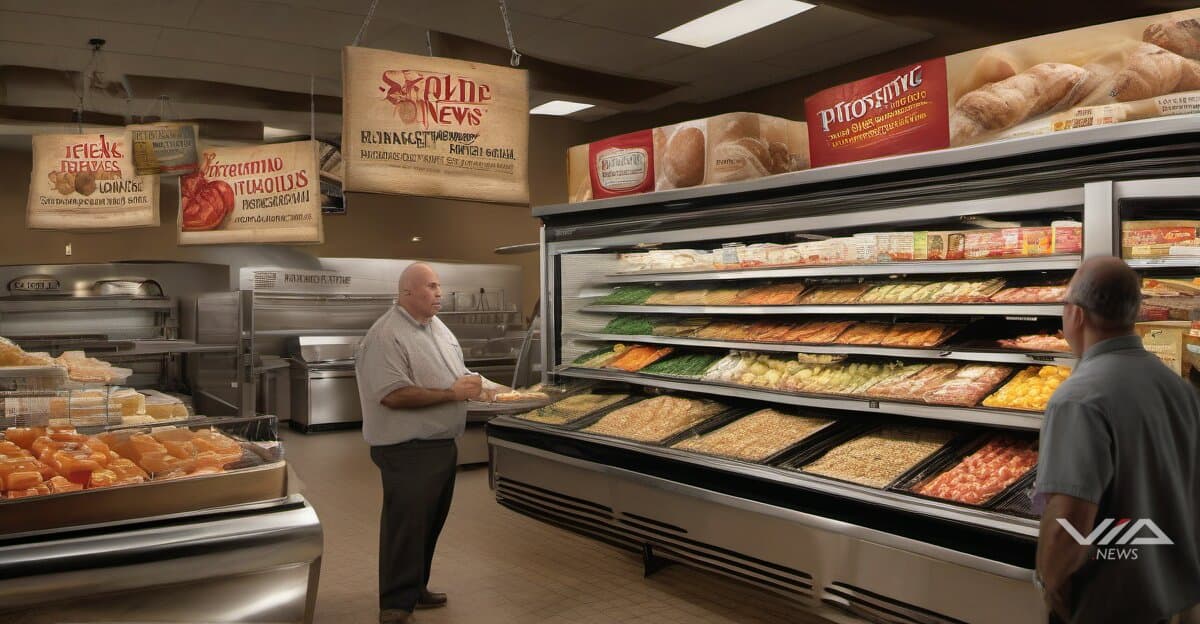
Image generated by AI for illustrative purposes. Not actual footage or photography from the reported events.

Armanino Foods of Distinction has 50% of its revenue dependent on a limited customer base, a concentration level that exceeds the 40% threshold corporate risk managers globally classify as severe. The U.S. frozen food manufacturer faces the same vulnerability afflicting mid-sized food suppliers worldwide as retail and foodservice consolidation concentrates market power among fewer buyers.

The company operates with a leading U.S. pesto franchise and frozen pasta lines, but this customer concentration creates power imbalances familiar across international food manufacturing. Major buyers in North America, Europe, and Asia increasingly dictate terms to smaller suppliers, squeezing margins and shifting orders to competitors with minimal negotiation leverage for manufacturers.

Food manufacturers face unique supply chain vulnerabilities when customer bases narrow. Production capacity, inventory management, and staffing levels align to specific customer demands, making single customer departures financially devastating. Rapid operational restructuring required after losing a major account often proves impossible without severe financial damage.

The risk assessment carries 70% confidence, indicating analysts identified concrete evidence of revenue concentration through financial disclosures. Multi-year food manufacturing contracts typically include annual renegotiation clauses where major buyers demand price concessions, exclusivity arrangements, or operational investments as renewal conditions.

The frozen food sector has seen buyer consolidation across developed markets, intensifying concentration risks for suppliers. Large retailers and foodservice distributors in the U.S., European Union, and other major markets control market access, forcing manufacturers into dependent relationships that create operational vulnerability and margin compression over time. Armanino's situation reflects structural challenges facing specialized food manufacturers globally as retail power concentrates.


Sources:
1 Yahoo Finance, "The Zacks Analyst Blog Amazon, Toyota, Intuit, Eastman and Armanino" (December 17, 2025)
2 Yahoo Finance, "Top Stock Reports for Amazon.com, Toyota Motor & Intuit" (December 16, 2025)
3 Nasdaq, "Validea Motley Fool Strategy Daily Upgrade Report - 12/5/2025" (December 05, 2025)

In this story · Knowledge Files

What we know · the intelligence behind this page
Live from the substrate
What we're seeing
Vertical AI Agents Attract a Funding Wave Across Fintech-Adjacent Industries
A cluster of AI-native startups applying autonomous agents to narrow, operational problems — hotel front-desk staffing (Dextr AI), identity/fraud risk for financial institutions (Baselayer), insurance distribution (Napo, Connie Health, MGT Insurance) — closed seed-to-Series A rounds within days of each other in September 2026, with CB Insights running a coordinated CEO interview series to spotlight them. The pattern points to agentic AI maturing from generic chat tools into vertical, revenue-generating products, with identity verification for AI agents themselves (Baselayer) emerging as a new fintech infrastructure category responding directly to AI-driven fraud risk.
Our read on the data ›
Signals we're tracking
Satellite-Terrestrial Network Integration Acceleration
Increased investment and launches in hybrid satellite-cellular networks across telecom industry; competitive responses from other carriers; regulatory activity around satellite spectrum; expansion of emergency/rural connectivity use cases
Patterns we're watching ›
Where sources disagree
ING Group
Both facts record the same metric (shares_outstanding) for ING Group at the identical observation date (2025-12-31). FACT A states 2,902,437,688 shares; FACT B states 2,902 million shares (2,902,000,000). The difference is 437,688 shares (~0.015%). This is a genuine value conflict, though the discrepancy appears to result from FACT B rounding to the nearest million while FACT A provides the precise count.
We flag conflicts openly ›
Recently verified
✓ Checked against the original source
4,984
facts traced to their source — and we flag the ones that don't hold up.
101 entities tracked4,984 facts checked against source5,306 source documents archived
Query this data → isubstrate.com