
Sunday, September 27, 2026

Global M&A Wave: Four Major Deals Across Food, Tech and Energy Mark Cross-Sector Acquisition Surge

Four major acquisitions closed simultaneously across US markets—Smithfield bought Nathan's Famous, ZenaTech acquired 18 drone firms, Evolution Petroleum expanded upstream assets, and Chevron completed its $53bn Hess merger. The coordinated activity signals renewed corporate confidence in global M&A markets after 2025's slowdown, with deal pipelines rising across North America, Europe and Asia.

Global M&A Wave: Four Major Deals Across Food, Tech and Energy Mark Cross-Sector Acquisition Surge
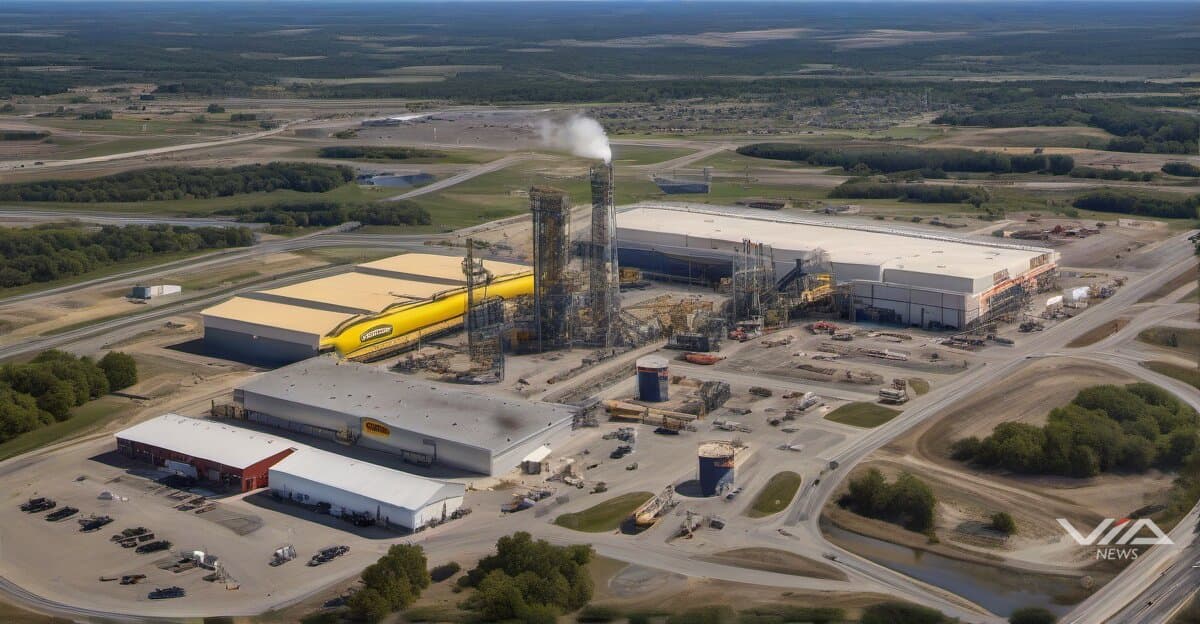
Image generated by AI for illustrative purposes. Not actual footage or photography from the reported events.

Four unrelated sectors saw major acquisitions close within days: Smithfield Foods purchased Nathan's Famous restaurant chain, ZenaTech acquired 18 technology companies, Evolution Petroleum bought new oil assets, and Chevron completed its $53 billion Hess Corporation merger. The clustering marks a notable acceleration in global M&A activity after subdued dealmaking through 2025.

Smithfield's Nathan's Famous acquisition consolidates branded food operations. The pork producer gains a recognized restaurant brand with international licensing potential beyond its core protein business. European food conglomerates including Nestlé and Unilever have used similar strategies to diversify revenue across categories and geographies.

ZenaTech's 18-firm buying spree represents aggressive consolidation in commercial drone technology. The company is assembling capabilities across hardware, software and applications. Chinese drone manufacturers like DJI expanded through similar roll-up strategies, though bulk acquisitions carry integration risks alongside market position gains.

Evolution Petroleum's asset purchase expands its upstream portfolio as energy markets stabilize. Independent producers typically acquire during price normalization before major producers re-enter bidding. Similar patterns emerged in North Sea acquisitions when oil recovered from 2020 lows.

Chevron's Hess deal stands as the largest transaction, gaining Hess's Guyana offshore assets. The supermajor expands its position in one of the world's most promising oil basins, where ExxonMobil, TotalEnergies and Petronas also operate. The merger concentrates Guyana production among fewer international operators.

Investment banks report rising M&A mandates globally. Corporate development teams are actively evaluating targets after 2025's cautious environment, with European and Asian firms also increasing acquisition activity. Management teams see clearer value creation paths through acquisition than organic growth as financing conditions improve and strategic imperatives align across markets.

In this story · Knowledge Files

What we know · the intelligence behind this page
Live from the substrate
What we're seeing
Enterprise AI Agents Scale Up Through Partnerships and Funding, But Data Readiness Lags Ambition
A wave of vertical AI-agent startups (Swarm, Veridox, Avallon AI, DA2, F2, Earthian, Meanwhile, Covecta, Penguin AI, Maisa AI) is being funded and profiled just as major infrastructure players — Microsoft/Mistral, Siemens/NVIDIA, and Manulife/Microsoft — cement enterprise AI governance and compute partnerships. Yet a Google Cloud report shows AI agents still lack access to the majority of company data (only 45% on average), and insider selling at incumbent C3.ai signals investor caution even as adoption intent (100% planned agentic AI use within two years) races ahead of actual data infrastructure.
Our read on the data ›
Signals we're tracking
Satellite-Terrestrial Network Integration Acceleration
Increased investment and launches in hybrid satellite-cellular networks across telecom industry; competitive responses from other carriers; regulatory activity around satellite spectrum; expansion of emergency/rural connectivity use cases
Patterns we're watching ›
Where sources disagree
Berkshire Hathaway
Both facts report Berkshire Hathaway's cash position on 2026-01-01 with identical observation timestamps, but claim vastly different values: 380 billion USD vs 400 USD. These cannot both be true for the same entity at the same point in time. The magnitude of the discrepancy (a factor of ~10^9) rules out rounding, unit conversion, or methodological differences.
We flag conflicts openly ›
Recently verified
✓ Checked against the original source
4,984
facts traced to their source — and we flag the ones that don't hold up.
101 entities tracked4,984 facts checked against source5,306 source documents archived
Query this data → isubstrate.com